




 18 días China, de principio a fin Pekín → Xi'an → Chuanzhusi → Jiuzhaigou → Chengdu → Zhangjiajie → Guilin → Yangshuo → Shenzhen Desde $6,360 Ver ruta
  8 días Agua pausada, ciudad veloz Shanghái → Yangshuo → Shenzhen Desde $2,350 Ver ruta
 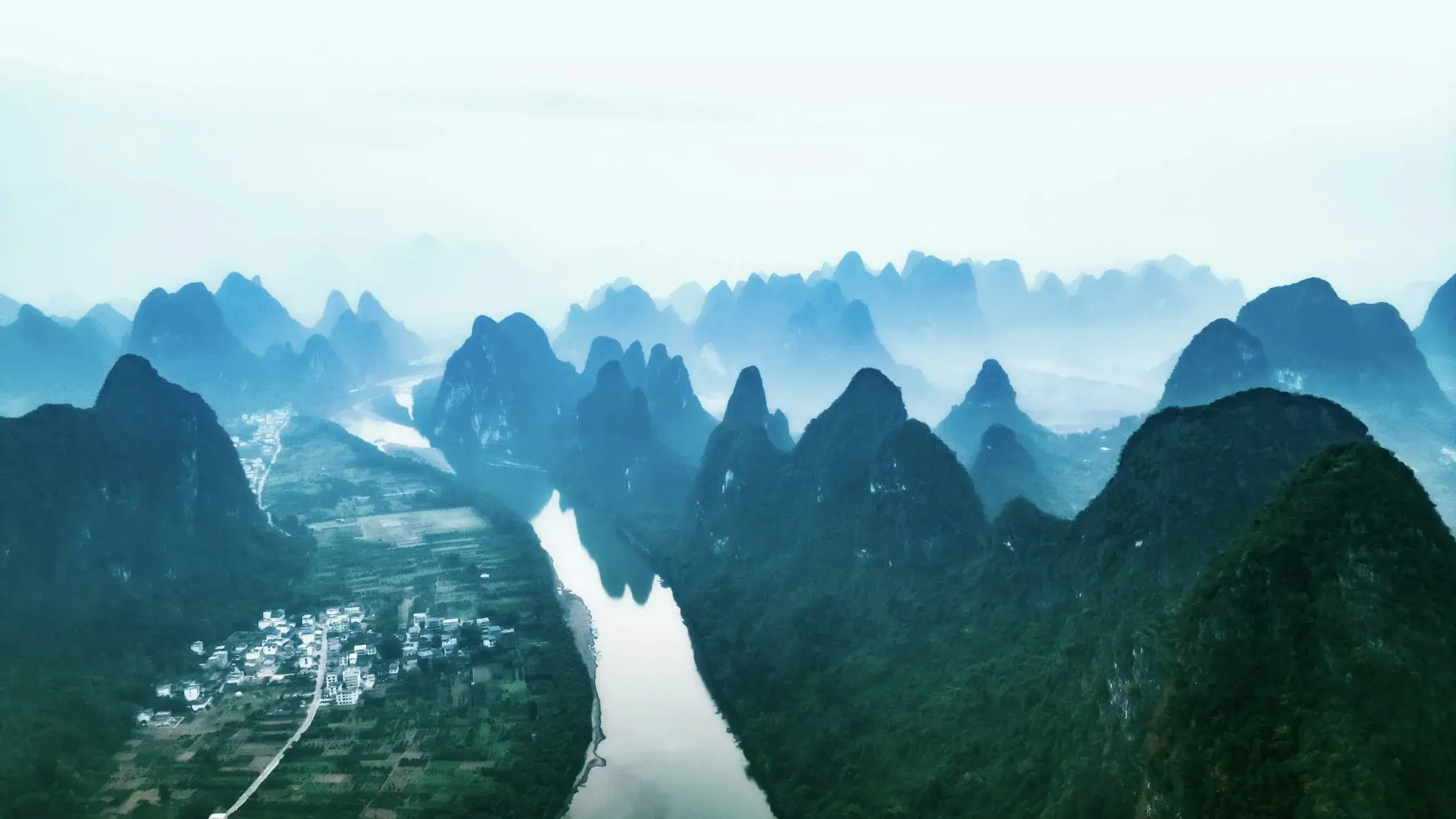 19 días Aguas abajo del Futuro Shenzhen → Guilin → Yangshuo → Chengdu → Chongqing → Yichang → Shanghái Desde $5,360 Ver ruta
 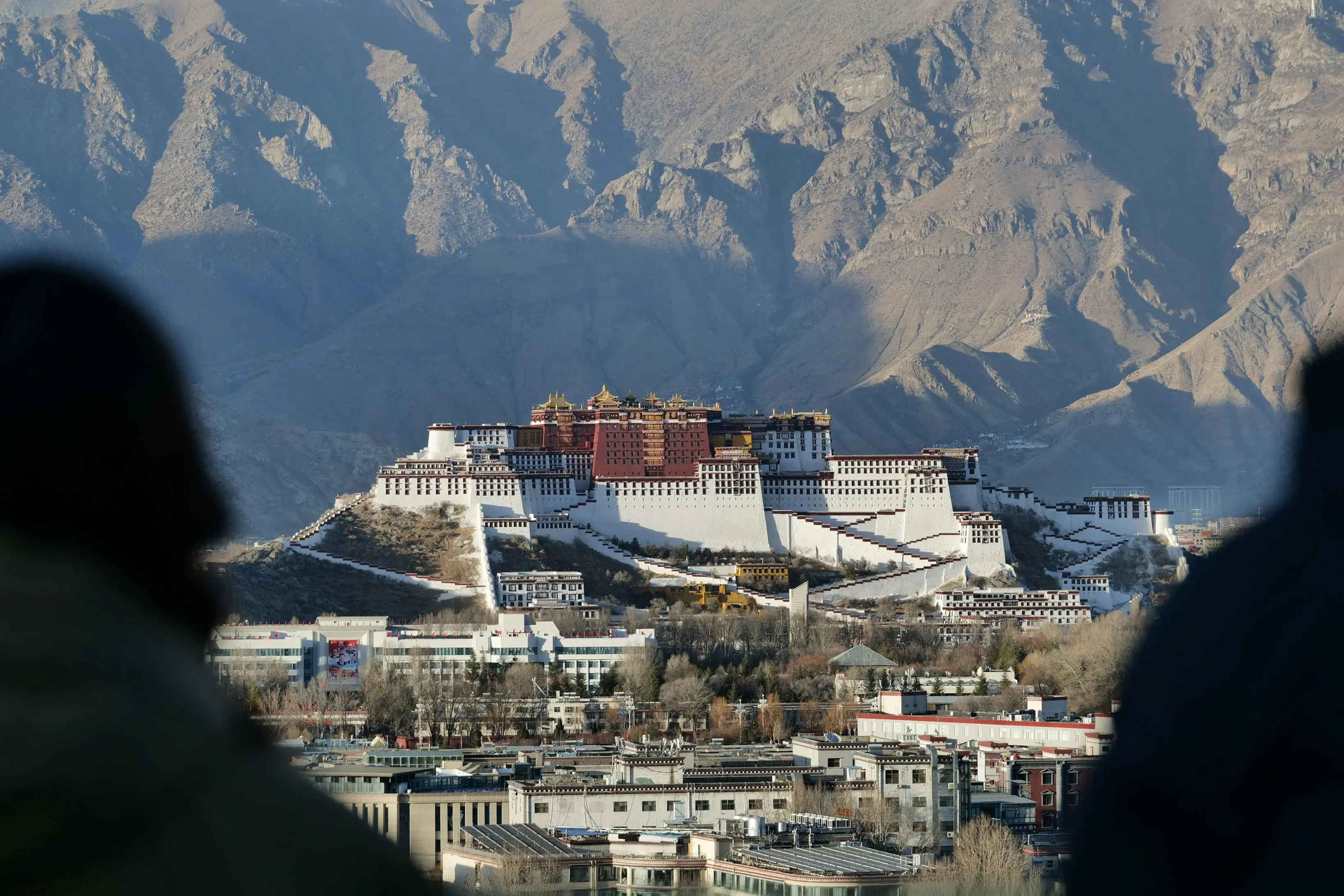 18 días Aire enrarecido, luego nivel del mar Pekín → Xi'an → Chengdu → Lhasa → Chongqing → Yichang → Shanghái Desde $4,900 Ver ruta
 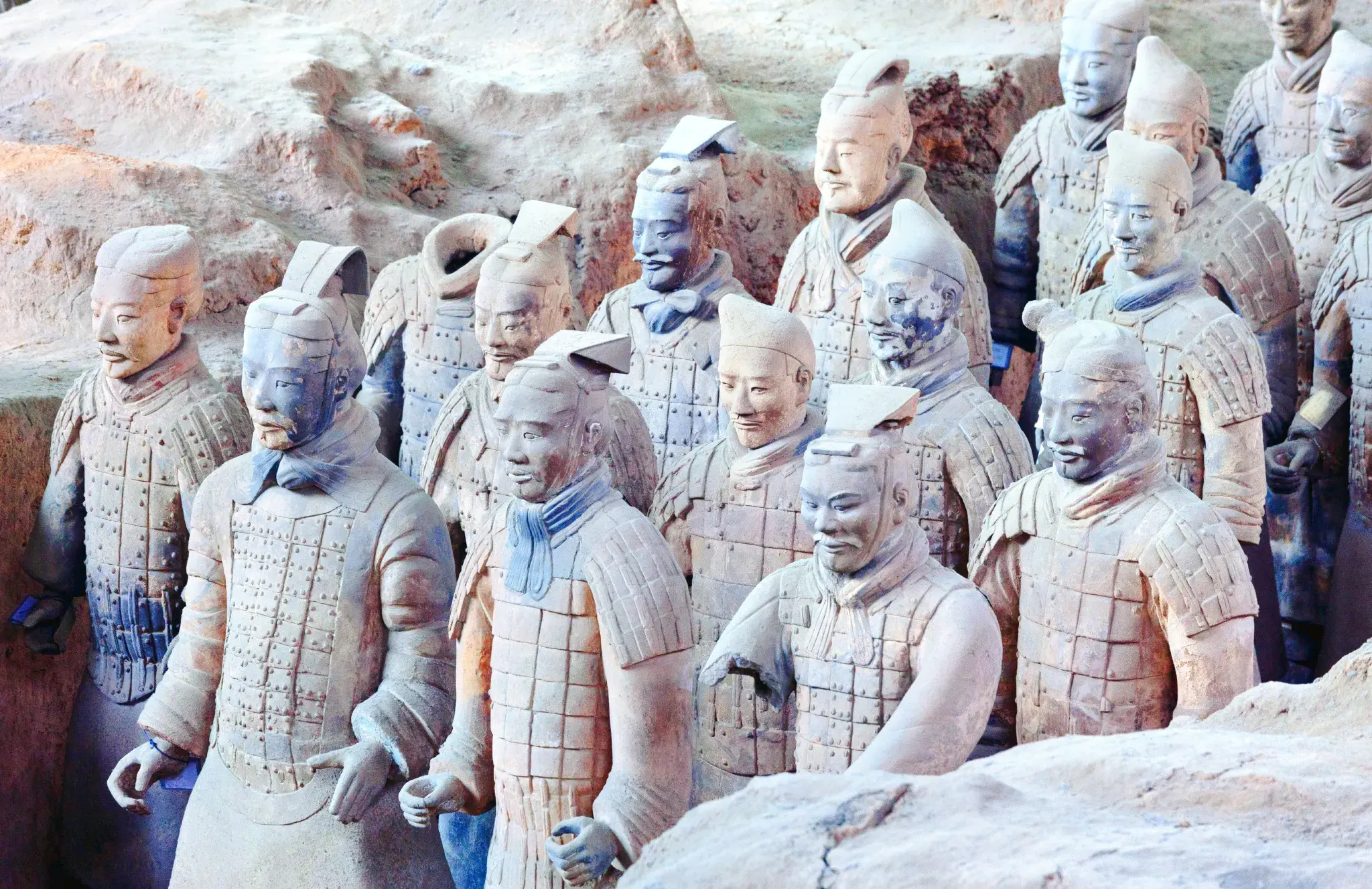 12 días Aún en uso Pekín → Xi'an → Chengdu → Shanghái Desde $4,310 Ver ruta
Shangri-La, China: ¿Vale la pena visitarlo? — ¿Y hará que te sientas mal por la altitud? (Guía 2026)
Shangri-La, China se encuentra a aproximadamente 3.160 m (10.370 ft) en el borde del Plateau Tíbetano en el noroeste de Yunnan, y sí, vale una visita de 2–3 días — para una experiencia tibetana-budista genuina sin necesidad de permiso de Tibet y con una altitud más suave que Lhasa. La altitud puede hacer que algunos viajeros se sientan enfermos, pero un ascenso escalonado a través de Lijiang lo previene para la mayoría. Esta es una guía de destino confiable, no una lista de tours.
Una nota de honestidad desde el principio. LyrikTrip es una empresa privada de inbound-China, no una OTA ni un vendedor de viajes — así que podemos decirte claramente cuándo Shangri-La supera a Tibet, y cuándo la altitud o un invierno duro hacen que el viaje sea una mala idea para tu grupo en particular. Debido a que la enfermedad por altitud es un tema de salud, cada punto de salud a continuación está respaldado y vinculado a una fuente autorizada (CDC de EE.UU.), y nada de esto reemplaza el consejo de tu propio médico.
El hecho clave para orientarte: Shangri-La (anteriormente Zhongdian, tibetano Gyalthang) es la capital de la Prefectura Autónoma Tibetana de Diqing y fue renombrada desde Zhongdian el 17 de diciembre de 2001 (Wikipedia, Shangri-La, Yunnan, verificada 2026-07-04). A ~3.160 m es el lugar más alto que la mayoría de los viajeros de Yunnan dormirán — es exactamente por qué la sección de altitud abajo es el corazón de esta guía.
Principales conclusiones
- Vale la pena, para el viajero adecuado. Shangri-La ofrece una cultura tibetana-budista auténtica — un gran monasterio funcional, ruedas de oración, un casco antiguo tibetano, praderas alpinas — como destino de 2 a 3 días, no de una semana.
- La altitud es real pero manejable. A ~3.160 m, algunos viajeros sufren agudo mal de altura (AMS). La mejor prevención es un ascenso escalonado: dormir dos noches primero en Lijiang (~2.400 m), tomar con calma el día de llegada, hidratarse y evitar el alcohol.
- No vuelas directamente arriba si puedes evitarlo. El autobús o tren desde Lijiang permite dividir el ascenso; volar desde una ciudad al nivel del mar (Shanghái, Cantón, Hong Kong) hasta el aeropuerto de Diqing salta por completo la aclimatación.
- Shangri-La no sustituye a Lhasa. Ofrece cultura tibetana sin necesidad de Permiso de Viaje a Tibet ni guía obligatoria — pero para el Palacio Potala y la meseta propiamente dicha, necesitas Tibet (TAR) y su permiso.
- Las mejores estaciones son primavera y otoño. Marzo–junio para praderas de flores silvestres, septiembre–noviembre para cielos despejados y praderas doradas. El invierno a 3.160 m es severamente frío — un verdadero disuasivo para familias y viajeros mayores.
- La altitud es un tema YMYL de salud. Todo aquí es información general de viaje, no consejo médico. Consulta a tu médico antes de viajar, especialmente con niños, familiares mayores o cualquier condición cardíaca, pulmonar o de presión arterial.
—
¿Vale la pena visitar Shangri-La? (Qué hay realmente)

Sí — si quieres una cultura tibetana-budista auténtica y paisajes alpinos sin la burocracia de Tibet, Shangri-La es una de las paradas más gratificantes de Yunnan. Pero trátalo como un destino enfocado de 2–3 días, no como una semana. Recompensa a los viajeros que se ralentizan; frustra a cualquiera que espere una lista de controles de una gran ciudad densa.
Esto es lo que define una visita:
- Monasterio Songzanlin (Ganden Sumtseling). El monasterio budista tibetano más grande de Yunnan, apodado el "Pequeño Palacio Potala", a unos 5 km del pueblo, a aproximadamente 3,380 m (Wikipedia / travelchinaguide, verificado 2026-07-04). Es un monasterio activo con monresidentes — vale la pena caminar despacio, porque está situado más alto que el propio pueblo.
- Parque Nacional Pudacuo (Potatso). Lagos alpinos, praderas y pasarelas de bosque. El paisaje es el atractivo; la altitud y los largos senderos significan que debes ir con paso tranquilo.
- Antiguo Pueblo Dukezong. Un antiguo pueblo tibetano restaurado con calles empedradas y una de las ruedas de oración más grandes del mundo, que requiere a varias personas para girarla.
- Una puerta de entrada a más. Shangri-La es el punto de partida para el Desfiladero del Salto del Tigre y la trepada a Yubeng hacia las Montañas Nieve Meili, para viajeros con más tiempo y una buena aclimatación.
Dos o tres noches son suficientes para visitar el monasterio, la ciudad vieja y un día de parque a un ritmo razonable. Si aún está ubicando dónde encaja Shangri-La respecto a Lijiang, Dali y el resto de la provincia, consulte  la guía completa de viaje de Yunnan para ver el itinerario completo.
¿Qué tan alto es Shangri-La — y sufrirás mal de altura?
Shangri-La se encuentra a aproximadamente 3,160 m (10,370 ft), lo suficientemente alto como para que algunos viajeros no acclimatados desarrollen enfermedad aguda de montaña (AMS): dolor de cabeza, náuseas, fatiga, sueño deficiente. La prevención más fiable es un ascenso escalonado: dormir dos noches en Lijiang (~2,400 m) primero, tomar con calma el día de llegada, hidratarse y evitar el alcohol. Los CDC de EE.UU. advierten que cualquier viajero no acclimatizado que duerma a ≥2,450 m (≥8,000 ft) corre riesgo — y Shangri-La claramente supera esa línea (Libro Amarillo de los CDC 2026, Viaje a gran altura y enfermedades de altitud, verificado 2026-07-04).
Este es el principio que hace que el plan siguiente sea inquebrantable. Las recomendaciones de los CDC, basadas en las de la Wilderness Medical Society, indican que una vez que duermas a más de 3.000 m, no debes elevar tu altitud de sueño en más de ~500 m por noche, y añadir una noche de aclimatación adicional por cada ~1.000 m de aumento en la altitud de sueño (CDC, verificado 2026-07-04). El trayecto de Lijiang (~2.400 m) a Shangri-La (~3.160 m) supone un salto de aproximadamente 760 m en altitud de sueño — justo en la zona donde una noche de amortiguador es clave. Por eso, "pasar dos noches en Lijiang" es el núcleo del marco, no un detalle opcional.
Plan escalonado de aclimatización Lijiang → Shangri-La
Las alturas son las mejores cifras disponibles hasta confirmar sobre el terreno (marcadas con verificar); el principio de ascenso se basa en los CDC.
| Etapa | Altura aproximada para dormir (verificar) | Noches sugeridas | Qué hacer / qué observar |
|---|
| Kunming / Dali (entrada a Yunnan) | ~1,890 m (Kunming) / ~1,900–2,000 m (Dali) | Pasar o 1 noche | Actividad normal, sin preparación especial. Un primer paso libre hasta ~2,000 m. | Lijiang (parada de aclimatación) | ~2,400 m (verificar) | 2 noches — el colchón, no opcional | Actividad ligera, hidratarse, evitar alcohol. Dejar que el cuerpo se asiente antes de cruzar los 3,000 m. → Lijiang, la parada de aclimatación | Shangri-La — día de llegada | ~3,160 m | — | No caminatas, no alcohol, hidratarse y descansar temprano. Los síntomas de AMS suelen aparecer 2–12 horas después de la llegada (CDC): dolor de cabeza, náuseas, mareos, fatiga o mal apetito son las señales. No insistas. | Shangri-La — a partir del día 2 | ~3,160 m | 2–3 noches | Una vez que te sientas normal, ve con calma hacia Songzanlin (~3,380 m) y Pudacuo. Nota: el monasterio y los parques están más altos que la ciudad — eso es otra subida, así que va despacio y siéntate cuando estés cansado.
Atención a estos síntomas — y sabe cuándo bajar. Según los CDC (verificado 2026-07-04):
- AMS leve: dolor de cabeza más al menos uno de los siguientes: náuseas, mareos, fatiga, mal apetito o sueño interrumpido, generalmente entre 2 y 12 horas después de la llegada. Dejar de ascender, descansar, hidratarse, tratar el dolor de cabeza y no dormir a mayor altitud. La mayoría de los casos se resuelven en 1-2 días.
- Señales de peligro — descender inmediatamente y buscar atención médica:
- HACE (edema cerebral de gran altura): marcha inestable (ataxia), confusión, somnolencia inusual o alteración del comportamiento. Los CDC advierten que puede progresar a coma en menos de 24 horas.
- HAPE (edema pulmonar de gran altura): falta de aire en reposo, tos, opresión en el pecho, que puede evolucionar a dificultad respiratoria obvia o esputo rosado/sangriento.
- Regla general: si los síntomas empeoran a pesar del descanso y tratamiento a la misma altitud, descender. Volver a Lijiang (~2.400 m) es un objetivo natural de descenso, y los CDC señalan que un descenso de incluso 300 m suele producir una mejora rápida.
La conclusión honesta: la aclimatación te brinda seguridad mediante el tiempo, no mediante un tanque de oxígeno. El oxígeno en botella o los remedios herbales pueden hacerte sentir un poco mejor, pero no reemplazan un ascenso lento. La forma inteligente de recorrer esta ruta es siempre dos noches en Lijiang, luego viajar por tierra, en lugar de volar directamente desde las tierras bajas hasta los 3.160 m.
Esta es información general de viaje, no consejo médico. El mal de altura puede ser grave y, en sus formas graves (HACE/HAPE), puede ser mortal. Consulte a su médico antes de viajar, especialmente sobre medicamentos preventivos como acetazolamida (Diamox), que los CDC listan con una dosis profiláctica típica para adultos de 125 mg dos veces al día, pero que debe ser prescrita y evaluada por un médico, no iniciada por uno mismo. Esto es doblemente importante si está embarazada, viaja con niños pequeños o mayores, o tiene alguna condición cardíaca, enfermedad pulmonar crónica, apnea obstructiva del sueño o problemas de presión arterial. Si los síntomas son severos (confusión, falta de aire en reposo, empeoramiento a pesar del descanso), descienda y busque ayuda médica. Referencia autorizada: US CDC Yellow Book 2026, Viaje a gran altitud y enfermedades de altura (verificado 2026-07-04).
Si se siente atraído por los paisajes de la meseta tibetana de gran altitud y quiere más de ese mundo, Qinghai — otro destino de la meseta tibetana de gran altitud es el siguiente paso natural, con la misma disciplina de aclimatación.
Shangri-La vs Tíbet — ¿Cuál debería visitar?
Shangri-La te ofrece una experiencia tibetana-budista auténtica — un gran monasterio en funcionamiento, ruedas de oración, un viejo casco tibetano, praderas alpinas — sin necesidad de Permiso de Viaje a Tibet, guía obligatoria y una altitud más suave de ~3.160 m (en comparación con los ~3.650 m de Lhasa). Es el viaje de cultura tibetana más fácil en China. Pero no sustituye al Palacio Potala o al Plateau tibetano propiamente dicho — para eso necesitas el Tibet (TAR) y su permiso. Decide primero si quieres una introducción a la cultura tibetana o Lhasa misma, y la respuesta se divide claramente.
La diferencia de permisos es la clave. Para la Región Autónoma Tibetana (TAR), todos los turistas extranjeros deben poseer un Permiso de Viaje a Tibet y viajar en un tour organizado por una agencia autorizada — no se permite el viaje independiente (Tierra de las Nieves / múltiples fuentes de permisos a Tibet, verificados 2026-07-04). Las áreas tibetanas fuera del TAR — incluyendo Shangri-La en Yunnan, más el oeste de Sichuan y Qinghai — no requieren tal permiso; viajas libremente con tu pasaporte y visa de China.
| Elija Shangri-La (Diqing, Yunnan) si… | Elija Tibet / TAR (Lhasa) si… | Considere Sichuan occidental / Qinghai si… |
|---|---|---|
| Quiere cultura tibetana sin permiso y sin guía obligatorio | Quiere específicamente el Palacio Potala / Lhasa | Quiere un tibetano sin permiso que sea más salvaje y profundo |
| Prefiere una altitud más suave de ~3.160 m con un buffer de Lijiang | Está preparado para ~3.650 m+ y un aclimatización más intensa | Está preparado para terreno más alto y duro (p. ej., Daocheng Yading >4.000 m) |
| Ya está haciendo Yunnan (Lijiang / Dali) | Puede comprometer días adicionales más tiempo de obtención del permiso (verifique) | Tiene el tiempo y la aptitud para largas rutas terrestres |
El veredicto honesto: Shangri-La es la puerta de baja fricción hacia la cultura tibetana, y para la mayoría de los viajeros que hacen Yunnan es exactamente la cantidad adecuada de "Tibet". Si su corazón está fijado en Lhasa, reserve el viaje al TAR debidamente —con permiso y guía— y no espere que Shangri-La lo reemplace.
¿Cómo se llega a Shangri-La? (Desde Lijiang — autobús, tren o avión)
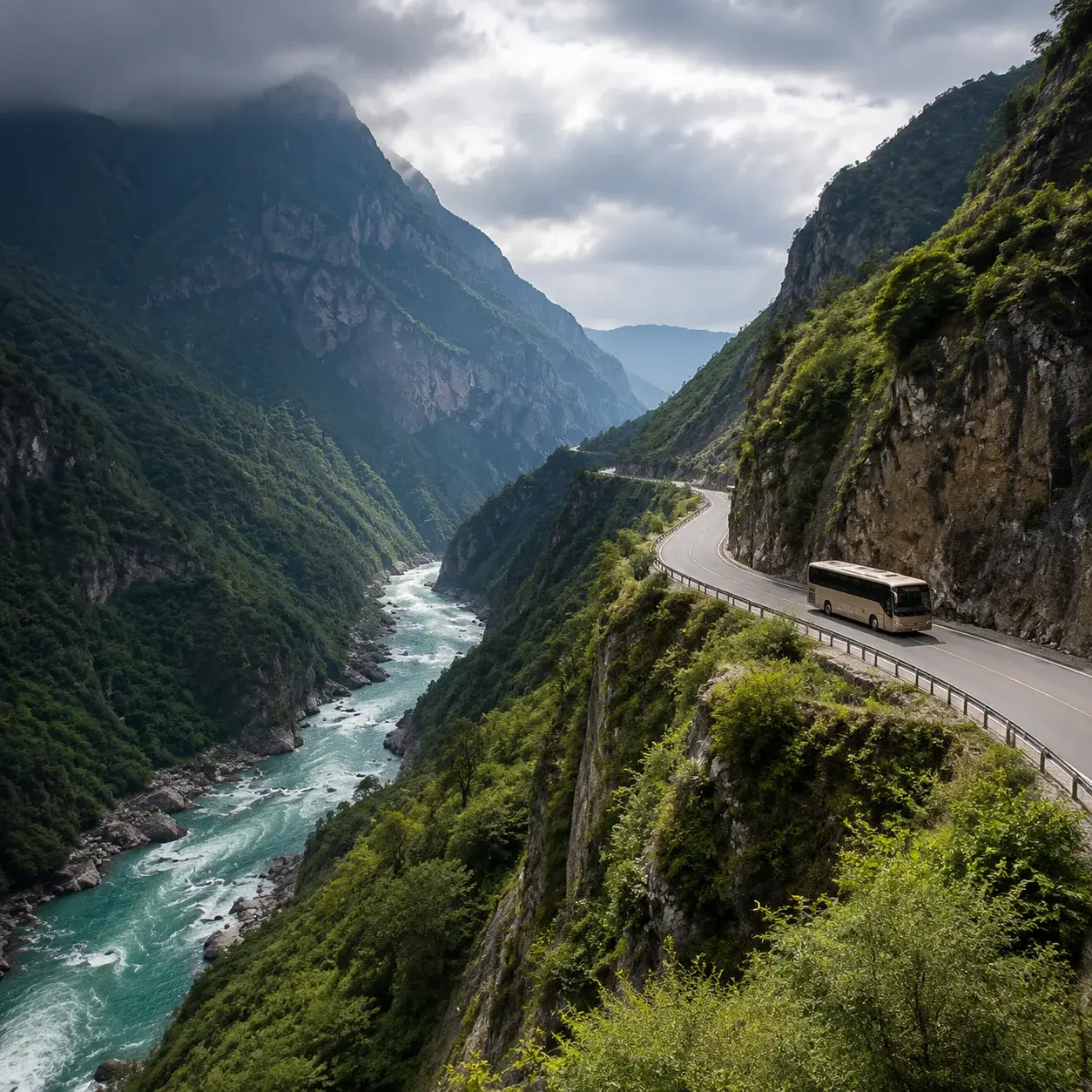
La mayoría de los viajeros llegan a Shangri-La desde Lijiang: el autobús de ~4 horas es el más barato y frecuente, la línea de tren de alta velocidad es la opción terrestre más rápida, y el aeropuerto de Diqing Shangri-La (DIG) conecta con ciudades nacionales como Kunming, Chengdu y Lhasa. Shangri-La no tiene aeropuerto internacional, por lo que los viajeros internacionales deben conectarse primero a través de un continente.
Las tarifas y horarios a continuación son rangos indicativos sujetos a confirmación (verificar 2026); pueden cambiar las tarifas de aerolíneas, trenes y autobuses.
Existe una dimensión de salud que ningún competidor menciona: el viaje terrestre desde Lijiang permite romper la ascensión y aclimatizarse; volar directamente a 3.160 m lo salta. Así que la forma "mejora" de subir no es simplemente la más rápida.
| Modo (desde Lijiang) | Tiempo (verificar) | Tarifa aproximada (verificar 2026) | Amigable para aclimatización | Ideal para |
|---|---|---|---|---|
| Autobús | ~4 h | ~¥80–90 (indicativo) | Máximo — por tierra, subida gradual, puede parar en Tiger Leaping Gorge | Presupuesto; salidas frecuentes; gradiente de altitud más estable |
| Tren de alta velocidad | ~1–2 h (verificar si está en funcionamiento) | (verificar tarifa) | Alto — aún por tierra, solo más rápido a 3.160 m (todavía dormir 2 noches en Lijiang primero) | Opción terrestre más cómoda y rápida |
| Volar al DIG | ~1 h de vuelo | (verificar tarifa según origen) | Bajo — salta completamente la aclimatización | Viajes de larga distancia desde otras ciudades de China, solo si has pasado tiempo a menor altitud primero |
Una advertencia directa: volar desde una ciudad al nivel del mar como Shanghái, Cantón o Hong Kong directamente al aeropuerto de Diqing significa que tu altitud para dormir sube miles de metros en un solo día — exactamente el escenario de ascenso rápido que los CDC señalan como de mayor riesgo. Si tienes una condición cardíaca o pulmonar, estás embarazada, viajas con niños pequeños, o has sufrido AMS moderado a severo antes, la ruta terrestre por Lijiang es más segura — y habla con tu médico primero.
Para la llegada internacional — entrar en China antes de llegar a Yunnan — comienza con tu aeropuerto de entrada, por ejemplo, la guía de llegada al aeropuerto de Pudong de Shanghái o la guía del aeropuerto de Baiyun de Cantón, luego continúa hacia Lijiang.
¿Cuándo es el mejor momento para visitar Shangri-La?
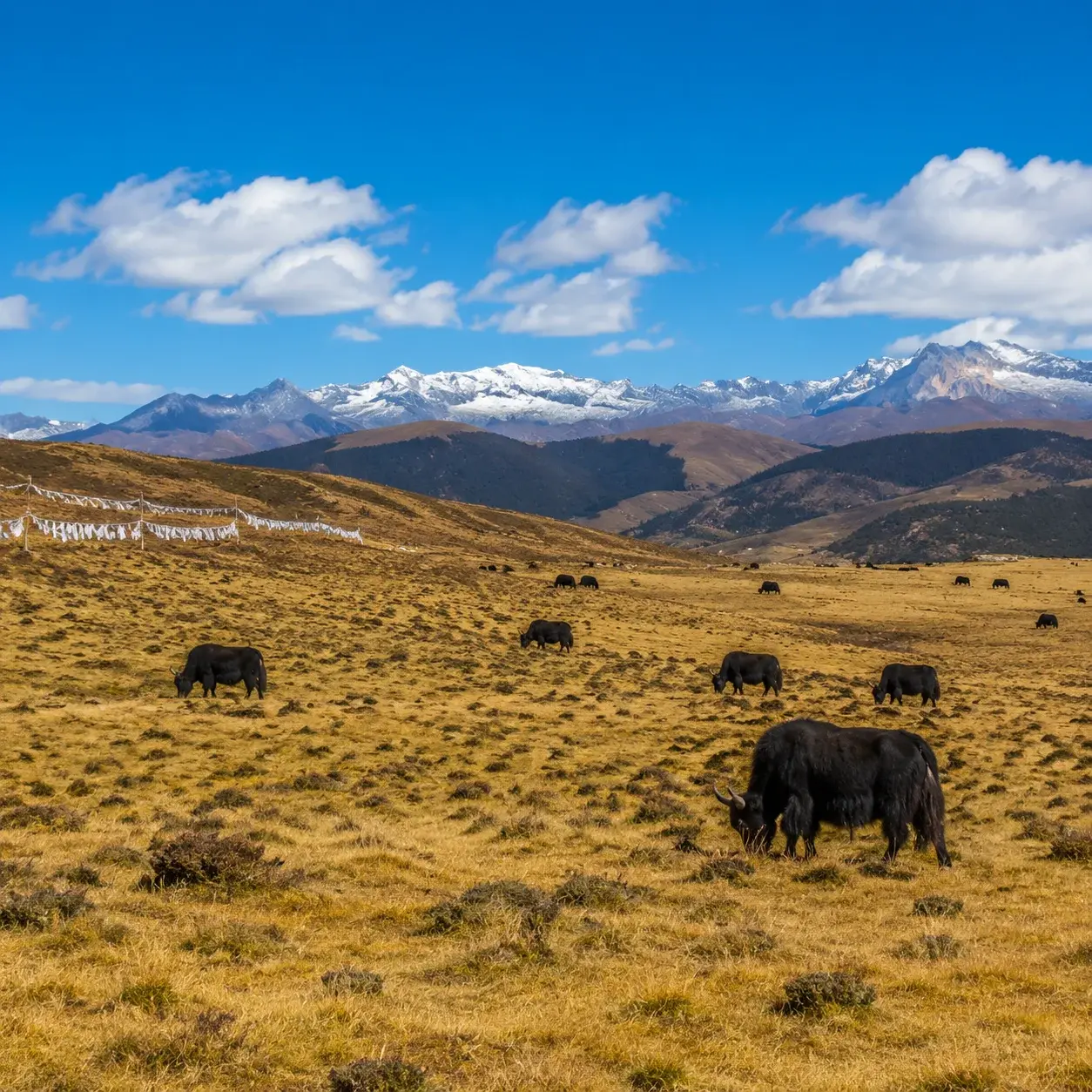
Los dos momentos ideales son la primavera (aproximadamente marzo–junio) para praderas con flores silvestres y el otoño (aproximadamente septiembre–noviembre) para cielos despejados y praderas doradas. El verano es la temporada de lluvias, y el invierno a 3,160 m es severamente frío — una consideración importante para familias y viajeros mayores. Elige tu ventana según lo que realmente quieras ver, no según una temporada "intermedia" genérica.
| Temporación | Qué obtienes | El trueque honesto / advertencia | Ideal para |
|---|---|---|---|
| Primavera (mar–jun) (verificar) | Prados alpinos, flores silvestres, rododendros | Las mañanas y las noches aún son frías (noches de primavera cerca de los 0 °C a 3.160 m); lleva capas abrigadas | Temporada de flores con relativamente menos lluvia |
| Verjulio–ago) | Pastos más verdes | Temporada de lluvias — senderos y carreteras pueden verse afectados, la visibilidad disminuye | Familias vinculadas a las vacaciones escolares (llevar equipo de lluvia, mantener el plan flexible) |
| Otoño (sep–nov) (verificar) | Cielos más despejados, pastos dorados, mejor visibilidad | Multitudes de temporada pico; grandes oscilaciones térmicas entre día y noche | Fotografía y viajeros que buscan días nítidos y claros |
| Invierno (nov–mar) | Menos turistas, paisajes nevados | ❄️ Frío severo a 3.160 m, calefacción insuficiente, algunos parques/carreteras afectados — un verdadero disuasorio para niños, mayores y cualquier persona con problemas de salud | Viajeros resistentes y bien equipados que buscan nieve fuera de temporada |
El trueque que los competidores pasan por alto: el invierno a 3.160 m no es solo "frío". La calefacción insuficiente combinada con el frío de gran altitud es lo que las familias y los viajeros mayores subestiman más — el dinero que ahorras en vuelos fuera de temporada, puedes recuperarlo en un niño tiritando y abuelos que no quieren salir de la pensión. Si tu grupo incluye niños pequeños o familiares mayores, compáralo con las notas de ritmo-altitud de la siguiente sección.
Visitar Shangri-La con Niños o Viajeros Mayores (Precauciones de Altitud)
A los 3,160 m, los niños y los viajeros mayores o de varias generaciones merecen un cuidado extra — no porque la altitud sea extrema, sino porque se sitúa exactamente en la línea donde un ascenso más lento y la opinión de un médico son más importantes. El paso protector más importante es el mismo para todos: dormir dos noches primero en Lijiang y llegar con calma. A continuación, ambos casos incluyen una advertencia médica repetitiva, porque se trata de una decisión de salud.
Viajar con niños. Los CDC afirman que los niños son tan susceptibles al AMS como los adultos — pero los niños pequeños son menos capaces de describir un dolor de cabeza o náuseas, por lo que el ascenso gradual (la parada en Lijiang) importa más, no menos, y el día de llegada requiere un adulto atento. Muévete con lentitud, hidrátate a menudo, lleva capas de ropa cálida, y si un niño se siente mal, trata el posible AMS y no subas más. Consulta con un pediatra antes de viajar, especialmente sobre cualquier medicamento.
Viajar con personas mayores o de varias generaciones. Los CDC señalan que las personas mayores de 50 tienen un riesgo ligeramente menor de AMS en promedio — pero las condiciones subyacentes, no la edad, son la variable real. La enfermedad coronaria, la enfermedad pulmonar crónica y la apnea obstructiva del sueño están todas señaladas para consulta médica antes de viajar a gran altitud. Incluye días de descanso, mantén un gradiente suave, considera tener oxígeno embotellado disponible (verificar disponibilidad local 2026) como ayuda para la comodidad — no como sustituto de la aclimatación — y obtén primero la aprobación de un médico.
El objetivo de esta sección no es asustarte. A 3,160 m la mayoría de los viajeros saludables se encuentran bien con un ritmo sensato; una minoría necesita realmente el visto bueno de un médico. Elegir la pendiente adecuada para tu propio cuerpo es lo que hace que este viaje sea seguro — y si se plantea una combinación de invierno duro, vuelo directo y alerta de salud, la respuesta honesta a veces es reprogramar o quedarse más bajo en Yunnan (Dali y Lijiang).
Preguntas frecuentes
¿Cómo de alto es Shangri-La, y sufriré mal de altura? Shangri-La está a unos 3,160 m (10,370 ft). Es lo suficientemente alto como para que algunos viajeros sufran AMS — dolor de cabeza, náuseas, fatiga — generalmente entre 2 y 12 horas después de llegar (CDC, 2026). Dormir dos noches primero en Lijiang y tomar el día de llegada con calma previene la mayoría de los casos. Consulta a tu médico.
¿Cómo llegar a Shangri-La desde Lijiang? La mayoría de los viajeros toman el autobús de ~4 horas (aproximadamente ¥80–90, verificar 2026), el tren de alta velocidad más rápido (~1–2 horas, verificar si está en funcionamiento), o vuelan al aeropuerto de Diqing. El viaje por carretera es mejor porque permite aclimatizarse en el camino; volar directamente a 3,160 m salta ese proceso.
¿Cuál es el mejor momento para visitar Shangri-La? La primavera (aproximadamente marzo–junio) para praderas de flores silvestres y el otoño (aproximadamente septiembre–noviembre) para cielos despejados y pastos dorados son los momentos ideales (verificar). El verano es la temporada de lluvias; el invierno es severamente frío a 3,160 m y un verdadero disuasorio para familias y viajeros mayores.
¿Es Shangri-La una alternativa adecuada a Tíbet? Sí, para la cultura tibetana sin papeleo innecesario: un monasterio en funcionamiento, ruedas de oración, un casco antiguo tibetano y una altitud más suave, sin necesidad de Permiso de Viaje a Tíbet ni guía obligatoria. Pero no sustituye al Palacio Potala o Lhasa, que requieren permiso TAR y visita guiada (verificado 2026-07-04).
¿Vale la pena visitar Shangri-La y cuántos días necesito? Sí, para viajeros que buscan una auténtica cultura tibeto-budista y paisajes alpinos. Dos o tres días bastan para el Monasterio de Songzanlin, el casco antiguo de Dukezong y un día de parque nacional, con un ritmo cómodo y consciente de la altitud. Es una parada enfocada, no una base de una semana.
¿Se puede visitar Shangri-La con niños pequeños o padres mayores a esa altitud? A menudo sí, con precaución: la escala en Lijiang y un día de llegada lenta son lo más importante, y las capas cálidas son esenciales. Sin embargo, los niños a veces no pueden describir síntomas, y las condiciones preexistentes de los viajeros mayores aumentan los riesgos. Consulte con un pediatra o médico antes de viajar (CDC, 2026).
Conclusión
Shangri-La merece su lugar en un viaje a Yunnan: una ventana auténtica, sin necesidad de permisos, hacia la cultura tibetano-budista, a una altitud que la mayoría de los viajeros pueden manejar con un plan sensato. Toma tres decisiones en orden — vale la pena dedicar 2–3 días concentrados; prepárate para la altitud mediante una ascensión escalonada con dos noches en Lijiang; luego elige cómo llegar y cuándo ir, priorizando el viaje por tierra y las ventanas de primavera u otoño. Si tu corazón está decidido para Lhasa, ese es un viaje diferente, sujeto a permisos; si quieres más altiplano alto, Qinghai y el oeste de Sichuan son los primos más salvajes.
Y si en lugar de eso prefieres no diseñar tú mismo el gradiente de altitud, el ritmo y la logística de Lijiang → Shangri-La —incluyendo niños y abuelos—, este es exactamente el tipo de viaje a Shangri-La, China que LyrikTrip planifica privadamente, en inglés, gestionando para ti los detalles de salud y comodidad. Whatever decidas, asciende despacio, observa cómo te sientes y habla con tu médico antes de ir.