




 18 días China, de principio a fin Pekín → Xi'an → Chuanzhusi → Jiuzhaigou → Chengdu → Zhangjiajie → Guilin → Yangshuo → Shenzhen Desde $6,360 Ver ruta
  8 días Agua pausada, ciudad veloz Shanghái → Yangshuo → Shenzhen Desde $2,350 Ver ruta
  19 días Aguas abajo del Futuro Shenzhen → Guilin → Yangshuo → Chengdu → Chongqing → Yichang → Shanghái Desde $5,360 Ver ruta
  18 días Aire enrarecido, luego nivel del mar Pekín → Xi'an → Chengdu → Lhasa → Chongqing → Yichang → Shanghái Desde $4,900 Ver ruta
  12 días Aún en uso Pekín → Xi'an → Chengdu → Shanghái Desde $4,310 Ver ruta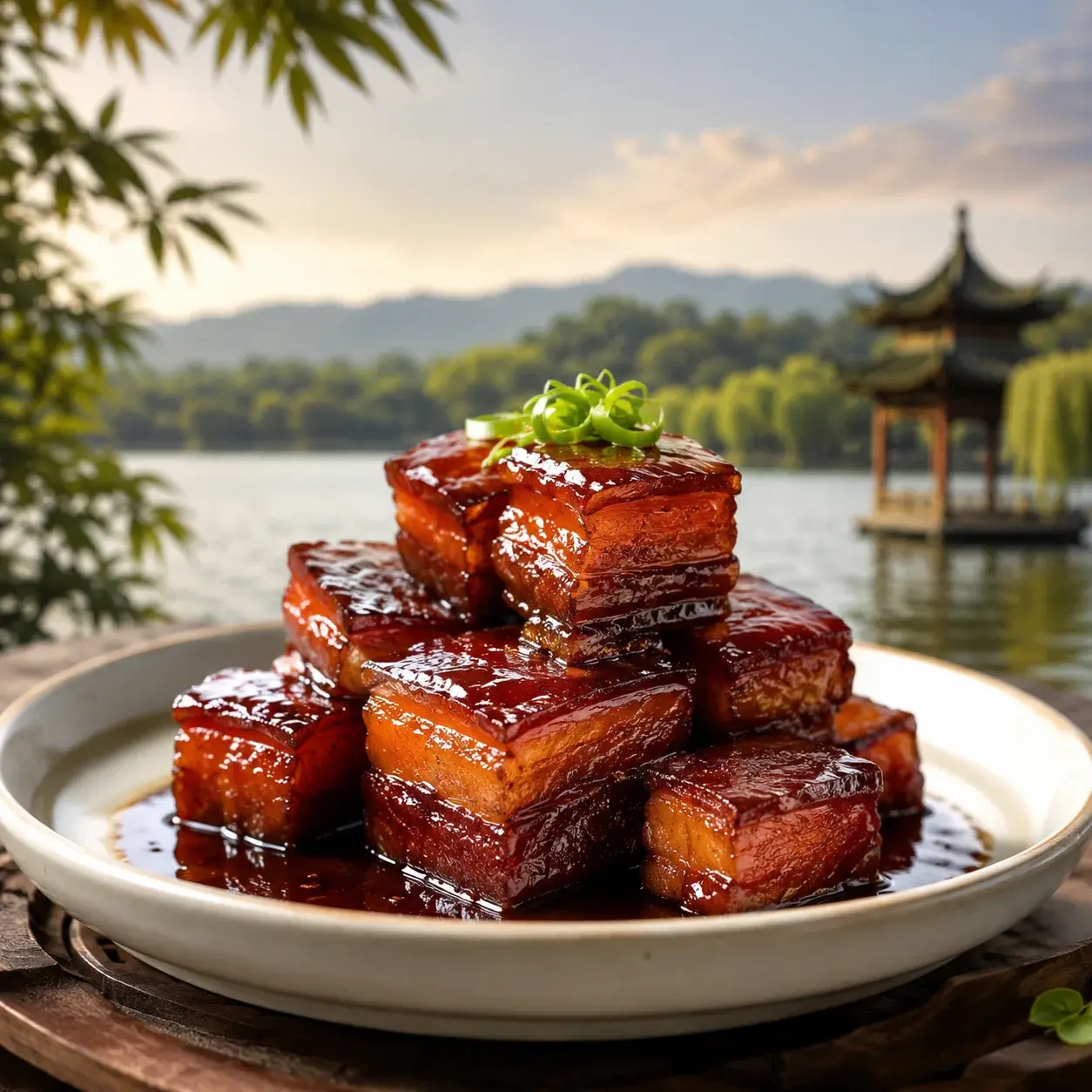
¿Qué es la comida de Hangzhou — qué comer y dónde?
La comida de Hangzhou es refinada, ligera y ligeramente dulce: piense en el pescado al vinagre del Lago Oeste, el tierno cerdo Dongpo que se deshace en la boca, y los camarones de río salteados con té verde Longjing. Es una cocina delicada junto al lago más que fuegos artificiales callejeros — y esta guía de comida de Hangzhou le muestra qué pedir, dónde está la versión auténtica y qué plato insignia vale la pena gestionar sus expectativas.
El interés por la comida de Hangzhou sigue creciendo, y la mayoría de los primeros visitantes llegan con las mismas tres preguntas: ¿qué son estos platos?, ¿dónde encuentro la versión buena y es realmente vale la pena ordenar el famoso pescado al vinagre? Esta guía responde a las tres, honestamente.
Nuestra postura es simple — atrévase a comer, coma bien. No somos un sitio de recetas ni estamos vendiendo un menú fijo. Estamos aquí para ayudarle a tomar buenas decisiones: qué probar, qué lugares se ganan su reputación, cómo dividir su tiempo entre la cena junto al mantel blanco y un mercado nocturno local, y aproximadamente qué presupuestar. Aventura con una red de seguridad.
Principales conclusiones
- La cocina de Hangzhou (杭帮菜 Hangbang) es el estilo predominante de la cocina de Zhejiang — una de las ocho grandes cocinas de China — y su carácter es ligero, fresco, estacional y ligeramente dulce, no picante.
- El plato emblemático, el pescado al vinagre del Lago Oeste, es genuinamente controvertido. Una versión bien elaborada es delicada y limpia; una mala es sosa y con huesos. Pídela en un lugar confiable y sabe lo que estás pidiendo.
- Dos íconos tienen historia real: El cerdo Dongpo lleva el nombre del poeta de la dinastía Song Su Dongpo, y Hangzhou es el lugar de nacimiento del té verde Longjing (Dragon Well), que aparece en la comida, no solo en la taza.
- Restaurante refinado vs. mercado nocturno local es una elección real: instituciones junto al lago para los platos clásicos del banquete; Mercado Nocturno de Wushan por brochetas y bocados baratos y locales.
- Esta es una ciudad del té. Acompañar una taza de Longjing con la comida y comer platos perfumados con té como camarones Longjing es lo que hace distintivo a Hangzhou.
- Los precios a continuación son rangos aproximados de RMB de 2026 y varían según el restaurante, la estación y lo turística que sea la zona — especialmente los clásicos de banquete varían mucho según el salón.
¿Qué hace distintiva la comida de Hangzhou?
Hangzhou es la cuna de la cocina Hangbang (杭帮菜), el estilo representativo de la cocina de Zhejiang — una de las ocho grandes regiones culinarias de China — y su personalidad entera se caracteriza por la mesura: ligera, fresca, estacional, ligeramente dulce y basada en los productos del Lago Oeste y los ríos circundantes, más que en el calor o los condimentos pesados *(identidad culinaria atemporal — citar Wikipedia, "Hangzhou" / "Zhejiang cuisine"; última verificación 2026-07). Si llegas desde Chengdu o Changsha esperando chile, recalibra por completo: esta es una cocina sutil y refinada que busca resaltar sus ingredientes.
Tres cosas dan identidad a la cocina, y dos de ellas vienen con historias reales que vale la pena conocer:
- Es una cocina de lagos y ríos. Peces de agua dulce, camarones pequeños, loto y verduras de temporada dominan — ingredientes extraídos de la cuenca del Lago Oeste y cocinados simplemente para mantenerlos frescos.
- Está profundamente ligada al té Longjing. Hangzhou es el origen del té verde 龙井 Longjing (Dragon Well), cultivado en las colinas al oeste del lago, y el té se incorpora a la comida misma — más famosamente en camarones Longjing (afirmación de origen atemporal — citar Wikipedia; última verificación 2026-07).
- Herencia literaria. El plato más famoso de la ciudad, 东坡肉 Dongpo pork, lleva el nombre de 苏东坡 Su Dongpo (Su Shi), el celebrado poeta y funcionario de la dinastía Song asociado con Hangzhou (afirmación de nombre atemporal — citar Wikipedia; última verificación 2026-07).
Entender que la comida de Hangzhou es refinada y suave, no fuerte ni picante, es la expectativa más útil que establecer antes de sentarse. El placer aquí es la delicadeza — y el plato que más prueba esa delicadeza es precisamente el que la ciudad es famosa por.
¿Cuáles son los platos imperdibles de Hangzhou?
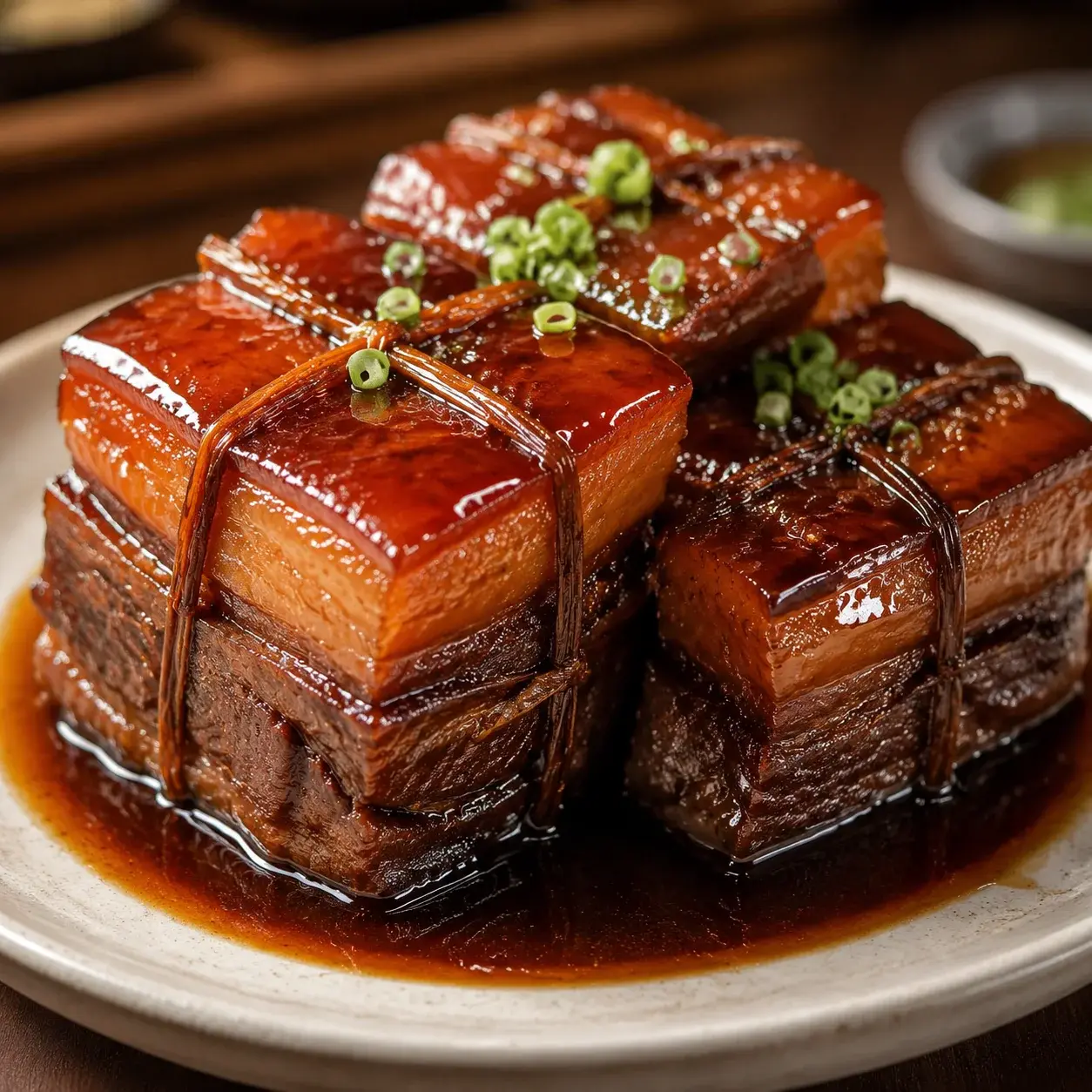
Empieza con el cerdo Dongpo, camarones Longjing y fideos pian er chuan — tres platos que siempre funcionan — y luego decide tú mismo sobre el famoso pero controvertido pez al vinagre del Lago Oeste. Aquí está el canon para primeros visitantes: qué es cada plato, dónde o cómo encontrar la versión auténtica, un precio aproximado para 2026, y —donde importa— una nota sincera. Tratamos cada elemento como una experiencia in situ — cómelos aquí, pidelos así — no como una receta.
| Clasificación | Plato (EN / 中文) | Qué es | Dónde / cómo encontrarlo | RMB aprox. (2026) |
|---|---|---|---|---|
| 1 | Cerdo Dongpo 东坡肉 | Barriga de cerdo estofada en salsa de soja, azúcar y vino de arroz — brillante, oscura, tierna al punto; nombrada en honor a Su Dongpo | Restaurante Hangbang completo; generalmente servido en un pequeño recipiente individual | ~40–90 (plato de restaurante) |
| 2 | Gambas Longjing 龙井虾仁 | Gambas de río pequeñas salteadas con té verde Dragon Well — delicadas, con aroma a té | Restaurantes Hangbang; plato emblemático de la "ciudad del té" | ~60–140 (varía ampliamente según tamaño/calidad de las gambas) |
| 3 | Pian er chuan 片儿川 | Sopa de fideos con brotes de bambú, lonchas de cerdo y verduras encurtidas — el plato cotidiano local | Fideuerías locales por toda la ciudad; clásico fiable y asequible | ~15–30 |
| 4 | Pollo del mendigo 叫化鸡 | Pollo entero envuelto en hoja de loto y arcilla, horneado hasta que está fragante y se deshace | Restaurantes tradicionales de Hangbang; a menudo requiere reserva previa | ~90–180 (entero; compartible) |
| 5 | Pescado al vinagre del Lago Oeste 西湖醋鱼 | Carpa asada en salsa de vinagre agri-dulce — EL plato emblemático, y el más polémico | Establecimiento ribereño confiable (ver nota honesta abajo) | ~60–130 |
| 6 | Pudín de almidón de loto 藕粉 | Pudín de almidón de lote cálido, translúcido y ligeramente dulce, a menudo con osmanthus | Tiendas de bocadillos y puestos de postre; final reconfortante | ~10–25 |
| 7 | Sopa de pescado de la hermana Song 宋嫂鱼羹 | Sopa espesa y ácida de pescado desmenuzado con larga historia junto al lago | Restaurantes clásicos de Hangbang | ~40–80 |
| 8 | Cong bao hui 葱包烩 | Wrap de cebollas y masa frita asado, bañado en salsa dulce-salada — callejero de Hangzhou | Calles antiguas de bocadillos como Hefang Street; puestos de mercado nocturno | ~5–12 |
Si solo vas a probar una cosa, que sea el cerdo Dongpo: es el plato que mejor refleja la filosofía de cocción lenta de Hangzhou, y una olla bien preparada es reconfortante por completo. El underrated cotidiano es el pian er chuan: los locales comen estas fideos de bambú y cerdo constantemente, son baratos y son un aterrizaje mucho más suave que los platos de banquete. Y el que debes probar con claridad es el pez al vinagre del Lago Oeste.
Nota honesta sobre el pez al vinagre del Lago Oeste: es el plato más famoso de la ciudad y también el más polarizador. Bien hecho — pescado fresco, salsa dulce-ácida equilibrada — es limpio y delicado. Mal hecho, puede saber soso, fangoso o desagradablemente huesoso, y muchos visitantes se quedan decepcionados. La solución no es saltárselo, sino pedirlo en una institución lacustre conocida y con reputación comprobada como Louwailou (楼外楼), un lugar que ha servido este plato junto al Lago Oeste durante más de un siglo: mencionado aquí por su reputación duradera, no como una recomendación personal verificada. Ajusta tus expectativas y considéralo como una prueba cultural obligatoria, no como un favorito garantizado. Las identidades de los platos y el contexto de consumo son atemporales; las cifras en RMB son rangos aproximados de 2026 y varían según el restaurante, la estación y lo turística que sea la ubicación.
¿Dónde comer — un restaurante refinado o el Mercado Nocturno de Wushan?
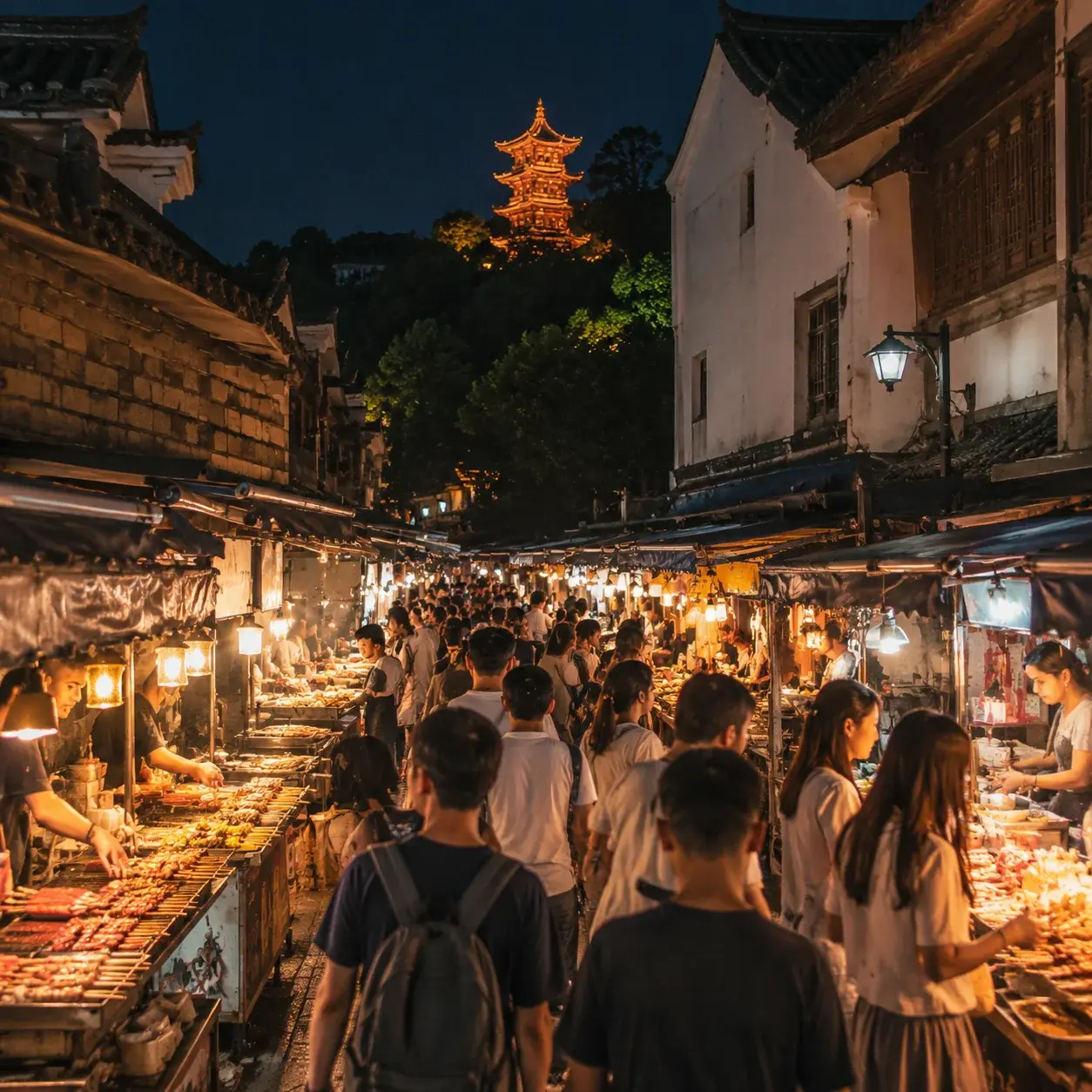
Depende de si quiere los platos clásicos del banquete Hangbang hechos correctamente o la comida callejera barata y cotidiana local — y los dos viven en mundos casi completamente diferentes, que la mayoría de las guías confunden. Las instituciones junto al lago son donde se preparan los platos emblemáticos — pescado con vinagre, cerdo Dongpo, camarones Longjing, pollo mendicante — a su nivel adecuado, a precios de restaurante normales. El mercado nocturno de Wushan es donde los locals se sirven brochetas y bocadillos por un pequeño cambio. Ninguno es "mejor"; responden a diferentes apetitos.
| Punto (EN / 中文) | Ambiente | Precio | Para qué sirve | Ideal para | La advertencia |
|---|---|---|---|---|---|
| Restaurantes Lakeside Hangbang (área de restaurantes del Lago Oeste 西湖) | Dining refinado con vistas al lago; el clásico canon de banquetas | 💰💰–💰💰💰 Más alto | Los platos insignia preparados correctamente: pescado con vinagre, cerdo Dongpo, camarones Longjing, pollo del mendigo | Una verdadera comida de Hangzhou; parejas, familias, primeros visitantes que quieren probar los iconos | Precios turísticos cerca del lago; los nombres famosos se llenan y la calidad puede variar — reputación ≠ garantía |
| Instituciones famosas como Louwailou 楼外楼 | Establecimiento histórico junto al lago de más de un siglo fuertemente asociado con el pescado con vinagre | 💰💰–💰💰💰 Más alto | La versión tradicional de los platos insignia | Pedir los clásicos donde son la especialidad de la casa | Muy popular y turístico; citado por su reputación, no como nuestra opción verificada — reserva con antelación y gestiona las expectativas |
| Mercado Nocturno Wushan 吴山夜市 | Mercado nocturno LOCAL sin friletes — brochetas, bocadillos de cebollino, postres de loto | 💰 Barato | Merienda local cotidiana, no cocina de banquete | Comedores aventureros y con presupuesto limitado; una noche de snacks locales baratos | Más local que turístico; es un escena de bocadillos, así que no esperes aquí los platos insignia refinados
La decisión en una línea: los restaurantes a orilla del lago te ofrecen los auténticos platos de Hangbang bien hechos, si aceptas los precios del restaurante y las posibles multitudes; el Mercado Nocturno de Wushan te ofrece una comida local auténtica y barata, a cambio de un menú completamente diferente (de callejón). Un día gastronómico inteligente en Hangzhou hace ambas cosas: almuerzo o cena sentados para los platos emblemáticos, y una paseo nocturno por el mercado nocturno para brochetas y un cálido postre de loto. Para la experiencia de la vieja calle de bocadillos entre las dos, Hefang Street (河坊街)** es la opción turística tradicional pero divertida para cosas como cong bao hui. La división misma es nuestro marco editorial y se mantiene; los puestos específicos, horarios y menús actuales son los que debes confirmar sobre el terreno.
¿Qué pasa con el té Longjing — cómo encaja en una comida de Hangzhou?
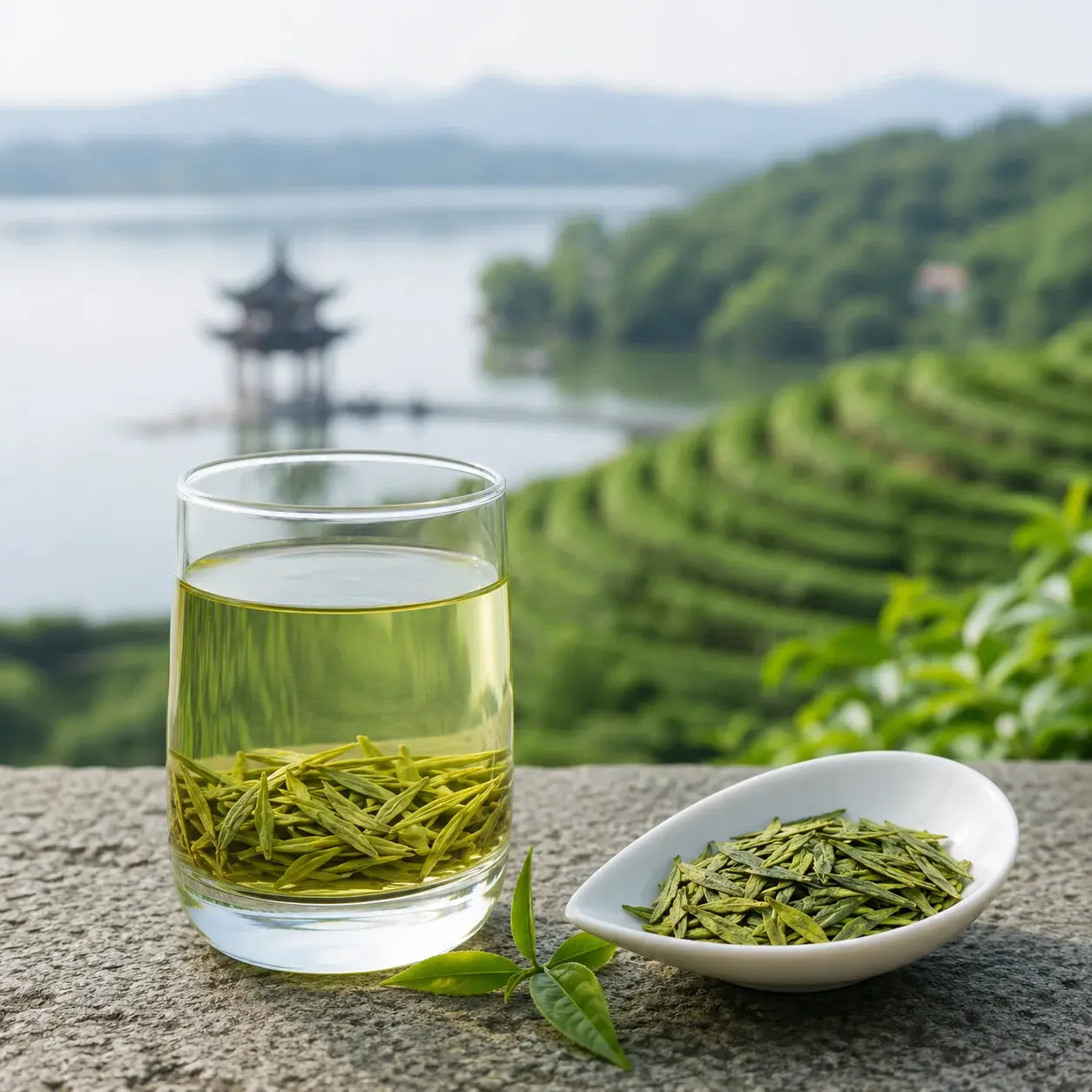
Hangzhou es primero una ciudad de té y luego una ciudad de comida, así que lo más inteligente que puedes hacer es tratar el té como parte de la comida — tanto como bebida junto con la comida como ingrediente en ella. El té verde Longjing (Dragon Well) se cultiva en las colinas justo al lado del Lago Oeste, y emparejarlo con la cocina de Hangbang es el enfoque que hace que comer aquí se sienta distintivamente hangzhouano y no genéricamente chino. Aquí tienes cómo usarlo.
| El ángulo del té | Qué es | Cómo disfrutarlo | Nota |
|---|---|---|---|
| Camarones Longjing | La firma "té en el plato" — camarones de río salteados con hojas de Dragon Well | Pídalo como plato principal; saboree la suave fragancia de té con hierba contra la dulzura de los camarones | El ejemplo más claro de té como alimento, no solo como bebida |
| Una taza de Longjing con la comida | Té verde ligero y herboso de Dragon Well | Bébelo durante una comida rica — corta la dulzura del cerdo Dongpo con elegancia | Las hojas pre-Qingming (primavera temprana) son las más apreciadas; la calidad y el precio varían enormemente |
| Merienda en la casa de té junto al lago | Longjing servido con pequeños bocadillos dulces o salados | Una pausa relajada entre las visitas turísticas y la cena | El ritmo tranquilo de la casa de parte del encanto de Hangzhou |
| Comprar té para llevar a casa | Hojas sueltas de Longjing como comestible souvenir | Compre hojas selladas y fechadas de un vendedor confiable; tenga cuidado con el muy barato "Lago Oeste Longjing" | Las hojas genuinas del Lago Oeste tienen un precio premium; aproximado, no exacto, precio |
La lógica de la combinación es simple y atemporal: un té verde ligero, con hierbas, es un contrapunto natural para los platos de Hangzhou, ligeramente dulces y estofados con soja, limpiando el paladar entre los ricos bites del cerdo Dongpo y complementando la delicadeza del camarón. No necesitas ser un experto en té — solo pide una taza de Longjing con tu comida y nota cómo cambia la comida. Las categorías específicas, añadas y precios son lo que varía y lo que confirma al punto de compra.
¿Es la comida de Hangzhou dulce, y pueden los que evitan la pimienta, los niños o los vegetarianos comerla?
Sí, la comida de Hangzhou tiende a ser ligeramente dulce — y eso es buena noticia para la mayoría de los visitantes, porque también significa que es una de las ciudades más suaves y familiares de China. La naturaleza ligera, ligeramente dulce y no picante de la cocina de Hangbang la convierte en un fácil punto de partida para palados cautelosos, niños y cualquier persona harta del chile.
Para los que evitan la pimienta y las familias, Hangzhou es como un puerto seguro: cerdo Dongpo, camarones Longjing, fideos pian er chuan, pudín de loto y la mayor parte del canon llevan poco o nada de calor. Lo principal que controlar es la dulzura y los huesos — algunos platos (y la salsa de pescado con vinagre) son deliberadamente dulces, y los peces de agua dulce como la carpa en el pescado con vinagre son espinosos, así que vigila a los niños con los platos de pescado. Los fideos pian er chuan y el tibio pudín de loto son entre las opciones más suaves y aptas para niños de la ciudad.
Los vegetarianos tienen más opciones aquí que en muchas ciudades de la comida china — el loto, los brotes de bambú, las verduras de temporada y el tofu son muy comunes — pero mantente atento: los caldos y salsas a menudo contienen carne, grasa o camarones secos, incluso cuando un plato parece ser de origen vegetal, y los platos famosos son mayoritariamente de carne o marisco. Las opciones más seguras son los platos de verdura y bambú, el pudín de loto simple y los cuencos de fideos claramente vegetarianos (confirma el caldo). Aprende la pregunta ¿hay algo vegetariano? yǒu sù de ma? — "¿tienes opciones vegetarianas?" La técnica de pedido es siempre útil; las opciones de un restaurante específico siempre vale la pena confirmar.
¿Cuánto cuesta la comida de Hangzhou y cómo se paga?
Presupuesta aproximadamente 30–200 RMB por persona, dependiendo de si estás picando en los mercados nocturnos o cenando los platos clásicos de banquete — porque un plato de pian er chuan y una cena de camarones al Longjing pertenecen a precios completamente diferentes. Hangzhou abarca desde auténticas y económicas fiterías y puestos de mercado nocturno hasta costosas instituciones junto al lago, por lo que tu factura refleja mucho más el entorno que la ciudad.
| Categoría | Apariencia | Aprox. RMB (2026) |
|---|---|---|
| Degustación local | Fideos Pian er chuan o brochetas del Mercado Nocturno de Wushan + pudín de loto | ~20–50 / persona |
| Muestra de platos emblemáticos | Cerdón Dongpo compartido + plato de fideos o sopa de pescado + té en un restaurante Hangbang de gama media | ~80–160 / persona |
| Banquete completo junto al lago | Pescado con vinagre + camarones Longjing + cerdón Dongpo + pollo mendigo en una institución famosa junto al lago | ~150–300+ / persona |
En cuanto al pago: se acepta el pago móvil (Alipay y WeChat Pay) casi en todas partes de Hangzhou — la empresa matriz de Alipay tiene su sede aquí, por lo que la ciudad es tan sin efectivo como se puede en China, incluso en los puestos más pequeños. A partir de 2026, los visitantes extranjeros pueden vincular una tarjeta Visa o Mastercard directamente a estas aplicaciones — no se necesita cuenta bancaria china — por lo que la configuración es mucho más fácil que antes. De todos modos, lleve algo de efectivo para los vendedores más pequeños del mercado nocturno, que ocasionalmente lo prefieren. Las cifras anteriores son rangos aproximados de 2026 y varían según el restaurante, la temporada y lo turística que sea la zona — especialmente los clásicos del banquete.
Preguntas frecuentes
¿Qué comida es famosa de Hangzhou? Hangzhou es conocida por la refinada cocina Hangbang (Zhejiang) — ligera, fresca y ligeramente dulce en lugar de picante. Sus íconos son el pescado con vinagre del Lago West, el cerdón Dongpo (nombrado después del poeta Su Dongpo), los camarones Longjing salteados con té verde Dragon Well, el pollo mendigo y los fideos Pian er chuan.
¿Es bueno el pescado al vinagre del Oeste del Lago? Es polémico, honestamente. Una versión bien hecha — carpa fresca en una salsa dulce-agrada equilibrada — es delicada y limpia, pero una mala puede saberse sosa o con huesos, y muchos visitantes se quedan decepcionados. Pídela en un establecimiento de confianza junto al lago y considérala como una experiencia cultural obligatoria, no como un favorito garantizado.
¿Qué es el cerdo Dongpo? Pork Dongpo (东坡肉) es panza de cerdo estofada a la roja en salsa de soja, azúcar y vino de arroz hasta quedar oscura, brillante y tierna al punto. Lleva el nombre de Su Dongpo (Su Shi), el celebrado poeta-funcionario de la dinastía Song asociado con Hangzhou, y es sin duda el plato más emblemático y fiablemente delicioso de la ciudad.
¿Dónde comer en Hangzhou? Divide tu día. Para los platos típicos preparados correctamente, elige un restaurante Hangbang junto al lago — instituciones conocidas como Louwailou son famosas por el pescado al vinagre, citadas por su reputación. Para una comida económica y local, dirígete al Mercado Nocturno de Wushan para brochetas y bocadillos, o a la Calle Hefang para comida callejera tradicional.
¿Es la comida de Hangzhou dulce? Sí, suavemente. La cocina Hangbang tiende a ser ligeramente dulce y estofada en soja, más que picante, por lo que es una de las ciudades más suaves y familiares de China. Si no te gusta lo dulce, ten en cuenta que platos como el cerdo Dongpo y la salsa del pescado al vinagre son deliberadamente dulces-salados — pregunta y elige en consecuencia.
¿Qué comer cerca del Lago Oeste?
En las cercanías del lago, priorice los clásicos de Hangbang en un restaurante de mesa: cerdo Dongpo, camarones Longjing y, con expectativas gestionadas, pescado al vinagre del Lago Oeste, idealmente acompañado de una taza de té Longjing. Para una opción más ligera, un bowl de fideos pian er chuan o un pudín de loto tibio es una opción suave y asequible.
Conclusión
Hangzhou premia a los comensales que llegan esperando delicadeza más que fuegos artificiales —una refinada y ligeramente dulce cocina junto al lago donde el cerdo se deshacha, los camarones saben a té y los fideos son la cotidianidad reconfortante. Pida primero los íconos confiables, abóquese al famoso pescado al vinagre con ojos claros en un lugar respetable, reparta su tiempo entre una adecuada comida junto al lago y un paseo por el Mercado Nocturno de Wushan, y deje que una taza de Longjing junte toda la comida. Atrévase a comer, coma bien.
Si prefiere que alguien navegue por la capa local —la institución junto al lago correcta, los auténticos puestos del mercado nocturno y el té, sin el trabajo de adivinar el idioma y las expectativas— una experiencia gastronómica personalizada de Hangzhou hace exactamente eso.
Siga explorando: nuestro pilar sobre  la escena de calle de China, la guía sobre comida de mercado nocturno y si vale la pena un recorrido gastronómico guiado.