


Private Routes
丝绸之路精华之旅:从西安到喀什10日游 10d $4,160 丝绸之路精华之旅:从西安到喀什10日游 2026年7月 Read Article 深度北京 — 长城与故宫,轻松游 4d $970 深度北京 — 长城与故宫,轻松游 2026年7月 Read Article 真实中国:12日小团探险之旅 12d $3,120 真实中国:12日小团探险之旅 2026年7月 Read Article 经典中国与云南:从北京到香格里拉和上海的18天之旅 18d $5,840 经典中国与云南:从北京到香格里拉和上海的18天之旅 2026年7月 Read Article 免签中国之旅:13天,从北京到香港 13d $3,640 免签中国之旅:13天,从北京到香港 2026年7月 Read Article

China Customs Allowance: What You Can Bring In and What to Declare

A visitor to China may bring in, duty-free, 400 cigarettes, 1,500 ml of alcohol above 12% ABV, and personal-use goods worth up to RMB 2,000; you must declare cash over RMB 20,000 or foreign currency over USD 5,000 equivalent. Anything over these limits goes through the red channel. Below are the current rules, per China Customs (GACC).

Customs is the last hurdle between a long-haul flight and your first day in China, and it's the one most families worry about needlessly. The rules are actually simple and generous for ordinary travelers — a bottle or two of wine, a carton of cigarettes, and the gifts and gadgets in your suitcase are almost always fine. The friction comes from not knowing the numbers, hesitating at the green-vs-red channel split, or carrying more cash than you realized needs declaring.

This guide lays out the current China Customs allowances for inbound travelers in plain terms: how much alcohol and tobacco you can carry, the cash and currency thresholds, what has to be declared, and how the green and red channels work. Every allowance figure below is sourced to the General Administration of Customs of China (GACC) and dated. One honest caveat up front: customs rules change, and enforcement varies by port — always verify the current figures on the official GACC portal before you travel.

Key Takeaways

- Tobacco: 400 cigarettes duty-free (or 100 cigars, or 500 g of tobacco) per adult, per entry — half that if you arrive from Hong Kong or Macao. - Alcohol: 1,500 ml of drinks at 12% ABV or higher, duty-free, per adult, per entry. - Cash is a declaration threshold, not a ban. Over RMB 20,000 or over USD 5,000 equivalent in foreign currency must be declared — but you can still carry it. - Personal-use goods: non-residents get roughly RMB 2,000 duty-free; residents get RMB 5,000. Excess is dutiable, not confiscated. - Green channel = nothing to declare. Red channel = anything over a limit, restricted, or you're unsure. When in doubt, go red. - YMYL note: these are GACC figures verified July 2026. Rules and enforcement change — confirm on the official portal before travel.

How Much Alcohol and Tobacco Can You Bring Into China Duty-Free?

Each adult visitor may bring in, duty-free, 1,500 ml of alcoholic drinks with 12% ABV or higher, and 400 cigarettes (or 100 cigars, or 500 grams of tobacco), per entry. These are the standard allowances China Customs (GACC) applies to inbound international passengers.

Two details catch travelers out. First, the alcohol allowance is defined by strength: the 1,500 ml figure applies to drinks at 12% ABV or above — think wine and spirits. Second, if you enter mainland China from Hong Kong or Macao, the allowances are halved: 200 cigarettes (or 10 cigars, or 250 g of tobacco) and 750 ml of alcohol. This trips up travelers who route through Hong Kong on the way in.

Go over the limit and it isn't confiscated — the excess is simply treated as dutiable goods, and you clear it through the red channel and pay duty. For a couple of bottles of wine bought at duty-free and a carton of cigarettes, most travelers are comfortably within the allowance. For the reverse — buying spirits or cigarettes at the airport shop as you arrive — see the duty-free-on-arrival section below.

What Is the Full China Customs Allowance? (Hero Table)

The table below is the at-a-glance version of the inbound allowances, with the "declare if over" trigger for each category. All figures are per adult passenger, per entry, sourced to China Customs (GACC).

CategoryDuty-free allowance (per adult, per entry)Declare / red channel if over
Cigarettes400 cigarettesOver 400 (over 200 if arriving from HK/Macao)
Cigars100 cigarsOver 100 (over 10 from HK/Macao)
Loose tobacco500 gOver 500 g (over 250 g from HK/Macao)
Alcohol (≥12% ABV)1,500 mlOver 1,500 ml (over 750 ml from HK/Macao)
Personal-use goods — non-residentRMB 2,000 total valueOver RMB 2,000 (20% duty on the excess)
Personal-use goods — residentRMB 5,000 total valueOver RMB 5,000 (20% duty on the excess)
Chinese currency (RMB cash)Declaration threshold, not a duty-free capOver RMB 20,000 — must declare
Foreign currency (cash)Declaration threshold, not a duty-free capOver USD 5,000 equivalent — must declare

Source: General Administration of Customs of China (GACC), "Customs Clearance Guide for International Passengers," english.customs.gov.cn — figures verified 2026-07-03. The 2025 GACC Order No. 276 (Measures for Customs Supervision of Inbound and Outbound Luggage and Articles, effective 1 April 2025) governs this framework. Rules change; verify on the official portal before travel.

How Much Cash Can You Bring Into China?

There is no ban on how much money you can carry into China, but you must declare it once you exceed RMB 20,000 in Chinese currency or the equivalent of USD 5,000 in foreign currency cash. These are declaration thresholds, not hard caps — crossing them is legal, provided you declare through the red channel.

This is the single most misunderstood China Customs rule. The RMB 20,000 figure is often wrongly described online as a limit on how much cash you're "allowed" to bring in. It isn't a limit on possession; it's the point at which the money must be declared. Above USD 5,000 equivalent in foreign banknotes, the same applies — declare it, and be ready to show the source and intended use of the funds if asked.

For nearly every family traveler, this is a non-issue: China runs on mobile payments (Alipay and WeChat Pay now accept many foreign cards), and you'll rarely need large cash. If you are carrying serious cash — for a property viewing, a big purchase, or simple caution — declare it, keep documentation, and don't try to split it across family members to duck the threshold, which customs treats as evasion. Undeclared amounts over the threshold can be held or fined.

For the customs and immigration paperwork that pairs with this — including the digital arrival card every traveler now files — see our China arrival card guide.

What Do You Have to Declare at China Customs?

You must declare anything over the duty-free allowances, cash over the currency thresholds, and any prohibited or restricted goods — plus anything you're genuinely unsure about. If a single category on the table above is over the line, you declare and take the red channel.

In practice, declare if you are carrying any of the following:

- Over the tobacco or alcohol allowance (more than 400 cigarettes / 1,500 ml). - Cash over RMB 20,000, or foreign currency over USD 5,000 equivalent. - Personal goods above the RMB 2,000 (non-resident) value limit — expensive gifts, high-value electronics you don't plan to take home, commercial samples. - Restricted items: fresh food, meat and dairy, plants, seeds, and soil; large quantities of medicine; certain cultural relics or valuables you intend to re-export. - Anything prohibited (see the final section) — though prohibited items shouldn't be brought at all.

The safest rule of thumb: if you'd have to think twice about whether something is allowed, declare it. Declaring an item that turns out to be fine costs you nothing but a minute at the red channel; failing to declare something that wasn't allowed can mean confiscation or a fine. Customs officers can and do X-ray checked and carry-on bags, so guessing is a poor bet.

Green Channel vs Red Channel: Which One Do You Use?

Take the green channel ("Nothing to Declare") only if everything you're carrying is within the duty-free allowances and none of it is restricted; take the red channel ("Goods to Declare") if any limit is exceeded, anything is restricted, or you're not sure. China uses this standard two-channel system at all international ports.

The green channel is a self-declaration that you're within every limit. It is not a free pass — choosing green does not stop customs from selecting you for inspection, and if a spot-check finds you over an allowance in the green channel, that's a customs violation, not an honest mistake. The red channel is simply where you go to declare, pay any duty, and clear over-limit or restricted goods. It is routine and, for most travelers who use it, quick.

For a family arriving together, the allowances are per adult passenger, so a couple's combined wine and tobacco allowance is double a single traveler's — but don't pool one person's over-limit purchase under another family member's name to stay green; assess honestly, and if the household total for any one person is over, that person takes the red channel. When unsure, red is always the correct and safe choice.

What Are the Duty-Free Limits on Gifts and Other Goods?

Non-resident visitors may bring in personal-use articles worth up to about RMB 2,000 duty-free; Chinese residents returning home get up to RMB 5,000. Above those values, customs levies duty (commonly 20%) on the excess portion — the goods aren't seized, just taxed. This covers the everyday category most tourists care about: gifts, cameras, laptops, watches, and souvenirs.

For a typical holiday, you'll be well within this. The limit matters if you're carrying a high-value gift or a piece of luxury electronics or jewelry you intend to leave in China. Note that genuinely personal effects you'll take home again — your own phone, laptop, and camera in normal quantities — are treated as personal belongings, not dutiable imports. The RMB 2,000/5,000 test is aimed at goods entering China to stay, and at anything that starts to look commercial in quantity.

If you exceed the value limit, you clear the excess through the red channel and pay the duty; you don't have to abandon the item. Because the duty and the "personal use" judgment are at the officer's discretion, keep receipts for valuable items so you can substantiate their value and purpose.

Can You Buy Duty-Free on Arrival in China?

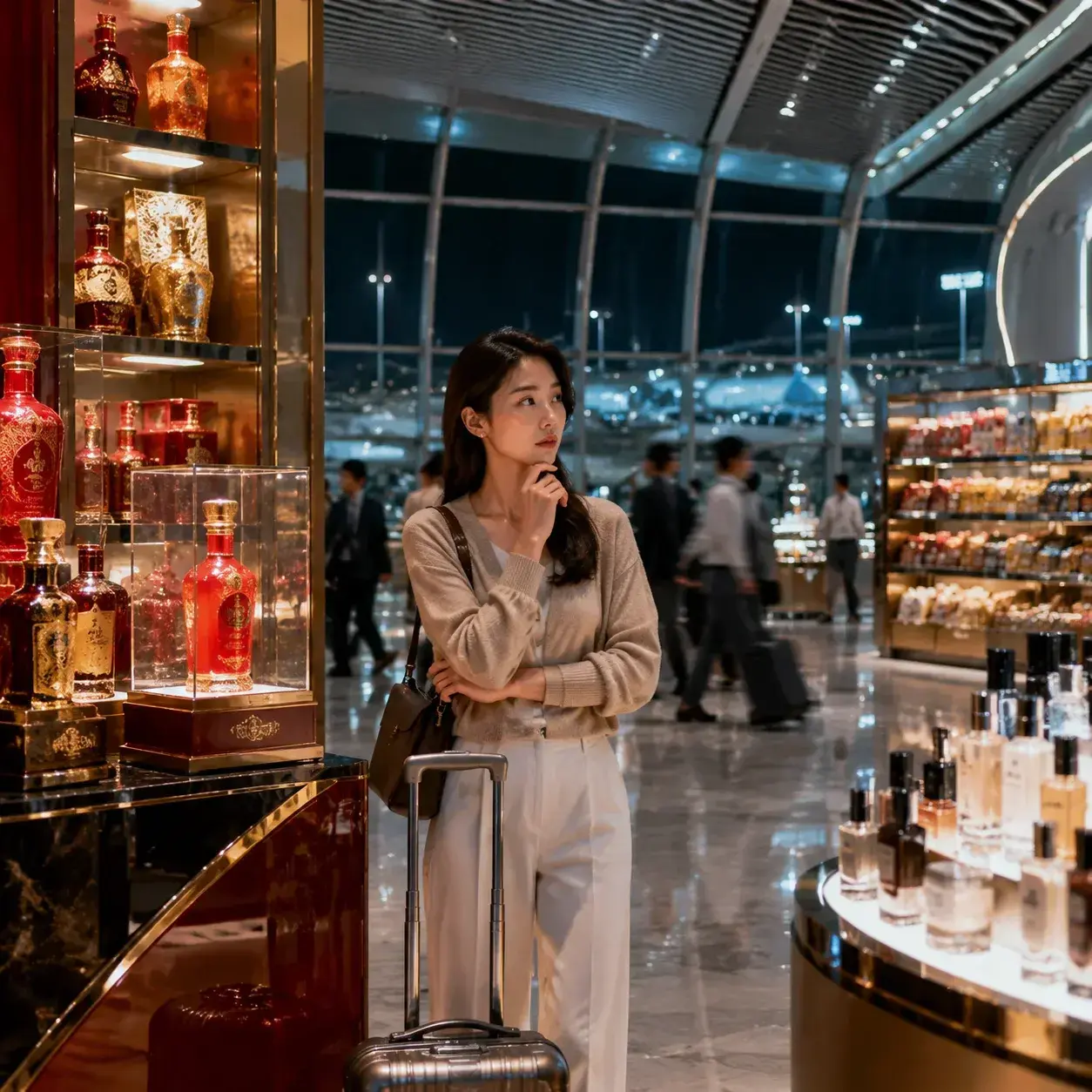
Yes — major Chinese international airports have arrivals duty-free shops, so you can buy alcohol, tobacco, cosmetics, and confectionery after you land but before you clear customs; those purchases still count toward your inbound duty-free allowance. This is the reverse angle many travelers miss: buying at the airport doesn't create a separate, extra allowance.

Arrivals duty-free is convenient — you skip carrying bottles across the world — but the 1,500 ml alcohol and 400-cigarette limits are totals for what you bring into the country, including anything bought at the arrivals shop. Buy two liters of spirits on arrival and you're already over the alcohol allowance and should declare the excess. On the way out, departures duty-free at Chinese airports follows the destination country's import rules, not China's, so check your home country's allowance before you load up.

China's downtown and airport duty-free scene has grown fast, and for a full walkthrough of what's worth buying, where the shops are, and how arrivals vs departures pricing compares, see our China airport duty-free shopping guide.

What Can't You Bring Into China at All?

Some goods are outright prohibited — weapons, illegal drugs, counterfeit goods, and products made from endangered species — while others are restricted and need permits or declaration, including fresh food, plants and seeds, live animals beyond limited pets, and larger quantities of medication. These sit outside the allowance framework entirely: no value limit makes a prohibited item admissible.

Key restricted-item points for family travelers:

- Medicines must be for personal use — generally a supply of around a week is fine; a longer supply needs a doctor's note and the original prescription, and controlled drugs (strong painkillers, sedatives, anything with ephedrine) may need a permit. - Fresh and animal-origin food — meat, dairy, fruit, and seeds — is heavily restricted for biosecurity; leave it out of your bag. - Plants, seeds, and soil require a pre-entry permit from GACC that cannot be issued at the airport. - Pets: only cats and dogs count as pets, one per person per entry, and they face a quarantine process on arrival.

This is also part of the broader entry picture — visas, the arrival card, and health rules — which we cover in our China entry requirements for tourists guide. Because prohibited- and restricted-item lists are updated periodically, confirm anything borderline on the official GACC portal before you fly.

Frequently Asked Questions

How many cigarettes and how much alcohol can I bring into China? Per adult, per entry: 400 cigarettes (or 100 cigars, or 500 g of tobacco) and 1,500 ml of alcohol at 12% ABV or higher, duty-free. Arriving from Hong Kong or Macao halves these limits. Anything over goes through the red channel — verify current GACC figures before travel.

Is there a limit on how much cash I can bring into China? There's no cap on possession, but you must declare cash over RMB 20,000 or foreign currency over USD 5,000 equivalent. These are declaration thresholds, not bans — declare through the red channel and be ready to show the source of large sums. Confirm current thresholds on the GACC portal.

Should I use the green channel or the red channel? Use the green channel only if everything is within the duty-free allowances and nothing is restricted. Use the red channel if any allowance is exceeded, anything is restricted, or you're unsure. Green isn't a free pass — customs can still inspect, and being over-limit in green is a violation.

What happens if I go over the duty-free allowance? You're not fined for honest excess — you declare it in the red channel and pay duty on the portion over the limit (commonly 20% on goods over the value allowance). Failing to declare is the problem: undeclared over-limit goods or cash can be seized or fined. When unsure, declare.

Do these China Customs rules change? Yes. Allowances, currency thresholds, and restricted-item lists are set by GACC and revised periodically — the current framework runs under GACC Order No. 276 (effective April 2025). The figures here are verified July 2026. Always confirm the current rules on the official GACC portal before you travel.

Clearing Customs With Confidence

For nearly every family arriving in China, customs is a formality: a couple of bottles of wine, a carton of cigarettes, gifts, and your own gadgets sit comfortably inside the allowances, and you walk the green channel in a minute. The rules that trip people up are the ones this guide fixes — the cash thresholds that are declaration triggers rather than bans, the halved allowances from Hong Kong and Macao, and the simple discipline of choosing red whenever you're over a line or genuinely unsure.

Because these are GACC figures and enforcement can shift, treat this as your starting map, not the final word: confirm the current allowances on the official portal before you fly. And if you'd rather not manage the fine print at all, LyrikTrip's private China trips include arrival support — a bilingual guide who meets you, walks you through customs and the arrival card, and makes sure your family's first hour in China is the easy one. Tell us your dates, and we'll take the arrival off your plate.