




 10 days Reunion Feast Guangzhou → Shantou → Jieyang → Chaozhou → Jinjiang → Quanzhou → Anxi → Zhangzhou → Xiamen From $4,000 View route
 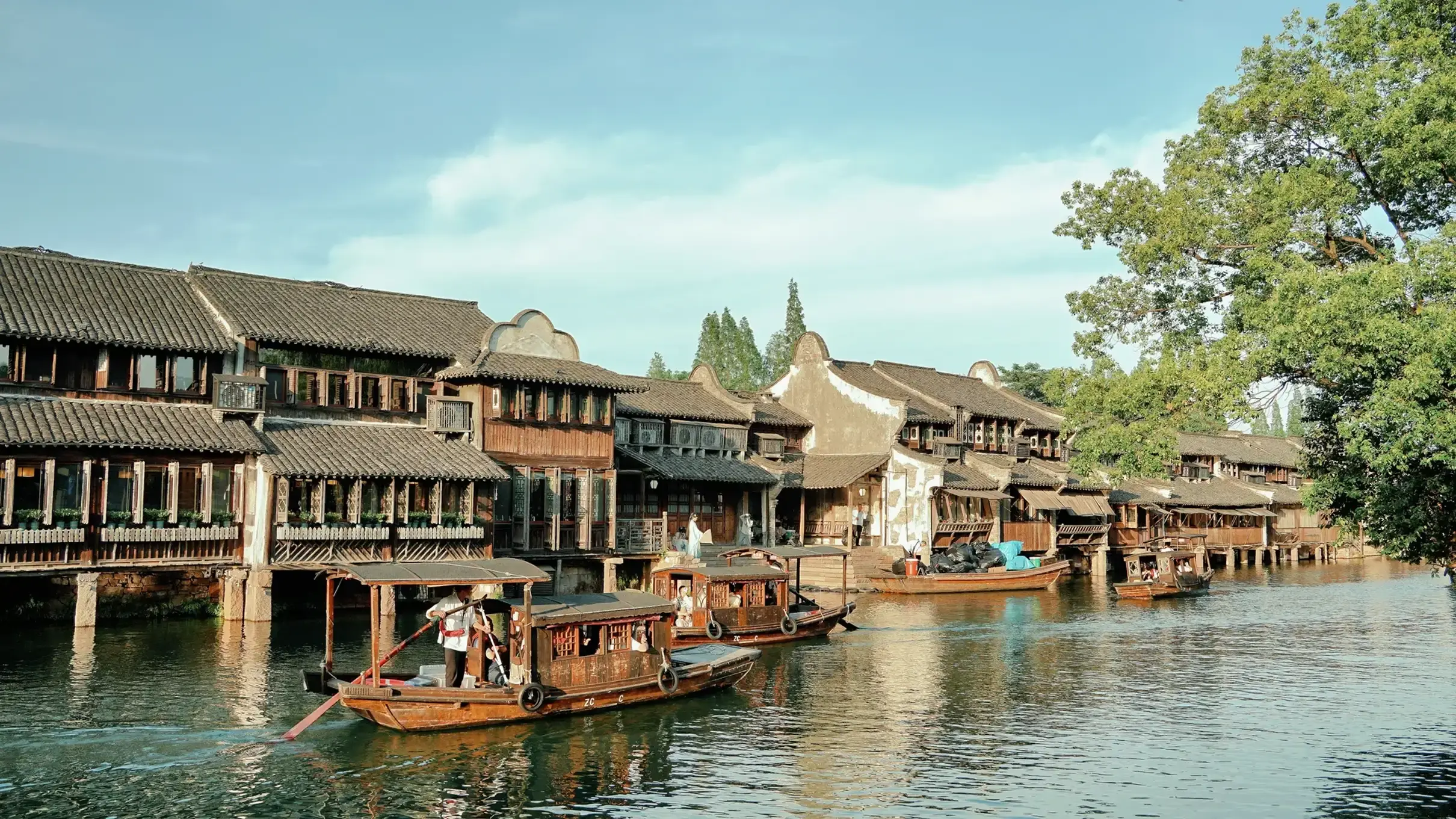 6 days Riverside Jiangnan Shanghai → Zhouzhuang → Suzhou → Wuzhen → Hangzhou From $1,032 View route
 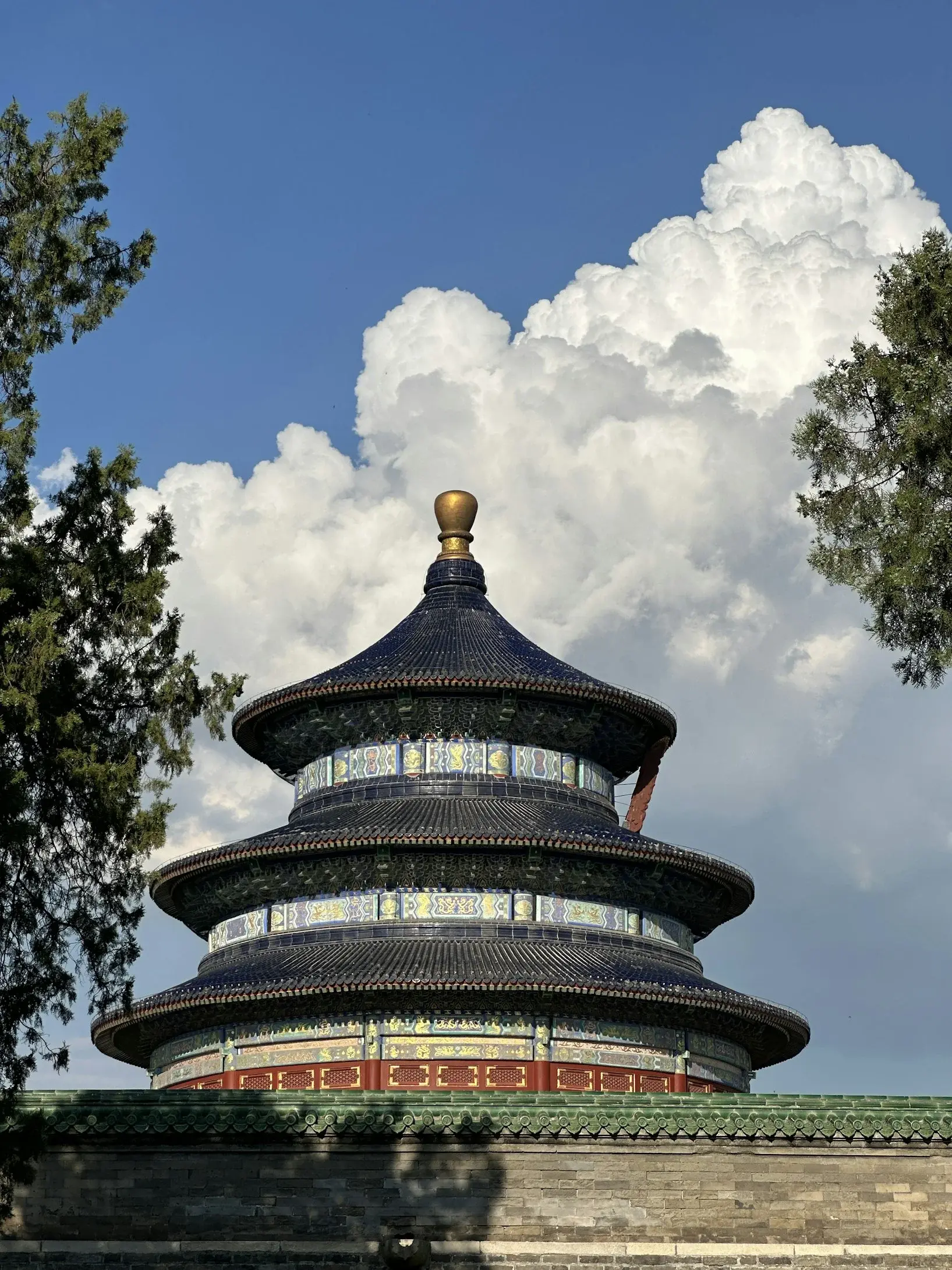 5 days Beijing, on One Line Beijing From $1,750 View route
 TL;DR
Avoid three peak periods in 2026—Spring Festival (15–23 Feb), Labour Day (1–5 May), and National Day (1–7 Oct)—when 300–900 million domestic tourists flood attractions, hotel prices surge 50–100%, and train tickets sell out weeks in advance. During the 2025 National Day holiday alone, China recorded 888 million domestic tourist trips and ¥809 billion ($113.8 billion) in tourism spending (Ministry of Culture and Tourism, 2025). The best travel windows are 8–29 Apr, 8–31 May, 1–24 Sep, and 8–31 Oct—offering identical weather and scenery without the crowds. This guide provides exact 2026 dates to avoid, real crowd data for major attractions, and strategic alternatives for travellers with inflexible schedules.
Quick Answer: What Are the Worst Dates to Visit China in 2026?
The three dates to absolutely avoid are: Spring Festival (15–23 Feb), Labour Day (1–5 May), and National Day Golden Week (1–7 Oct). During these periods, attractions operate at 300–500% of normal capacity, hotel prices double, and high-speed train tickets sell out 2–3 weeks in advance. If your schedule is flexible, shift just one week later—8–31 Oct offers the same spectacular autumn weather as Golden Week with a fraction of the crowds.
What Are the Three Major Holidays You Should Avoid?
Three holiday periods account for virtually all crowd-related travel problems in China. Avoiding these three windows—totaling just 21 days out of 365—eliminates 90% of crowd risk.
| Holiday | 2026 Dates | Duration | Domestic Tourists (2025 data) | Price Impact |
|---|---|---|---|---|
| Spring Festival | 15–23 Feb | 9 days (40-day travel rush) | 9.4 billion total trips during Chunyun (Ministry of Transport, 2026) | Transport +100–200%; hotels variable |
| Labour Day | 1–5 May | 5 days | 314 million trips (Ministry of Culture and Tourism, 2025) | Hotels +50–100%; attractions 200–400% capacity |
| National Day | 1–7 Oct | 7 days | 888 million trips (Ministry of Culture and Tourism, 2025) | Hotels +50–100%; attractions 300–500% capacity |
Data Sources: Ministry of Culture and Tourism official statistics (2025); Ministry of Transport Chunyun data (2026); State Council holiday calendar (November 2025)
LyrikTrip Tip: The simplest rule for China travel timing: avoid any week that contains 1 May, 1 October, or Chinese New Year's Eve. Shift your trip by just 7–10 days in either direction and you'll experience the same destinations in dramatically better conditions.
What Are the Official Public Holidays in China for 2026?
China has seven official public holidays in 2026, announced by the State Council on 4 November 2025. The 2026 Spring Festival is the longest in modern Chinese history at nine consecutive days.
| Holiday | 2026 Dates | Days Off | Adjusted Workdays | Crowd Level |
|---|---|---|---|---|
| New Year's Day (元旦) | 1–3 Jan | 3 | 4 Jan (Sun) works | 🟡 Moderate |
| Spring Festival (春节) | 15–23 Feb | 9 | 14 Feb (Sat) & 28 Feb (Sat) work | 🔴 Extreme (transport) |
| Qingming Festival (清明节) | 4–6 Apr | 3 | None | 🟡 Moderate |
| Labour Day (劳动节) | 1–5 May | 5 | 9 May (Sat) works | 🔴 Extreme |
| Dragon Boat Festival (端午节) | 19–21 Jun | 3 | None | 🟡 Moderate |
| Mid-Autumn Festival (中秋节) | 25–27 Sep | 3 | 20 Sep (Sun) works | 🟡 Moderate |
| National Day (国庆节) | 1–7 Oct | 7 | 10 Oct (Sat) works | 🔴 Extreme |
Source: General Office of the State Council, official notice released 4 November 2025
Key 2026 calendar note: The Mid-Autumn Festival (25–27 Sep) falls just three working days before National Day (1–7 Oct). Many travellers bridge the gap by taking leave 28–30 Sep, creating an effective 12-day mega-holiday from 25 Sep to 7 Oct. Expect elevated crowds and prices throughout this entire period.
Why Is National Day Golden Week the Worst Time to Visit China?
How bad do crowds actually get during National Day?
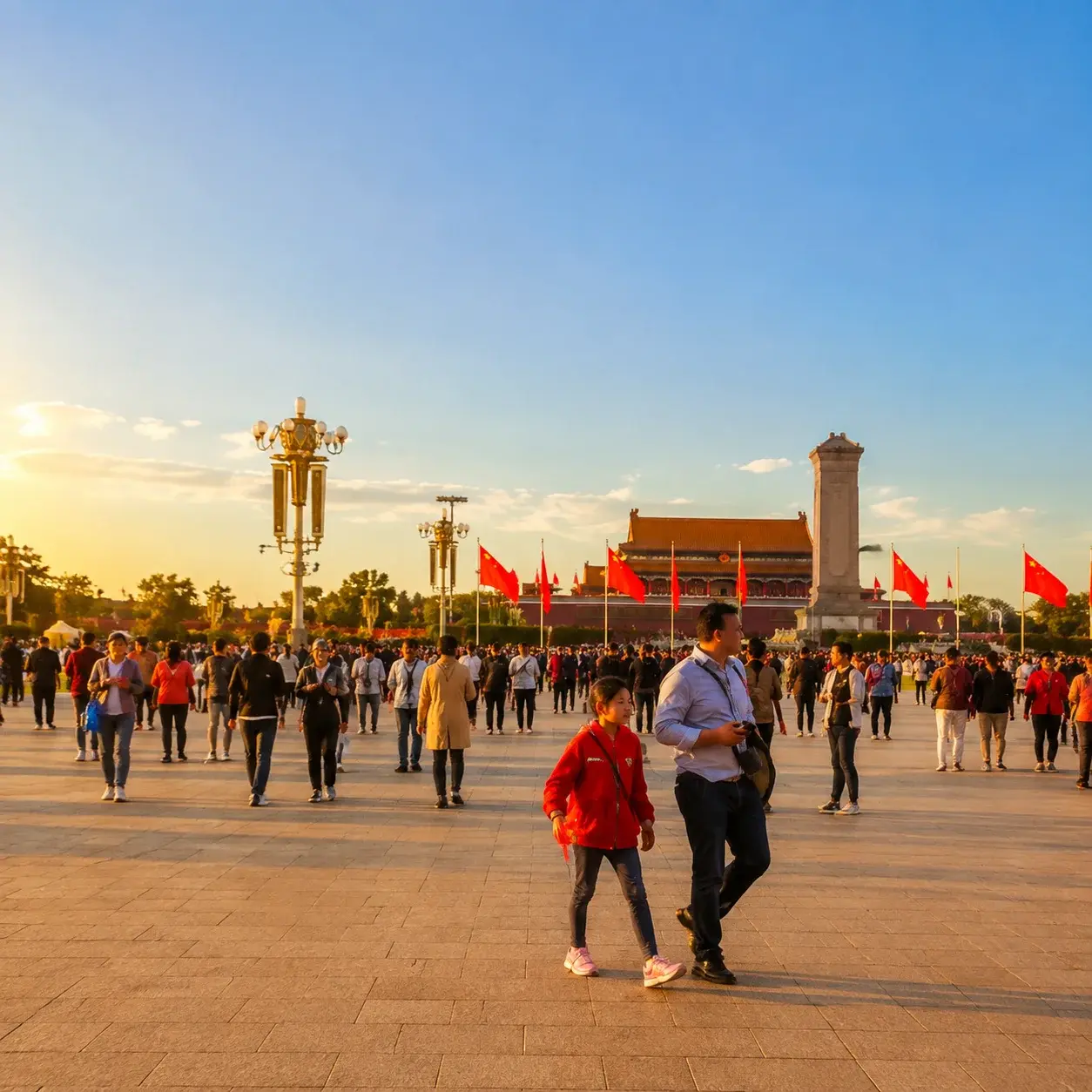
National Day Golden Week is the single worst time to visit China as a tourist—888 million domestic tourist trips were recorded during the 2025 holiday (an 8-day period that overlapped with Mid-Autumn Festival), generating ¥809 billion ($113.8 billion) in tourism spending, according to the Ministry of Culture and Tourism. To put this in perspective: that's more than the entire population of Europe travelling within a single week.
The impact on specific attractions is staggering:
| Attraction | Normal Day | National Day | Impact |
|---|---|---|---|
| Great Wall (Badaling) | 30,000–40,000 visitors | 80,000 (daily cap, reached by 9 AM) | Slow-moving human traffic jam; 2-hour visit becomes all-day ordeal |
| Forbidden City | 40,000–50,000 visitors | 80,000 (daily cap, tickets sold out by morning) | Shoulder-to-shoulder; can\'t see exhibits; hours-long entry wait |
| Zhangjiajie | Manageable crowds | Cable car waits 2–4 hours | More time queuing than enjoying scenery |
| West Lake (Hangzhou) | Peaceful lakeside strolls | Waterfront paths impassable | Completely loses its contemplative atmosphere |
Hotel prices during National Day tell the story equally clearly: a 4-star hotel room that normally costs ¥500–800/night ($70–110) jumps to ¥1,000–1,600 ($140–225)—if you can find availability at all. Many properties in popular destinations sell out 2–3 months in advance.
High-speed train tickets, which are normally easy to book same-day or next-day, sell out 2–3 weeks before National Day. This eliminates the flexibility to change plans—a critical problem when your itinerary depends on weather or energy levels.
Why does National Day create such extreme crowds?
The answer is structural: National Day is one of only two 7-day holidays in China's calendar, and most Chinese workers receive only 5–15 days of annual leave total. When 1.4 billion people share the same narrow vacation windows, the math is brutal. 1 October celebrates the founding of the People's Republic of China (1949), making it both a patriotic and family travelling tradition. The vast majority of travel is domestic—international trips are more expensive and require more planning—so the full force of demand concentrates within China's borders.
When should you travel instead of National Day?
Travel 8–31 Oct for identical autumn weather and scenery without the crowds. Even 8–10 Oct can see lingering crowds as travellers extend holidays, so 11 Oct onward is the true sweet spot. Late October offers China's most spectacular autumn foliage in northern cities, crystal-clear skies, and comfortable temperatures of 15–25°C (59–77°F)—the same conditions as Golden Week, at 30–50% lower prices.
"11–31 Oct is our team's single favourite travel window for China," says James Liu, Senior Tour Director at LyrikTrip with 18 years of experience. "You get peak autumn beauty, perfect weather, thin crowds, and the best hotel availability of the year. It's the same China, but a completely different experience."
Why Is Labour Day Golden Week Nearly As Problematic?
How crowded does China get during Labour Day?
China recorded 314 million domestic tourist trips during the 2025 Labour Day holiday (1–5 May), a 6.5% year-on-year increase, with daily cross-regional passenger traffic averaging 293 million trips per day (Ministry of Transport, 2025). While smaller than National Day, the concentration of travellers into just five days creates severe crowding at popular destinations.
The impact on specific experiences:
Zhangjiajie (Avatar Mountains): Cable car waits of 2–3 hours; trails congested; viewpoints packed with selfie-takers blocking views
Shanghai Disneyland: 60,000+ visitors versus normal 30,000–40,000; ride waits of 2–4 hours; exhausting day with minimal rides experienced
Xi'an Terracotta Warriors: Viewing platforms become packed; difficult to see the warriors clearly; rushed experience replaces contemplative wonder
Li River Cruise (Guilin): Boats packed to capacity; departure delays; reduced scenic enjoyment
Which days of Labour Day are worst?
1–3 May are the absolute peak, but 4–5 May remain heavily crowded.
Many travellers depart the evening of 30 Apr to maximise holiday time, creating a transport surge that evening. The crowd effect extends through 7 May as delayed returns create lingering congestion.
Avoid 30 Apr – 7 May entirely.
When should you travel instead of Labour Day?
8–31 May offers warm, pleasant spring weather with post-holiday calm—or travel 1–29 Apr for beautiful spring blossoms and comfortable temperatures. Both windows deliver the same seasonal experience at normal prices with standard crowd levels.
What Makes Chinese New Year Uniquely Challenging?
How is Spring Festival different from other holidays?
Chinese New Year is fundamentally different from National Day and Labour Day: instead of a tourism surge, it triggers the world's largest annual human migration as hundreds of millions of workers return to their hometowns for family reunions. The 2026 Chunyun (春运, Spring Travel Rush) recorded 9.4 billion inter-regional passenger trips over 40 days (2 Feb – 13 Mar), according to the Ministry of Transport—roughly equivalent to every person in China making 6–7 trips.
The 2026 Spring Festival holiday itself runs 15–23 Feb (9 days)—the longest in modern Chinese history. Chinese New Year's Day falls on 17 Feb 2026 (Year of the Horse).
What happens before, during, and after Chinese New Year?
| Phase | Dates (2026) | Transport | Cities | Businesses | For Tourists |
|---|---|---|---|---|---|
| Pre-New Year rush | 2–16 Feb | Overwhelmed outbound from cities | Gradually emptying | Begin closing | Transport nearly impossible to book |
| New Year week | 17–23 Feb | Relatively quiet | Ghost-town atmosphere | Most closed | Empty attractions (if open), festive decorations |
| Return rush | 24 Feb – 13 Mar | Overwhelmed inbound to cities | Gradually reopening | Slowly resuming | Transport extremely difficult again |
Can you visit China during Chinese New Year?
Yes—but only if you stay in one city, book everything months in advance, and accept significant limitations. Chinese New Year offers a genuinely unique cultural experience that no other time of year can replicate: temple fairs with traditional performances, streets blazing with red lanterns, fireworks displays, and an intimate family-oriented atmosphere.
If you want the cultural experience:
Best dates: Arrive 13–14 Feb (before rush peaks); stay through 23 Feb; depart 24–25 Feb
Critical rule: Stay in ONE city—do not attempt intercity travel during Chunyun
Book everything 3–4 months in advance—hotels, guides, and any available attraction tickets
Best cities for Chinese New Year: Beijing (major temple fairs, traditional celebrations), Xi'an (ancient city with strong traditions), Chengdu (relaxed atmosphere, food scene stays partially open)
Avoid Shanghai during CNY—it empties out dramatically and feels commercial rather than traditional
If you want to avoid hassles entirely:
Avoid 2 Feb – 13 Mar completely. Safe alternatives: travel before 31 Jan or after 15 Mar.
Pros and cons at a glance:
| ✅ Pros | ❌ Cons |
|---|---|
| Most important Chinese cultural celebration | Transport nearly impossible during rush periods |
| Festive decorations, temple fairs, lion dances | Many restaurants, shops, services closed |
| Major attractions nearly deserted (if open) | Limited attraction hours; some sites close entirely |
| Lower hotel prices in major cities (locals have left) | Can\'t change plans due to transport constraints |
| Authentic cultural immersion unavailable at other times | Guide availability limited (many visit their own families) |
Which Minor Holidays Are Manageable with Planning?
Four shorter holidays bring moderate crowds and slight price increases but remain perfectly manageable with 2–3 weeks of advance booking.
Should you worry about New Year's Day (1–3 Jan)?
Minimal impact. A 3-day weekend that generates moderate short-distance travel. Crowds are noticeable but not problematic. Book hotels and train tickets 2–3 weeks ahead and expect a normal travelling experience with slightly busier attractions.
Is Qingming Festival (4–6 Apr) a problem for tourists?
Manageable with planning. Qingming (Tomb-Sweeping Day) is a somber, family-oriented holiday focused on visiting ancestors' graves rather than tourism. Tourist sites see increased visitors but nothing approaching Golden Week levels. Many Chinese travel to rural hometowns rather than tourist destinations, so the impact on major attractions is moderate.
Strategy: Book 3–4 weeks ahead. Expect moderate crowds at major attractions. Some sites may hold special ceremonies worth experiencing. Spring weather is typically beautiful during this period.
What should you know about Dragon Boat Festival (19–21 Jun)?
A cultural highlight worth experiencing, with manageable crowds. The Dragon Boat Festival commemorates the ancient poet Qu Yuan and features spectacular dragon boat races, traditional zongzi (sticky rice dumplings wrapped in bamboo leaves), and riverside celebrations.
Best cities for Dragon Boat Festival experiences: Hangzhou (West Lake dragon boat races), Guangzhou (Pearl River celebrations), Suzhou (canal-side festivities). The cultural spectacle often outweighs the moderate crowd increase.
Strategy: Book 2–3 weeks ahead. Plan to watch dragon boat races—they're genuinely thrilling. Crowds are moderate and the festive atmosphere enhances rather than diminishes the experience.
Does Mid-Autumn Festival (25–27 Sep) affect travel plans?
Moderate impact, but watch the calendar proximity to National Day.
Mid-Autumn Festival celebrates family reunion and the harvest moon with mooncakes, lantern displays, and moon-viewing gatherings. The holiday itself is manageable.
However, in 2026, Mid-Autumn Festival (25–27 Sep) falls just three working days before National Day (1–7 Oct). Many travellers will bridge the gap, creating elevated crowds from 25 Sep through 7 Oct. If visiting during this window, book 4–6 weeks ahead and expect higher-than-normal prices throughout.
Best activities: Moon-viewing parties in parks or by lakes, mooncake tasting at traditional bakeries, lantern festivals in major cities. The full autumn moon over West Lake or the Forbidden City is genuinely magical.
When Does Tibet Close to Foreign Tourists?
Why does Tibet have an annual closure period?
Tibet typically closes to foreign tourists for approximately 1–2 months in late winter/early spring, centred around the politically sensitive anniversary of 10 March (1959 Tibetan Uprising). During this period, the Tibet Tourism Bureau stops issuing Tibet Travel Permits to foreign nationals.
2026 prediction:
Losar (Tibetan New Year): 19 Feb 2026
Likely closure: Late Feb – approx. 31 Mar 2026
Expected reopening: Early Apr 2026
Note: Exact closure dates are announced with little advance notice. The closure applies only to foreign tourists—Chinese citizens can visit year-round.
When is the best time to visit Tibet?
May–Oct, with June and September offering the best balance of weather, accessibility, and crowd levels. July–Aug is peak season with highest prices. Tibet Travel Permits require 15–20 days of advance processing through a licensed travel agency—independent travel is not permitted for foreign tourists.
Alternative high-altitude destinations (no closure period):
Qinghai: Qinghai Lake, Tibetan Buddhist monasteries, no permit required
Yunnan: Shangri-La region, Tibetan minority areas, stunning scenery
Western Sichuan: Ganzi and Aba Tibetan Autonomous Prefectures, accessible year-round
Which Attractions Suffer Most from Holiday Crowds?
Not all attractions are equally affected by holiday crowds. Narrow walkways, limited-capacity cable cars, and daily visitor caps create bottlenecks that turn manageable sites into nightmares during peak periods.
Which attractions become unbearable during holidays?
| Attraction | Why It\'s Worst During Holidays | Normal Experience | Holiday Experience |
|---|---|---|---|
| Great Wall (Badaling) | Narrow walkways become human traffic jams | Scenic walk, 2–3 hours | Can\'t move, all-day ordeal |
| Forbidden City | 80,000 daily cap reached by 9 AM | Spacious courtyards, 3–4 hours | Shoulder-to-shoulder, can\'t see exhibits |
| Zhangjiajie | Cable car bottleneck creates 2–4 hour waits | Stunning mountain scenery | More queuing than scenery |
| Huangshan (Yellow Mountain) | Narrow mountain paths become dangerously crowded | Breathtaking sunrise views | Dangerous crowding on steep stairs |
| West Lake (Hangzhou) | Waterfront paths become impassable | Peaceful, contemplative strolls | Loses all its charm |
| Jiuzhaigou | Boardwalks become slow-moving queues | Pristine turquoise lakes | Can\'t stop for photos |
| Shanghai Disneyland | Ride waits jump from 30–60 min to 2–4 hours | Fun, full day of rides | Exhausting, minimal rides |
What are the less-crowded alternatives?
For every overcrowded attraction, there's a comparable experience nearby with a fraction of the visitors:
| Instead of\... | Try\... | Why It Works |
|---|---|---|
| Great Wall (Badaling) | Jinshanling, Huanghuacheng, or Mutianyu | 50–80% fewer visitors; more authentic experience |
| Shanghai Museum / National Museum | Aurora Museum, Rockbund Art Museum | World-class collections without the queues |
| Zhangjiajie main entrance | Wulingyuan entrance or Tianmen Mountain on weekdays | Different access points distribute crowds |
| Jiuzhaigou | Huanglong, Munigou | Similar stunning scenery, far fewer visitors |
| West Lake (Hangzhou) | Xixi Wetland, Longjing Tea Plantations | Equally beautiful, fraction of the crowds |
How Can You Travel During Peak Holidays If Your Schedule Is Fixed?
If you must travel during peak periods, these five strategies—used by LyrikTrip's guides for 15+ years—minimise negative impact.
Strategy 1: Choose secondary destinations
Skip Beijing, Shanghai, Xi'an, and Guilin during holidays. Instead, visit Chengdu, Guizhou, Fujian, Yunnan, or Gansu—these destinations see far fewer domestic tourists even during Golden Weeks, yet offer equally rich cultural and natural experiences.
Guizhou Province, for example, contains stunning karst landscapes, minority ethnic villages, and the spectacular Huangguoshu Waterfall—yet receives a fraction of Guilin's holiday visitors. Fujian's Tulou (earthen roundhouses, UNESCO World Heritage) and coastal scenery are world-class but largely unknown to domestic mass tourism.
Strategy 2: Visit famous sites at off-peak hours
The early morning strategy works even during Golden Week: arrive at attractions when they open (7:30–8:00 AM) and experience 1–2 hours of relative calm before tour groups arrive at 9:30–10:00 AM. Leave by 10:00 AM. Alternatively, the late afternoon strategy (arrive 3:00–4:00 PM) catches the window after tour groups depart, with better photography light as a bonus.
Strategy 3: Book everything at maximum advance
| Item | Booking Timeline for Peak Periods |
|---|---|
| Hotels | 3–4 months ahead |
| High-speed trains | Exactly 15 days ahead (when booking opens on 12306.cn) |
| Attraction tickets | As soon as available (7–30 days ahead depending on site) |
| Tours and guides | 3–4 months ahead |
| Domestic flights | 2–3 months ahead |
Strategy 4: Build flexibility into your itinerary
Have a Plan B for every day. If the Forbidden City is overwhelmed, pivot to the Temple of Heaven (less crowded) or the 798 Art District (minimal holiday impact). If Badaling Great Wall is gridlocked, redirect to Jinshanling. A knowledgeable local guide with real-time crowd intelligence is invaluable during peak periods.
Strategy 5: Work with local experts
During peak periods, the gap between independent travel and guided travel widens dramatically. Local experts provide pre-booked tickets (guaranteed entry even when sites are "sold out" to walk-ups), VIP entrances at select attractions, real-time crowd monitoring with instant itinerary adjustments, and access to lesser-known sites that offer comparable experiences without crowds.
What Are the Best Travel Windows in 2026?
Which dates offer the best experiences?
After removing the problematic dates, five windows stand out as optimal for visiting China in 2026:
🌟 8–29 Apr: Spring Beauty
Ideal conditions: Beautiful spring weather (15–25°C), blooming flowers (cherry blossoms, peonies), comfortable humidity, moderate crowds, reasonable prices. Avoid 4–6 Apr (Qingming Festival—moderate crowds only). This is one of the two best weather windows of the year.
🌟 8–31 May: Post-Holiday Calm
Ideal conditions: Warm, pleasant weather (18–28°C), lush greenery, longer daylight hours, post-Labour Day calm with excellent availability. The contrast with the preceding week is dramatic—same destinations, same weather, but crowds drop 70–80%.
🌟 1–24 Sep: Early Autumn
Ideal conditions: Autumn begins with clear skies, comfortable temperatures (18–26°C), and moderate crowds. Book early because prices begin rising as National Day approaches. End your trip by 24 Sep to avoid the Mid-Autumn/National Day mega-period.
🌟 8–31 Oct: Peak Autumn (Our Team's Favourite)
Ideal conditions: Spectacular autumn foliage in northern cities, crystal-clear skies, ideal temperatures (12–22°C), post-Golden Week calm, and the best hotel availability of the year. This is the window LyrikTrip's team personally recommends most often—identical scenery to Golden Week at 30–50% lower prices with a fraction of the crowds.
🌟 1–30 Nov: Best Value
Ideal conditions: Excellent weather in southern China (Guilin, Kunming, Shanghai remain mild at 12–20°C), very few crowds, lowest prices of the year (20–40% below peak), and an authentic atmosphere free of mass tourism. Northern China (Beijing, Xi'an) gets cold but remains visitable with warm clothing.
Which months are acceptable with caveats?
| Month | Conditions | Caveats |
|---|---|---|
| March | Spring begins, fewer crowds, moderate prices | Variable weather; some rain in south; Tibet likely closed |
| 1–18 Jun, 22–30 Jun | Highland destinations ideal; school not yet out | Hot in eastern China; rainy in south; avoid 19–21 Jun (Dragon Boat) |
| December | Very low crowds, low prices, unique winter experiences | Cold in north (Beijing: -5–5°C); shorter days; prices rise around Christmas |
| 1–31 Jan | Very low crowds, low prices, authentic atmosphere | Cold weather; shorter days; avoid 1–3 Jan (New Year\'s) |
How Far in Advance Should You Book for Each Season?
What's the booking timeline for peak holidays?
| Item | Timeline |
|---|---|
| Hotels | 3–4 months ahead |
| International flights | 3–4 months ahead |
| High-speed trains | 15 days ahead (when 12306.cn booking opens) |
| Attraction tickets | As soon as available (7–30 days ahead) |
| Tours and guides | 3–4 months ahead |
What's the booking timeline for shoulder season?
| Item | Timeline |
|---|---|
| Hotels | 4–6 weeks ahead |
| International flights | 2–3 months ahead |
| High-speed trains | 1–2 weeks ahead |
| Attraction tickets | 1–2 weeks ahead |
| Tours and guides | 6–8 weeks ahead |
How flexible is booking for off-season?
| Item | Timeline |
|---|---|
| Hotels | 2–4 weeks ahead |
| International flights | 1–2 months ahead |
| High-speed trains | 3–7 days ahead (often same-day available) |
| Attraction tickets | 3–7 days ahead |
| Tours and guides | 4–6 weeks ahead |
FAQ
What are the worst dates to visit China in 2026?
Avoid the Spring Festival, Labour Day around May 1, and National Day around October 1. These periods create the worst crowding, transport pressure, and hotel price spikes.
Why is National Day Golden Week so difficult?
National Day combines national holidays, strong autumn weather, and domestic travel demand, so famous attractions, trains, hotels, and airports become extremely crowded.
Is Labor Day really that bad for travellers?
Yes. Labor Day is shorter than National Day but still creates intense domestic travel, especially around May 1 to 5 and the surrounding weekends.
Should I avoid Chinese New Year completely?
For most first-time tourists, yes. It can be culturally fascinating, but transport sells out, many businesses change hours, and family travel demand dominates the country.
Which dates should I choose instead?
Choose the weeks just after major holidays, such as from May 8 onwards or from October 8 onwards, or aim for April, September, late October, and November.
What if I can only travel during a holiday?
Book early, avoid the most famous attractions at peak hours, stay longer in fewer places, use private transfers where useful, and choose secondary destinations strategically.