



 5 Tage Peking, auf einer Linie Peking ab $1,750 Route ansehen
  12 Tage China, hautnah Peking → Taiyuan → Pingyao → Xi'an → Shanghai ab $3,990 Route ansehen
  18 Tage China, von Anfang bis Ende Peking → Xi'an → Chuanzhusi → Jiuzhaigou → Chengdu → Zhangjiajie → Guilin → Yangshuo → Shenzhen ab $6,360 Route ansehen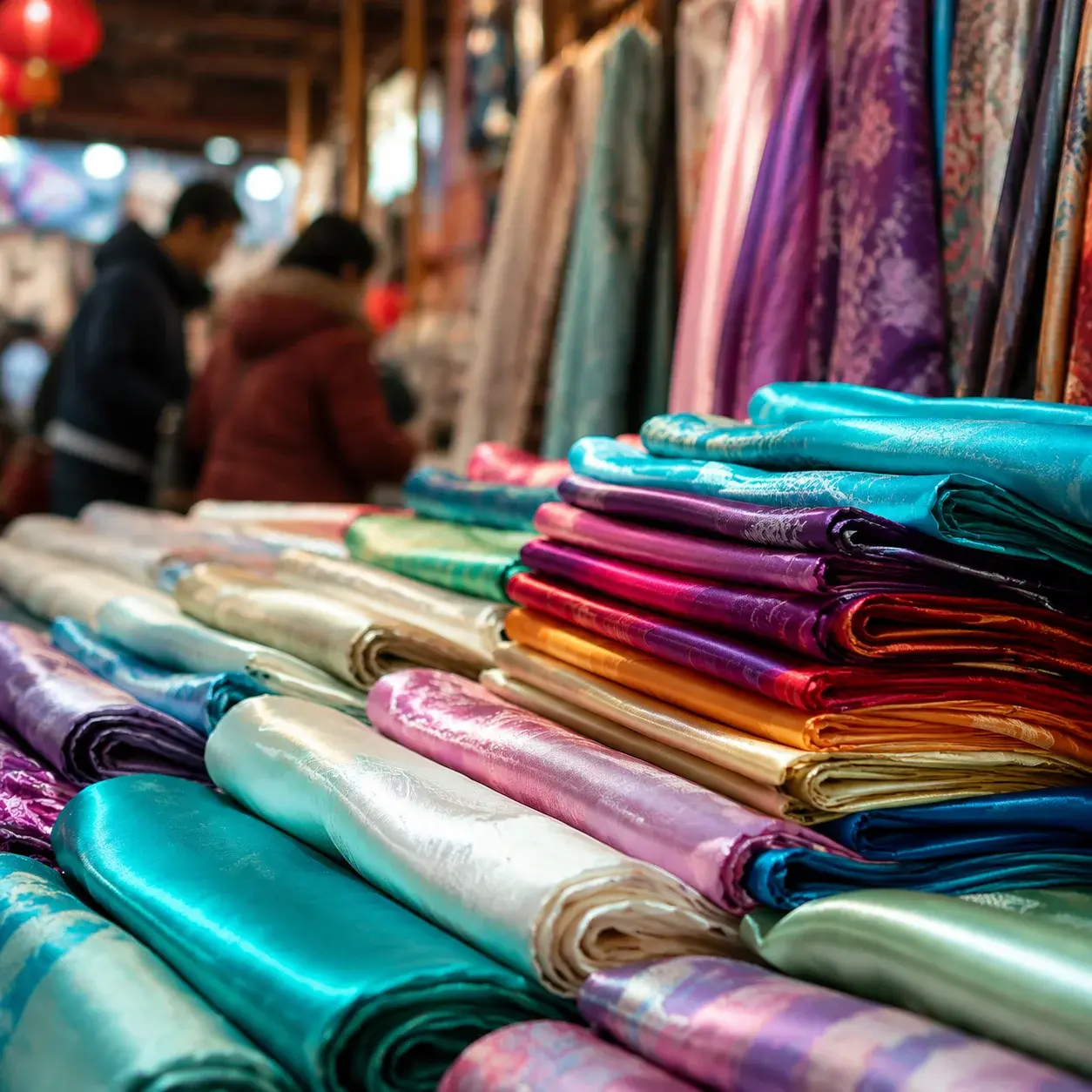
Seidenmarkt Peking: Ist es echte Seide, und wie man ohne Abzocke feilscht
Der Seidenmarkt Peking (Xiushui) ist sowohl echt als auch gefälscht: Die unteren Etagen sind ein berühmter Basar für Luxus-Gegenstände, bei dem "Seide" oft Polyester ist, während echte Seidenkleidung und Schneiderei oben zu finden sind. Der erste Preis ist usually 5–10× dessen, was Sie tatsächlich zahlen werden, also testen Sie, bevor Sie vertrauen, und eröffnen Sie Ihr Angebot weit unter dem angeforderten Preis.
Dies ist ein neutraler Käufer-Schutz-Feldführer zum Seidenmarkt, auch bekannt als Seidenstraße oder Xiushui-Markt. Wir sind ein inbound-China-Reiseunternehmen, kein Laden oder ein Touristen-Trichter, also haben wir keinen Grund, Sie zu einem Kiosk zu führen. Unsere einzige Aufgabe hier ist es, Sie davon fernzuhalten, einen Seidenpreis für einen Polyester-Schal zu zahlen oder eine gefälschte Marke durch die Zollkontrolle zu tragen.
Am Ende können Sie drei Dinge tun: echte Seide von gefälschter am Tisch unterscheiden, faire RMB-Preise aushandeln, ohne sich anfangen zu lassen, und sicher einkaufen (und nach Hause kommen).
Wichtige Erkenntnisse
- Es ist sowohl ein gefälschter Markt als auch ein echter Seidenmarkt. Die unteren Etagen sind die Etagen für Fälschungen und Feilschen; echte Seidenschnitte und Schneiderei befinden sich oben, während Tee, Porzellan, Gemälde und Jade in einer anderen Etage zu finden sind (laut travelchinaguide). Das genaue Markenprogramm der dritten Etage soll vor Ort zu finden sein — bestätigen Sie dies.
- Gehen Sie davon aus, dass „Seide“ Polyester ist, bis es den Test besteht. Echte Maulbeerseide brennt wie Haare und erlischt von selbst; Polyester schmilzt zu einer harten Kugel. Kein einzelner Test ist Beweis — lesen Sie sie zusammen.
- Der erste Preis ist Theater. Auf den Fälschungsetagen beträgt er typischerweise das 5–10-fache des Ladenpreises. Beginnen Sie mit etwa 10–15 % des ersten Angebots und seien Sie bereit, zu gehen.
- Planen Sie nach Ziel. Möchten Sie nur echte Seide? Überspringen Sie den Kampf mit Polyester im Keller und gehen Sie direkt zur dritten Etage.
- Achten Sie auf die Zollvorschriften. Echte Seide wird problemlos erklärt; gefälschte Markenartikel können an der Grenze in den USA, der EU und dem UK beschlagnahmt werden.
- Erreichen Sie es über die U-Bahn-Linie 1, Bahnhof Yong'anli (laut travelchinaguide); der genaue Ausgang und die Gehzeit sind nur indikativ.
Was ist der Seidenmarkt (Xiushui Street), und ist es echte Seide oder ein gefälschter Markt?
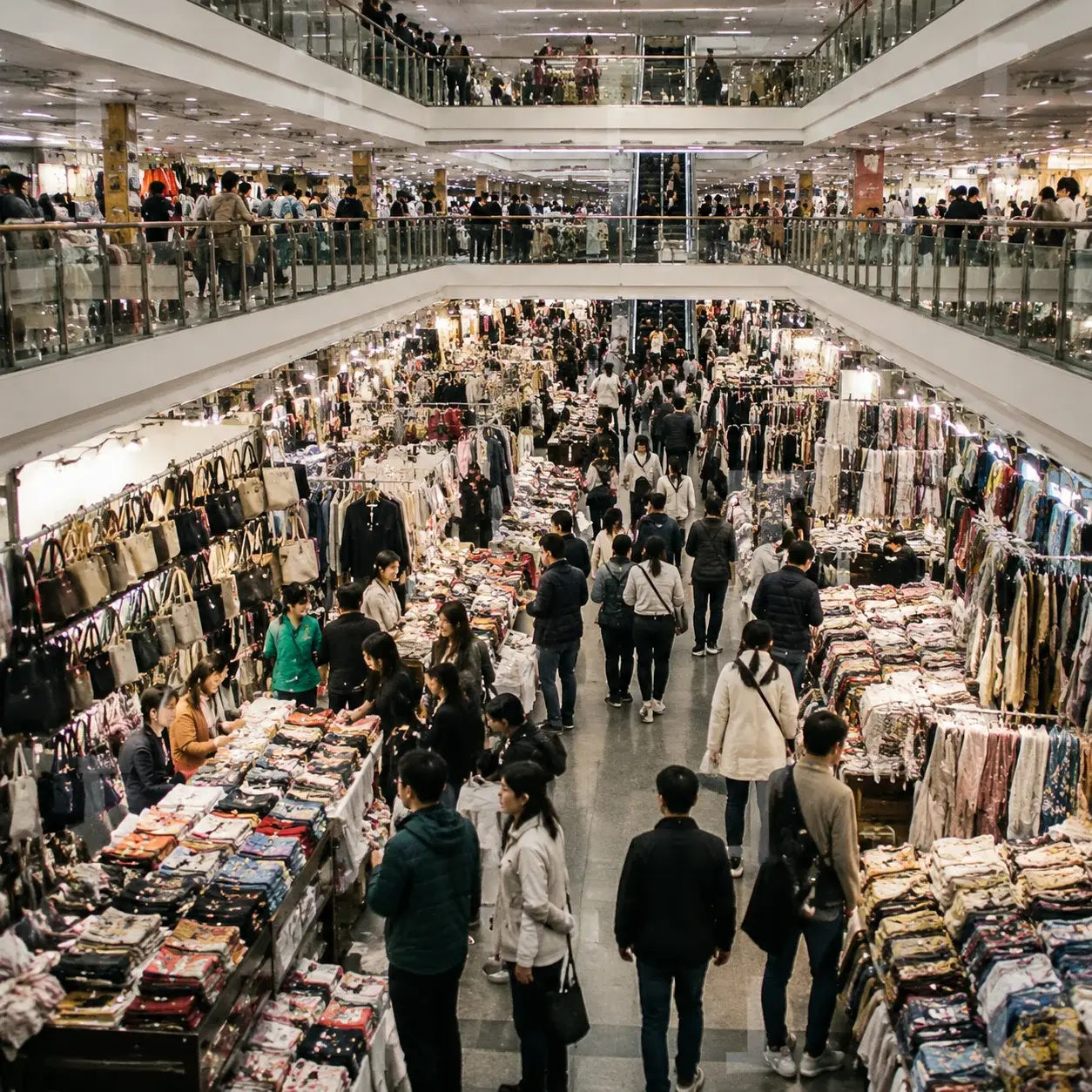
Beides. Der Silk Market ist ein großes Mehrstock-Einkaufszentrum in Peking, das für gefälschte „Designer“-Artikel auf den unteren Etagen und echte Seidenkleidung以及对裁剪服务在上层而闻名。所以当人们问北京丝绸市场是否卖真丝或是一个“假货市场”时,诚实的答案是:它是一个假货市场和一个真丝市场,上下叠加——关键是知道你在哪一层。
首先,让我们澄清一下名称。“Silk market beijing,” “silk street beijing,” “beijing silk market,” “xiushui market,” and “silk street market”都是同一个地方——这个场所每月吸引约14,800次搜索(竞争较低,同比增长约50%)。它位于朝阳区秀水地区。“fake market beijing”的搜索(每月约1,000次,同比增长约23%)也指向这里:旅行者已经怀疑这是一个仿冒市场,并希望得到确认以及安全的购物计划。
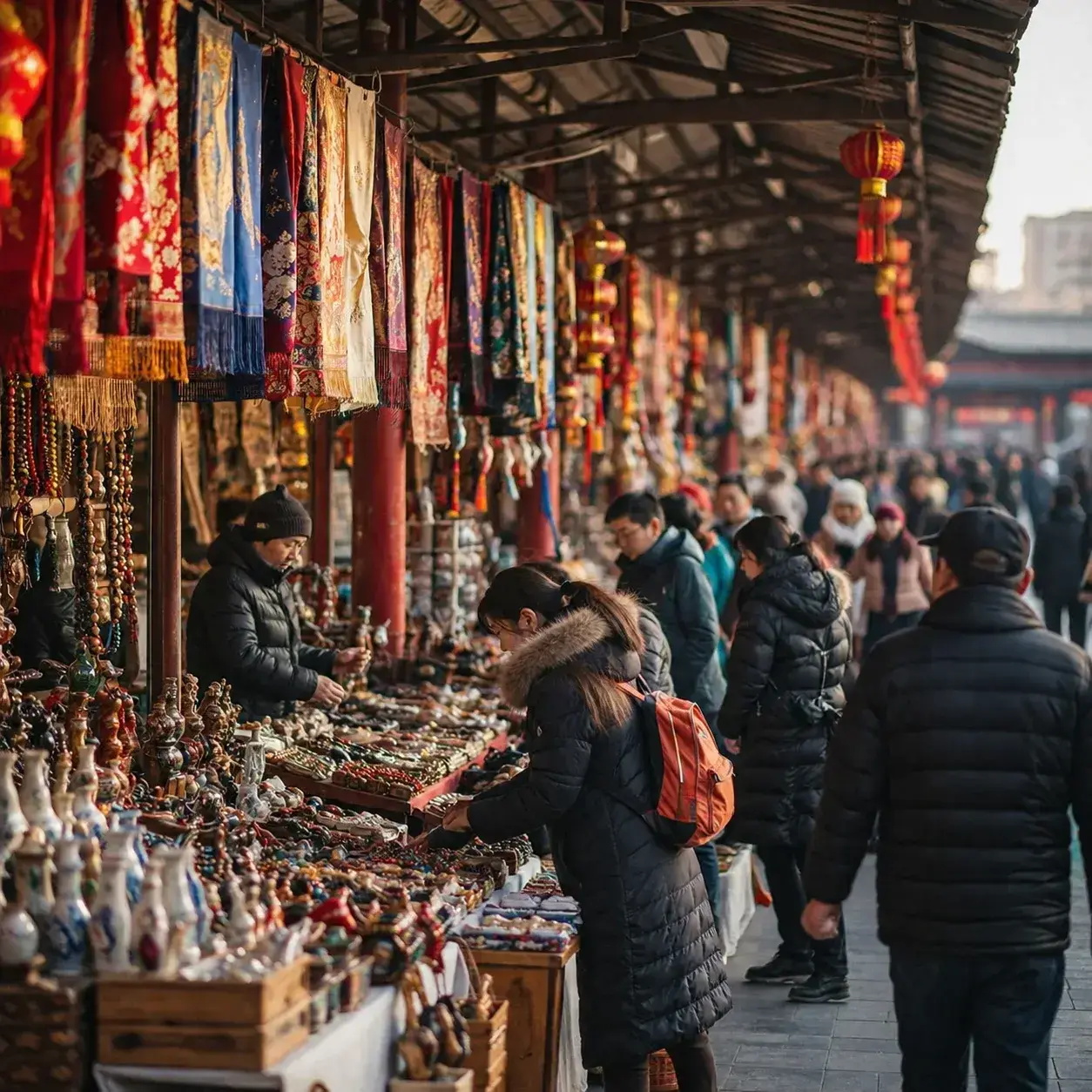
诚实的现实是分层的。下层是一个讨价还价的舞台,销售“看起来像奢侈品”的商品——服装、包、配饰、运动服——通常是假冒商品。上层是真丝所在的地方:真正的围巾和服装、唐装和旗袍(qipao)、量身定制的裁缝服务以及历史悠久的丝绸零售商。两种真相共存。将整个地方视为“全是假货”会让你错过真正的真丝;而将其视为“一个丝绸市场”则会让你在聚酯纤维上多花钱。
Auf einen Blick: Nr. 8 Xiushui East Street, Chaoyang, Beijing; erreichbar mit der U-Bahn-Linie 1 bis Yong'anli (nach travelchinaguide), ca. 5 Minuten zu Fuß. Täglich geöffnet von 09:30–21:00. Die genaue Ausgangsnummer und Gehzeit sind Richtwerte.
Welcher Stock für Sie? Der Xiushui-Etagen-Kaufleitfaden
Richten Sie sich nach Ihrem Ziel, nicht durch Herumirren. Möchten Sie feilschen und Fotos machen? Besuchen Sie die Etagen 1–2. Für echte Seide, Geschenke oder Maßschneider nehmen Sie den Aufzug bis Etage 3. Die Etage ist Ihre erste Schutzmaßnahme als Käufer – sie entscheidet, ob Sie mit Polyester kämpfen oder echte Seide kaufen. Kein Konkurrent passt den Etagenplan an das an, was Sie tatsächlich kaufen wollen – hier ist unser Plan.
Finden Sie sich zunächst in dieser Tabelle nach Kundentyp zurecht, dann lesen Sie den Etagenplan darunter. Das grobe Layout ist konsistent: Seide oben, Handwerkswaren (Tee, Porzellan, Gemälde, Jade) auf einer anderen Etage, Feilschgüter auf den unteren Etagen (nach travelchinaguide). Die konkreten Marken und der Ablauf des Maßschneidens sind interne Details, die sich ändern können – betrachten Sie dies als Richtwert und bestätigen Sie vor Ort.
Kundentyp → Zuordnung zur Etage
| Du bist… | Gehe zu | Was zu kaufen | Budget-Mentalität | In einem Satz |
|---|---|---|---|---|
| Souvenir-Einkäufer | Besuche Stockwerke 1–2; kaufe echte Seide auf Stockwerk 3 | Ein oder zwei Schals, kleine Stücke; genieße das Feilschen | Niedrig – du zahlst für das Erlebnis | Behandle Stockwerk 1–2 wie ein Spiel; kaufe echte Seide oben |
| Geschenkkaufender | Direkt zu Stockwerk 3 | Seriöse SeidenSchals/-Kleidung mit Geschichte | Mittel – achte auf Momme + Zertifizierung | Wette nicht auf die Authentizität eines Geschenke; gehe zu den etablierten Marken |
| Maßschneiderei-Klient | Schneider auf Stockwerk 3 | Maßgefertigte Qipao, Tangzhuang, Krawatten, Nachtwäsche | Mittel-hoch – lass ausreichend Zeit ab | Prüfe zuerst den Stoff, bestätige den Zeitplan, buche es nicht für deinen letzten Tag |
| Reines Feilschen / Fotos | Stockwerke 1–2 | Fälschungen kleine Waren, Requisiten | Minimal – du weißt, dass es falsch ist | Zahle keinen echten Preis für einen falschen Look und trage keine Fälschungen durch die Zollkontrolle |
| Seidensammler / Investor | — (Xiushui ist nicht der beste Ort) | — | — | Für ernsthafte Seide vergleiche einen Leitfaden aus Suzhou/Hangzhou |
Stockwerksübersicht (Kategorien nach travelchinaguide; genaue Stockwerkszahlen sind indikativ)
| Etage | Was wird hauptsächlich verkauft | Wertvoll für | Hinweis |
|---|---|---|---|
| Etagen 1 & 2 | Die Verhandlungsetagen: „Luxus-aussehende“ Kleidung, Taschen, Accessoires, Sportswear — meist Fälschungen | Menschen, die gerne verhandeln, Fotografen | Nehmen Sie an, es ist falsch; führen Sie den Seidentest bei jeder „Seide“ durch |
| Etage 3 | Die echte Seidenetage: echte SeidenSchals/-Kleidung, Tangzhuang, Cheongsam/Qipao, Maßschneiderei, ein Seidenmuseum und rund 18 etablierte Seidenhändler, darunter traditionsreiche Marken | Geschenkkäufer, Kunden für Maßschneiderei, ernsthafte Seidenkäufer | Wenig Zeit und wollen nur echte Seide? Kommen Sie direkt hier |
| Etage 4 | Kunsthandwerk: Tee, Porzellan, Kalligrafie/Malerei, Jade | Kunsthandwerks- und Geschenkkäufer | Für Jade verwenden Sie einen vom Käufer bereitgestellten Leitfaden zum Schutz beim Kauf vor dem Kauf |
Die traditionsreichen Marken, die mit Etage 3 verbunden sind, sind Ruifuxiang (瑞蚨祥), bekannt für hochwertige Seide; Shengxifu (盛锡福), eine etwa 90-jährige Hut- und Handwerkskammer; und Neiliansheng (内联升), berühmt für traditionelle Stoffschuhe. Ob jede Marke derzeit vorhanden ist, ihre genaue Lage und ob das Seidenmuseum geöffnet ist, ist nur indikativ — überprüfen Sie dies vor Ort, bevor Sie sich darauf verlassen.
Maßschneiderei auf Etage 3 läuft typischerweise ab: Messung → erste Anprobe → Abholung. Bevor Sie sich entscheiden, fragen Sie nach Expressservice, Änderungen, Anzahlung und Versand nach Hause. Die tatsächlichen Lieferzeitrahmen für Maßschneiderei sind nicht offiziell bekannt — überprüfen Sie dies vor dem Kauf und planen Sie keinen maßgeschneiderten Qipao für Ihren letzten Tag in Peking.
Unsere ehrliche Einschätzung (Routing): Der Boden ist der Schutz des Käufers. Wenn Sie nur echte Seide wollen, kämpfen Sie nicht mit Polyester auf den Etagen 1–2 – nehmen Sie den Aufzug bis zur 3. Etage, wo die Waren, die Marken und die Schneider sind und die Preise viel transparenter sind.
Wie erkennt man echte Seide von gefälschten am Stand?
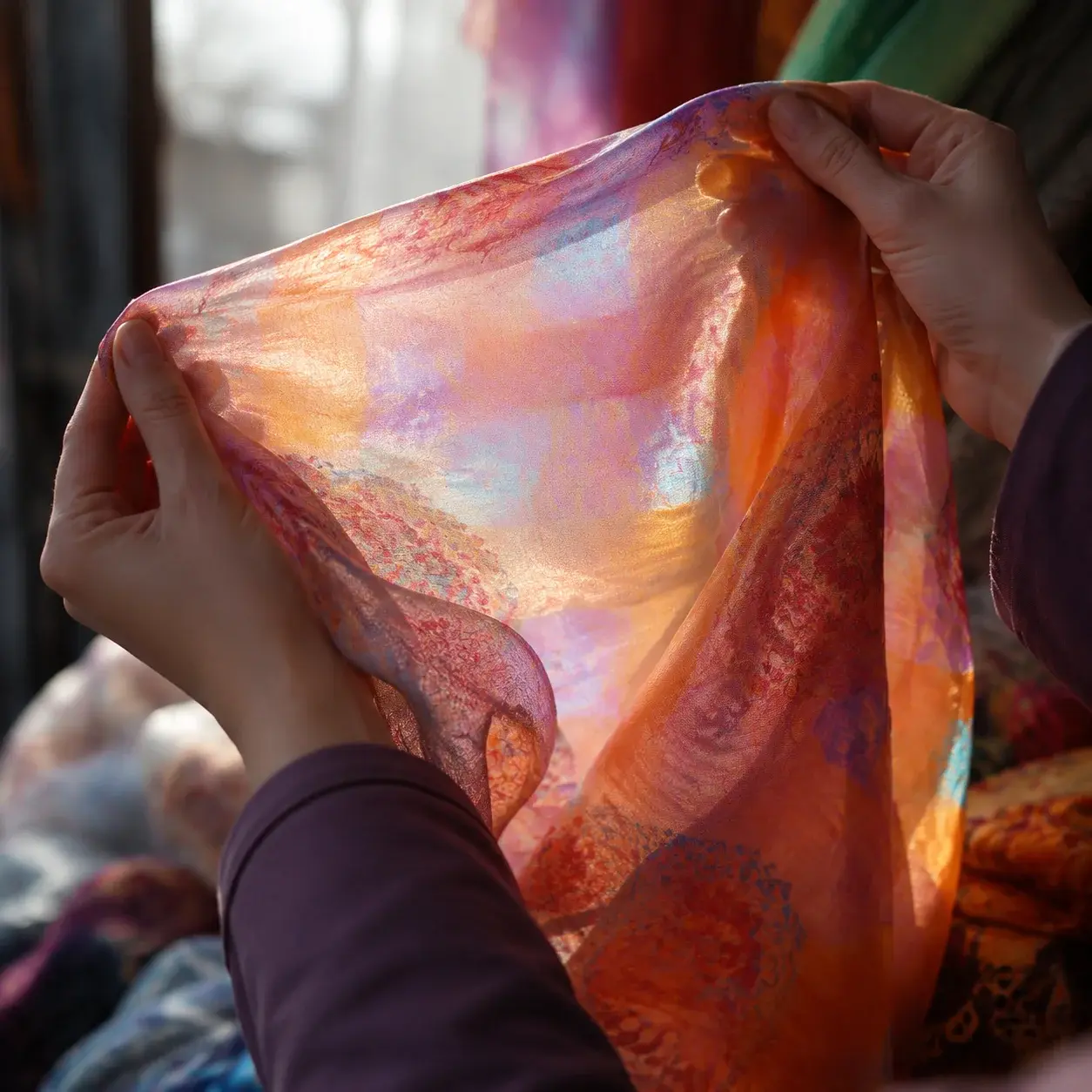
Gehen Sie davon aus, dass jeder »Seiden«-Pashminas Polyester ist, bis er einen Test bestanden hat – und kein einzelner Test ist ein Beweis, also lesen Sie mehrere zusammen. Die meisten »Seiden« auf den unteren Etagen sind Polyester oder ein Seiden-Polyester-Mix, der zu einem Seidenpreis verkauft wird, und eine Behauptung von »100 % Seide« zu einem verdächtig niedrigen Preis ist selbst das Erkennungsmerkmal. Echte Maulbeerseide ist eine Protein-Faser (wie Haar); Polyester und Rayon sind Kunststoff. Diese eine Tatsache bestimmt jeden Test unten.
Das ist das Einzige, was Wettbewerber überlassen – keiner lehrt Sie, wie Sie tatsächlich prüfen können. Hier ist eine Punktzahl, die Sie in Sekunden am Counter durchführen können.
Echtheitsbewertung für echte vs. gefälschte Seide
Bewerten Sie +1 für jedes echte Merkmal, −1 für jede rote Flagge. Lesen Sie die ganze Zeile, bevor Sie urteilen.
| # | Test | So führt man es in 5 Sekunden durch | Reiner Mulberry-Seide (+1) | Rote Flagge (−1) | Was es beweisen kann / was nicht |
|---|---|---|---|---|---|
| 1 | Brenntest (der harte Beweis) | Frag vorher, dann brenne einen losen Faden aus einer versteckten Naht – nie das ganze Stück | Brennt langsam, schwer am Brennen, riecht nach verbranntem Haar/Federn, lässt eine weiche graue Asche zurück, die zu Pulver wird | Brennt schnell, chemischer/Kunststoffgeruch, schmilzt zu einem harten schwarzen Kropf, der sich nicht zerdrücken lässt | Trennt Protein von Kunststoff stark; kann keine Qualitätsstufe oder Momme beweisen |
| 2 | Glanz | Halte den Stoff ins Licht | Ein wechselnder, mehrfarbiger, perlmuttartiger Glanz (irideszierend) | Ein flatternder, gleichmäßiger, überglänzender Kunststoffglanz | Deutet auf natürliche Faser hin; reicht allein nicht aus (Satinfinish täuscht) | 3 | Griff | Drücke auf den Handrücken, gleite darüber | Warm-nicht-kalt, erwärmt sich schnell zur Haut, weich und flüssig wie Wasser | Kühl-glatt, statisch, stickig/luftarm | Schließt offensichtliches Polyester aus; kann einen Seidenmix nicht ausschließen | | 4 | Ring-Slide | Ziehe den Schal durch einen Ring oder deine Faust | Gleitet leicht | Ballt sich zusammen, zieht wider, zeigt Widerstand | Leichte echte Seide; nicht für schwere Stoffe | | 5 | Momme / Etikett | Lies das Etikett oder frage; suche nach 100% 桑蚕丝 (Mulberry-Seide) | Etikettiert mit 19–25 Momme = hohe Qualität | Keine Momme-Angabe = rote Flagge | Qualitätsindikator; ersetzt nicht die Echtheitsprüfung | | 6 | Preissinnigkeit | Vergleiche mit dem Preis, den echte Seide haben sollte | Vernünftig定价, kann OEKO-TEX / Zertifizierungszeichen tragen | „100% Seide“ zum Preis eines Taschentuchs ist keine Seide | Der stärkste Wahrscheinlichkeitsnachweis; reicht allein nicht aus für Echtheitsbeweis |
Bewertungsbereich:
- +3 bis +5 (insbesondere ein sauberes Brennergebnis plus Momme-Wert) → wahrscheinlich echt; jetzt verhandeln Sie den Preis.
- 0 bis +2 → betrachten Sie es als Mischung oder Polyester; zahlen Sie einen Polyestergang oder gehen Sie.
- Die Preisregel (rote Linie): Alles, was als „100 % Seide“ gekennzeichnet ist, aber so günstig ist, dass es unrealistisch ist, ist per Definition keine echte Seide. Echte Maulbeerseide kostet niemals einen Taschentuchpreis.
Der Musterwechsel-Widerstand: Bestehen Sie darauf, dass das genaue Stück, das Sie getestet haben, das Stück ist, das sie schneiden und verpacken, und behalten Sie das Gewebe im Auge. Ein häufiger Trick besteht darin, Ihnen ein echtes Muster zu testen, dann Polyester von einer anderen Rolle zu schneiden.
Das Brennverhalten, der Glanz, das Gefühl und die Momme-Fakten oben sind ewige Texturchemie, die mit öffentlichen Texturquellen abgestimmt wurden (sinocultural.com, mulberryparksilks.com, ellesilk.com, blissy.com; Letztverifiziert: 2026-07). Brennen Sie nur einen einzelnen Faden aus einem versteckten Nahtzugabe und nur mit Zustimmung des Verkäufers.
Unsere ehrliche Meinung (Seide): Der Brenntest ist der einzige Schritt, der Protein stark von Plastik trennt – aber beginnen Sie keinen Streit im Laden über ein einziges Schal. Holen Sie sich entweder eine Zustimmung und testen Sie einen Faden, oder gehen Sie einfach nach oben in den 3. Stock und kaufen Sie bei einem seriösen Verkäufer. Die gesparte Argumentation lohnt sich den kleinen Aufpreis.
Wie können Sie auf dem Seidenmarkt handeln, ohne abgezockt zu werden?
Bestimmen Sie Ihren Absprichpreis, bevor Sie sprechen; beginnen Sie bei etwa 10–15 % des ersten Angebots, steigern Sie sich langsam und seien Sie wirklich bereit zu gehen. Die Eröffnungsangebote auf den Nachahmungsetagen sind typischerweise das 5- bis 10-fache des echten Preises — das ist Theater, keine Beleidigung, und Feilschen wird erwartet. Die entscheidende Zahl ist die, die Sie im Kopf haben, bevor der Verkäufer seinen nennt.
Wettbewerber bieten Ihnen nur ein einziges Klischee an („bieten Sie 10–30 %“). Hier stattdessen die strukturierte Leiter.
Die Eröffnungsgebot → Absprich-Leiter (6 Schritte)
- Bleiben Sie ruhig. Tun Sie so, als würden Sie nur stöbern. Der Moment, in dem Sie zeigen, dass Sie es wollen, wird der Preis festgelegt.
- Niedrig eröffnen. Gegen Sie nach ihrem Angebot mit etwa 10–15 % des ersten Angebots (wenn sie ¥950 nennen, eröffnen Sie mit etwa ¥100–150). Auf der echten-Seiden-Etage 3 ist der Spielraum geringer, also eröffnen Sie näher.
- Schrittweise erhöhen. Steigern Sie in kleinen Schritten; springen Sie nie direkt zu Ihrem eigentlichen Ziel. Lassen Sie sie auf Sie zukommen.
- Gehen Sie weg. Nennen Sie Ihren Preis und wenden Sie sich tatsächlich ab und gehen. Der Rückruf („okay, okay — Endpreis“) ist meist das Signal, dass Sie die echte Untergrenze erreicht haben. Dies ist Ihr stärkster Hebel.
- Bündeln. Mehrere Stücke kaufen? Verhandeln Sie einen Paketpreis — das ist meistens günstiger als der Einzelkauf.
- Sauber abschließen. Vereinbaren Sie zuerst den Preis, dann zahlen Sie in runden Zahlen per Bargeld oder mobiler Zahlung. Lassen Sie Ihre Karte oder Ihr Telefon nicht am Rechner liegen und ignorieren Sie den hartnäckigen Verkaufsauftritt.
RMB-Anker pro Kategorie (indikative Bereiche — überprüfen Sie vor dem Kauf)
Dies sind Richtungsangaben nach Kategorien, keine Aussage zu einem einzelnen Produkt und keine Garantie. Auf den Etagen mit Fälschungen ist der Eröffnungspreis eine Performance; bei echter Seide und Schneiderei auf Etage 3 sind die Ankerpunkte höher, aber der Spielraum für Verhandlungen geringer, da die Produkte echt sind.
| Kategorie | Eröffnung → realistischer Abschluss (indikativ) | Was die Lücke verursacht | Warnhin |
|---|---|---|---|
| "Seiden"-Schal (Etagen 1–2) | Eröffnung liegt weit über dem Abschluss; der Abschluss kann einen Bruch des ersten Angebots betragen (überprüfen Sie das echte Vielfache) | Oft Polyester/Blend zum Seidenpreis | "100 % Seide", die billig genug ist, um unrealistisch zu sein = Polyester; zahlen Sie den Preis für Polyester |
| Echter Seiden-Schal / -Gewand (Etage 3) | Weniger Raum, sanfteres Feilschen (überprüfen Sie den Bereich) | Maulbeerseide, Momme, Handwerkskunst | Kein Momme-Label, flaches, lebloses Glanzbild = Zweifel |
| Maßgeschneiderte Seiden-Qipao / Tangzhuang / Krawatte / Nachtwäsche (Etage 3) | Verhandelt pro Stoff + Arbeitsaufwand + Zeitplan (überprüfen Sie) | Stoffauthenzität + Momme + Handarbeit + Lieferzeit | Prüfen Sie zuerst "Seide" mit der Punktzahl; bestätigen Sie den Zeitplan vor jeder Anzahlung |
| "Designer"-Tasche / Uhr / Elektronik (Fälschung) | Eröffnung ca. 5–10-mal so hoch wie der Abschluss (überprüfen Sie) | Reine Nachahmung, geringe Kosten | Rechtliche Risiken bei der Zollabfertigung (siehe unten) – überlegen Sie es sich zweimal |
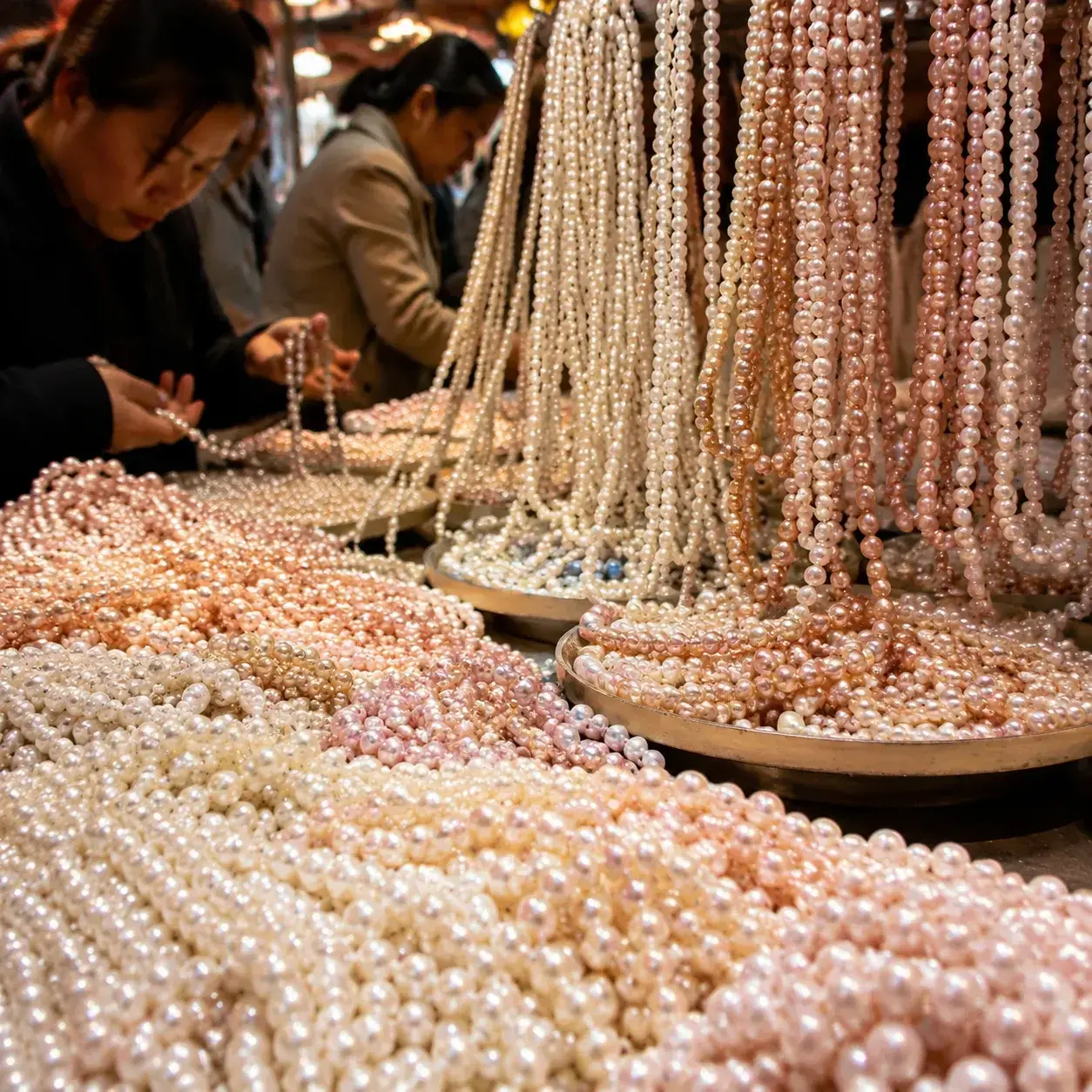
| Perlen / kleine Kunsthandwerke | Pro Artikel verhandeln (überprüfen Sie; vergleichen Sie eine Perlenleitlinie zum Preis) | Material + Handwerkskunst | Verknüpfen Sie mit einer Perlenleitlinie zur Überprüfung der Echtheit |
Unser ehrlicher Rat (Verhandeln): Die entscheidende Zahl ist dein Maximalpreis, den du festlegst, bevor du überhaupt sprichst. Bestimme ihn, starte niedrig und sei bereit zu gehen — dieser Markt lebt von Touristen, die das nicht tun. Der eigentliche Verlust ist nie ¥20 zu viel für einen Schal; es ist, Seidenpreis für Polyester zu zahlen oder ein gefälschtes "Gucci" durch die Zollkontrolle zu tragen.
Was sich lohnt zu kaufen (und was du lassen solltest)
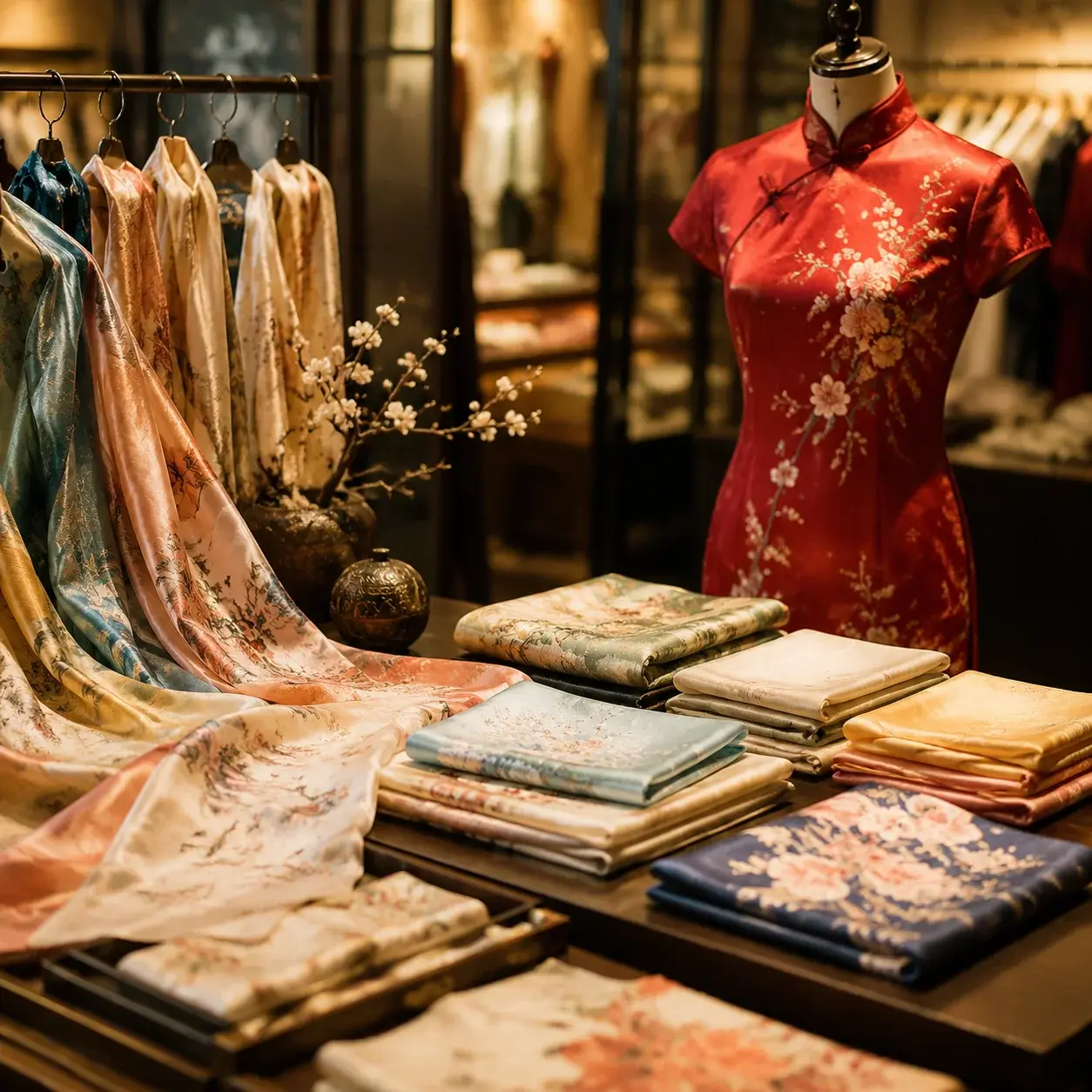
Kaufe echte Seide und Schneiderei vom 3. Stock, Perlen und Kunsthandwerk als Geschenke; vermeide gefälschte "Designer"-Taschen, Uhren und Elektronik. Die Seide im Obergeschoss (sofern sie die Prüfung besteht), ein maßgeschneidertes Qipao oder Hemd und handgefertigte Souvenirs sind die Dinge, nach denen du dich freuen wirst, sie mit nach Hause zu nehmen. Fälschungen von Luxusmarken haben schlechte Qualität und stellen gleichzeitig ein Problem beim Zoll dar.
Lohnt sich:
- Echte Seidenschals und -kleidung im Obergeschoss — wenn sie die Prüfung bestehen.
- Maßgeschneiderte Qipao, Tangzhuang, Krawatten und Schlafwäsche — plane genügend Zeit ein.
- Perlen (siehe Perlenführer zur Authentifizierung) und Kunsthandwerk wie Tee, Porzellan und Kalligrafie als Geschenke.
Vorsicht oder meiden:
- Gefälschte "Designer"-Taschen, Uhren und Elektronik — schlechte Qualität und ein Risiko an der Grenze.
- Jegliche "Seide", die die Prüfung nicht besteht, oder ein "100 % Seiden"-Stück, das wie ein Taschentuch定价 ist.
Seidenmarkt vs. Yaxiu (Yashow) und Perlenmarkt: Welchen wählst du?
Wählen Sie den Silk Market für die größte Auswahl und das volle Feilschen, Yaxiu (Yashow) in Sanlitun für ähnliche Waren zu manchmal günstigeren Preisen und den Hongqiao Pearl Market für Perlen sowie eine lokalere Klientel. Sie überlappen sich stark, sodass die Wahl davon abhängt, was Sie suchen und wie viel Energie Sie ins Feilen investieren wollen.
Der Silk Market ist der größte und am stärksten touristisch ausgerichtete der drei, was auch dazu führt, dass hier am aggressivstens gefeilscht wird. Der Yaxiu (Yashow) Markt bietet ein ähnliches Sortiment an Kleidung, Taschen und Schneiderei im Sanlitun-Gebiet und kann etwas günstiger sein — einen Versuch wert, wenn Sie ohnehin in der Gegend sind. Der Hongqiao Pearl Market konzentriert sich auf Perlen und zieht mehr lokale Käufer; wenn Perlen Ihr Ziel sind, beginnen Sie dort und nutzen Sie einen spezialisierten Perlenführer zur Authentifizierung, bevor Sie zahlen.
Was passiert, wenn Sie es nach Hause bringen? Fälschungen und Zoll
Echte Seide ist in Ordnung, aber gefälschte Markenwaren — ein gefälschter "Gucci"-Schal oder eine "Rolex"-Uhr — können bei der Zollbehörde in den USA, der EU und dem UK beschlagnahmt werden und Strafen nach sich ziehen. Das ist der Abschnitt, den keine OTA schreibt, und genau darum sollten Sie mit offenen Augen einkaufen.
Privat genutzte Mengen sind risikoärmer als kommerzielle Mengen, bergen aber dennoch kein Null-Risiko: Der Import von Waren mit gefälschten Marken ist eine rechtliche und nicht nur eine质量问题. Behalten Sie Ihre Quittungen, deklarieren Sie ehrlich und bedenken Sie, dass die persönliche Zollfreigabe in jedem Land unterschiedlich ist. Die Schwellenwerte und die Durchsetzung des Zolls variieren je nach Land und ändern sich — überprüfen Sie die aktuellen Regeln Ihres Heimatlandes vor dem Kauf oder der Abreise, anstatt sich auf einen einzelnen Wert zu verlassen. Ein sicheres Souvenir ist ein echter Seiden scarf, den Sie im 3. Stock überprüft haben, nicht eine Nachahmung, über die Sie an der Grenze schwitzen müssen.
Häufig gestellte Fragen
Ist die Seide am Silk Market Beijing echte Seide? Ein Teil davon, aber der größte Teil der »Seide« in den unteren Etagen besteht aus Polyester oder einer Mischung, die zum Seidenpreis verkauft wird. Echte Seide befindet sich in den oberen Etagen. Führen Sie den Brenn-, Fühl- und Etikettentest durch, bevor Sie einem Stück vertrauen, und gehen Sie von Polyester aus, bis es bestanden hat.
Ist Silk Street ein Markt für Fälschungen? Ja und nein. Silk Street (Xiushui) ist weltberühmt für gefälschte »Designer«-Taschen, Uhren und Kleidung in seinen unteren Etagen, aber seine obere Etage verkauft echte Seidenkleidung, Schneiderei und etablierte Marken. Es ist ein Markt für Fälschungen und ein Markt für echte Seide in einem Gebäude.
Wie feilschen Sie am Silk Market Beijing? Setzen Sie Ihren Absprachepreis fest, bevor Sie sprechen. Der erste Preisoffer liegt oft um das 5- bis 10-fache des echten Preises, also beginnen Sie bei etwa 10–15 % des angeforderten Preises, erhöhen Sie in kleinen Schritten und seien Sie bereit zu gehen — der Rückruf des Verkäufers ist normalerweise der echte Mindestpreis.
Was sollte man auf dem Seidenmarkt in Peking kaufen? Kaufen Sie echte Seidenschals und -kleidung, maßgeschneiderte Schneiderei, Perlen und Handwerksprodukte, alle aus den oberen Etagen, wo die Waren echt sind. Vermeiden Sie gefälschte "Designer"-Taschen und -Uhren – sie sind von geringer Qualität und stellen ein Zollrisiko dar, wenn Sie nach Hause fliegen.
Welche Öffnungszeiten hat der Seidenmarkt in Peking? Der Seidenmarkt ist täglich von 09:30 bis 21:00 Uhr geöffnet, laut Travelchinaguide und trip.com-Einträgen. Es lohnt sich immer noch, am Tag Ihres Besuchs kurz nachzusehen, aber Sie können sicher mit den üblichen Öffnungszeiten von 09:30–21:00 Uhr planen.
Ist der Yaxiu (Yashow) Markt besser als der Seidenmarkt? Sie verkaufen eine ähnliche Auswahl an Kleidung, Taschen und Schneiderei. Der Yaxiu (Yashow) in Sanlitun kann günstigere Preise und kleinere Menschenmengen bieten, während der Seidenmarkt größer und stärker touristisch定价 ist. Wählen Sie Yaxiu für Wert, den Seidenmarkt für Auswahl und das vollständige Feilscherlebnis.
Fazit zum Seidenmarkt in Peking
Der Seidenmarkt in Peking ist ein Basar für Fälschungen und ein echter Seidenmarkt zusammengelegt, also kaufen Sie entsprechend: Wissen Sie, dass die unteren Etagen Theater sind, testen Sie jede "Seide", bevor Sie ihr Vertrauen geben, beginnen Sie Ihr Angebot bei etwa 10 % und seien Sie bereit zu gehen, und tragen Sie niemals gefälschte Markenartikel durch den Zoll. Planen Sie nach Ihrem Ziel – echte Seide und Schneiderei befinden sich oben im 3. Stock, nicht im Polyester-Kampf unten.
Für einen größeren Überblick sehen Sie unseren  Leitfaden zu Pekings Märkten und Einkaufsmöglichkeiten, vertiefen Sie sich in den Stoff mit Echtes Seidenkauf in China, wenden Sie denselben Käufer-Schutzrahmen an, um echtes Jade in China zu erkennen, prüfen Sie den Hongqiao Perlenmarkt und wie man echte Perlen erkennt Markt in Sanlitun.
Wenn Sie lieber ganz auf das Ratespiel verzichten möchten, bietet LyrikTrip private, maßgeschneiderte China-Reisen mit einem Guide, der Sie zu ausgewählten Seiden- und Schneidereien führt – echter Wert, ehrlich berechnet, ohne Touristen-Aufschlag.