




 18 Tage China, von Anfang bis Ende Peking → Xi'an → Chuanzhusi → Jiuzhaigou → Chengdu → Zhangjiajie → Guilin → Yangshuo → Shenzhen ab $6,360 Route ansehen
  3 Tage 3-tägige Tour: Vier-Gipfel-Berg, Biepagou und Dagu-Eisberg Chengdu ab $1,599 Route ansehen
  10 Tage Abschiedsessen Guangzhou → Shantou → Jieyang → Chaozhou → Quanzhou → Zhangzhou → Xiamen ab $4,000 Route ansehen
  12 Tage Achse bis Küchentisch Peking → Xi'an → Chengdu ab $4,060 Route ansehen
  12 Tage China auf zwei Höhen Kunming → Lijiang → Shangri-La → Tacheng → Chengdu → Dujiangyan → Leshan ab $3,900 Route ansehen
 Shanghai-Maglev: Ist es lohnend, und wie kommt man von Pudong in die Stadt?
Der Shanghai-Maglev lohnt sich einmalig – er erreicht 430 km/h und fährt Longyang Road in etwa 7–8 Minuten, der schnellste kommerzielle Zug der Welt. Doch ist er nicht automatisch Ihre intelligenteste Flughafentransportoption, da Sie an einer U-Bahn-Verknüpfung aussteigen und nicht direkt vor Ihrem Hotel gelangen; somit bleibt noch eine Teilstrecke zurück.
Diese Lücke ist genau der Punkt dieser Anleitung. Die meisten Menschen, die nach „Shanghai Maglev Train“ suchen, lösen eigentlich ein größeres Problem: Wie komme ich am besten vom Flughafen Pudong (PVG) zu meinem Hotel, und ist dieser berühmte Zug tatsächlich die beste Lösung? Die ehrliche Antwort hängt von Ihrem Gepäck, Ihrem Budget und Ihrer Landezeit ab. Im Folgenden erhalten Sie eine klare Einschätzung, ob sich der Maglev lohnt, sowie einen Vergleich aller vier Möglichkeiten in die Stadt – Maglev, U-Bahn, Taxi/DiDi und der Flughafenbus –, damit Sie die richtige Wahl für Ihre Reise treffen können. Wenn Sie zunächst ein vollständiges Bild der Terminals und Ankunftsszenen wünschen, sehen Sie unsere  ausführliche Anleitung zum Flughafen Shanghai Pudong; sonst entscheidet die Vergleichstabelle zwei Abschnitte unten.
Wichtige Erkenntnisse
- Der Maglev ist die schnellste Fahrt, nicht die schnellste Reise. Sein 8-minütiger Sprint bringt Sie nach Longyang Road, wo Sie umsteigen müssen – die eigentliche Tür-zu-Tür-Zeit beträgt gewöhnlich ~40–55 Minuten, nicht 8. Alle vergleichen die Fahrt; Sie sollten die gesamte Reise vergleichen.
- Probieren Sie es einmal für das Erlebnis; verlassen Sie sich nicht darauf, vier Koffer und ein jet-lagged Kind zu transportieren. Es ist eine echte Bucket-List-Fahrt zu einem günstigen Preis, aber für Familien, schwere Gepäckstücke und späte Ankünfte sind ein Taxi oder DiDi im Door-to-door-Service vernünftiger.
- Wohin es geht, zählt: Der Maglev fährt nur eine Linie — PVG ⟷ Longyang Road — und nirgendwo anders. Nicht am Bund, nicht im People's Square, nicht in den meisten Hotels.
- Linie 2 ist jetzt direkt. Sie können die Metro-Linie 2 direkt von PVG in die Stadt fahren — der alte Umstieg über Guanglan Road ist entfallen. Die günstigste Option bei gewöhnlich ¥7–9.
- Achten Sie auf die letzten Züge. Der Maglev stoppt gegen 21:40 Uhr und die Metro gegen 22:30 Uhr (vor der Reise prüfen). Kommen Sie nach ca. 22 Uhr an, sind Sie auf Taxi oder DiDi angewiesen.
- Alle untenstehenden Fahrzeiten und Preise sind indikativ und mit `待实地核实` gekennzeichnet — bestätigen Sie vor Ihrer Reise. Preise und Fahrpläne ändern sich; dies ist eine Logistikseite, auf die Sie handeln.
—
Ist der Shanghai-Maglev lohnend? (Die ehrliche Antwort)
Ja — als Erlebnis der besonderen Art, nicht als Standard-Flughafentransfer. Der Maglev ist ein echter Bucket-List-Ride: 8 Minuten, bis zu 430 km/h, fast lautlos, mit einer lebenden Geschwindigkeitsanzeige im Wagen. Für gewöhnlich ¥50 (oder ¥40 mit einem Flugticket desselben Tages, `待实地核实`) ist es preiswert für das, was es bietet. Aber es ist nicht automatisch die klügste Verbindung vom PVG zu Ihrem Hotel, da es nur bis Longyang Road reicht — ein Umstiegspunkt der Pudong-U-Bahn — und Sie danach noch eine Strecke mit U-Bahn oder Taxi zurücklegen müssen.
Hier ist die Spannung, die kein Konkurrent offen benennt, weil sie den Verkauf erschwert:
| Iconische 430-km/h-Fahrt | Intelligentere Tür-zu-Tür-Verbindung |
|---|---|
| Was es Ihnen bietet: der schnellste kommerzielle Zug der Welt, das Geschwindigkeitsdisplay im Wagen, eine 8-minütige Geschichte zum Erählen | Was es Ihnen bietet: keine Umstiege, Gepäck im Kofferraum, Fahrerhilfe, kein Druck durch letzte Züge |
| Was es kostet: Es hält bei Longyang Road, Sie müssen mit Gepäck umsteigen — die gesamte Fahrt dauert immer noch ~40–55 Min. | Was es kostet: mehr Geld (gewöhnlich ¥150–250) und Sie verpassen den Reiz des „schnellsten Zuges, den ich je gefahren bin“ |
Fahren Sie damit, wenn Sie Züge mögen, leicht reisen und tags ankommen — idealerweise mit einem Hotel in der Nähe von Longyang Road oder an einer Haltestelle der Linie 2. Lassen Sie es weg, wenn Sie schweres Gepäck haben, kleine Kinder oder ältere Eltern, einen verspäteten oder ausgefallenen Flug oder ein Hotel weit entfernt von der Maglev-Linie. Der vollständige Vergleich aller Verkehrsmittel finden Sie unten in der Tabelle.
Wohin fährt der Shanghai Maglev eigentlich?
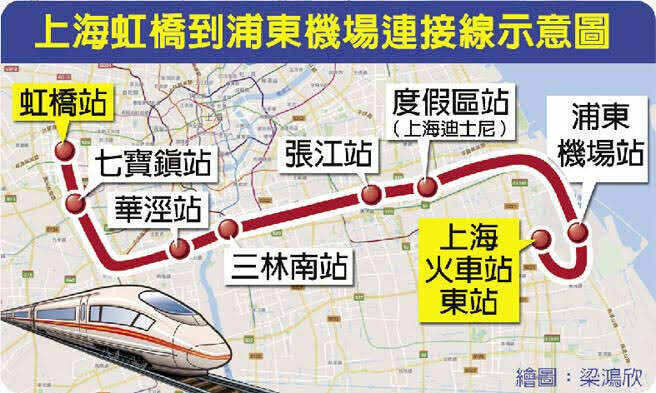
Die Magnetbahn verläuft auf einer einzigen Strecke von 30 km — Pudong Flughafen (PVG) ⟷ Longyang Road Station — und nirgendwo anders. Sie fährt nicht zum Bund, People's Square oder den meisten Hotels. Dies ist der größte Missverständnis für Erstbesucher: Viele Reisende gehen davon aus, dass die "Shanghai-Magnetbahn" sie in Shanghai bringt. Das tut sie nicht. Sie bringt Sie nahe zur Stadt, schnell, und dann wechseln Sie um.
Longyang Road ist ein Umsteigepunkt im Pudong-Metro-Netz, bedient von Linien 2, 7, 16 und 18 (verifiziert am 2026-07-03), sodass Sie dort in das zentrale Shanghai umsteigen können. Der Weg sieht wie folgt aus:
- Von: Pudong Flughafen (PVG), Magnetbahnhof an den Terminals angebaut
- Nach: Longyang Road Station (~30 km, üblicherweise 7–8 Minuten)
- Weiter: Umstieg auf Metro-Linie 2 zum Bund / People's Square / Jing'an oder Taxis an Longyang Road nehmen
Dies vorweg zu wissen, vermeidet einen echten Planungsfehler – die Buchung der Magnetbahn mit der Erwartung, dass sie direkt到您的 Hotel führt. Es ist eine hervorragende erste Etappe, aber auf den meisten Routen ist es nur die erste Etappe. Wenn Ihr Hotel sich nahe Longyang Road oder direkt an der Linie 2 befindet, sieht die Kombination aus Magnetbahn und Metro plötzlich viel praktischer aus, was genau der Vergleich entscheidet.
Wie man vom Pudong Flughafen in die Stadt kommt: Alle 4 Wege verglichen
Der Maglev ist die schnellste Fahrt, aber nicht die schnellste Reise. Tür-zu-Tür übertrifft ein Taxi oder DiDi (üblicherweise 45–70 Minuten) den Maglev für alle, die außerhalb des Longyang Road-Gebiets wohnen, da es keine Umsteigeverbindungen gibt und direkt zum Hotel führt; die U-Bahn ist am günstigsten; der Maglev gewinnt an Erlebnis und Tagesgeschwindigkeit, wenn Ihr Hotel in der Nähe eines Line-2-Haltestellen liegt. Dieser eine Satz ist die ehrliche Antwort auf „Maglev vs. U-Bahn von Pudong“ und „schnellste Weg vom Flughafen Pudong nach Shanghai“ — hier ist das vollständige Tür-zu-Tür-Bild dahinter.
Dies ist die Tabelle, die Wettbewerber nicht bauen: Statt die 8-minütige Fahrt zu vergleichen, addiert sie die gesamte Reise — Maglev-Sprint + Umstieg am Longyang Road + Ihre Weiterreise — und bewertet jede Verkehrsmittelvariante anhand der Faktoren, die tatsächlich entscheiden: Gepäck, Kinder und ältere Reisende sowie das Risiko des letzten Zuges.
| Art | Geschwindigkeit / Fahrzeit | Preis (einfach) | Gesamt Tür-zu-Tür (üblich) | Gepäck | Mit Kindern / älteren Reisenden | Letzte Abfahrt | Geeignet für |
|---|---|---|---|---|---|---|---|
| Maglev + U-Bahn (→ Longyang Rd → Linie 2/7/16/18) | 7–8 min Fahrt (bis zu 430 km/h) | üblich ¥50 (¥40 mit gleichflügigem Flugticket); Kinder unter 130 cm kostenfrei `Vor Ort prüfen` | ~40–55 min inkl. Umstieg Longyang Rd `Vor Ort prüfen` | Fair – ein Umstieg mit Gepäck | Für ältere Kinder gut; beliebt – schwierig mit Kleinkindern und Gepäck | ~21:40 (`Vor Ort prüfen`) | Das Erlebnis + ein Hotel in der Nähe von Longyang Rd / Linie 2 |
| U-Bahn Linie 2 (direkt ab PVG) | ~60–90 min | üblich ¥7 (¥3–9 pro Stop) `Vor Ort prüfen` | ~60–90 min (~65 min zum People's Square) `Vor Ort prüfen` | Schlecht – voll, wenig Gepäckraum | Anstrengend mit kleinen Kindern oder Älteren + Gepäck | ~22:30 (`Vor Ort prüfen`) | Budget-Reisende, leichtes Gepäck, tagsüber |
| Taxi / DiDi | 45–70 min | üblich ¥150–250 + ~¥15 Maut (Nachtzuschlag) `Vor Ort prüfen` | ~45–70 min, Tür-zu-Tür `Vor Ort prüfen` | Best – Kofferplatz, keine Umstiege | Best – Kindersitze über DiDi, kein Tragen | 24/7 | Familien, schweres Gepäck, späte Ankunft, nicht-zentrales Hotel |
| Airport-Shuttlebus | 60–90 min | üblich ¥20–30 `Vor Ort prüfen` | ~60–90 min + Gehweg zum Hotel `Vor Ort prüfen` | Gut – eigener Stauraum | Passt, wenn die Route zu Ihrer Gegend passt | Nur tagsüber/Abends (`Vor Ort prüfen`) | Bestimmte Hotelcluster-Strecken, mittleres Budget |
Vorlesen: Für die meisten Erstbesucher, die im zentralen Shanghai (Bund / People's Square / Jing'an) übernachten, ist ein Taxi oder DiDi die stressärmste Tür-zu-Tür-Option – ein fester Preis, keine Umstiege, endet am Lobby. Nehmen Sie den Maglev für einen Tagesausflug oder Ihre Abreise zum Flughafen, wenn Sie leicht packen können und die 430 km/h genießen, ohne sich mit Koffern durch den Umstieg in Longyang Road zu quälen. Nehmen Sie nur die U-Bahn-Linie 2, wenn Sie streng im Budget sind und wenig Gepäck haben. Jeder Fahrpreis und jede Zeit in dieser Tabelle ist indikativ und mit `待实地核实` gekennzeichnet – bestätigen Sie die aktuellen Zahlen erneut, bevor Sie sich darauf verlassen. Für eine detailliertere Umstiegserklärung (private Abholungen, Warteschlangen für Taxis, feste Preise) siehe unseren kompletten Leitfaden zum Flughafen Pudong in Shanghai.
Ist der Maglev die richtige Wahl für Sie? (Der Entscheidungsfinder)
Passen Sie das Verkehrsmittel dem Reisenden an, nicht der Höchstgeschwindigkeit. Die 430 km/h des Maglevs gelten für alle, aber die richtige Antwort hängt von Ihrem Gepäck, Ihrer Reisegruppe und Ihrer Ankunftszeit ab. Diese Entscheidungs-tabelle gibt eine Empfehlung und den ehrlichen Grund für jeden Reisetyp an – heben Sie die Zeile hervor, die zu Ihnen passt.
| Du bist... | Empfehlung | Warum |
|---|
| Ein Erlebnissucher / Eisenbahnfan, leichte Gepäck, Ankunft tagsüber, Hotel in der Nähe von Linie 2 | ✅ Maglev fahren (Maglev + U-Bahn) | Du hast nichts gegen die Gesamtdauer von ca. 40–55 Minuten – hier geht es um das 8-minütige, 430 km/h rasante Erlebnis und den Geschwindigkeitsbildschirm im Wagen. Das ist der Fall, in dem der Maglev gewinnt. | Eine Familie mit kleinen Kindern oder älteren Eltern / schweres Gepäck / ein verspäteter oder später Flug | ✅ DiDi oder privater Transfer (Tür-zu-Tür) | Du möchtest kein Schleppen, keine Umstiege und keine Angst vor dem letzten Zug. Ein Auto holt dich ab, 24/7 – die kluge Wahl, wenn Komfort wichtiger ist als Novelty. | Budget-bewusst, leicht reist, tagsüber ankommend | ✅ U-Bahn-Linie 2 (direkt, üblicherweise ¥7–9) | Der Umstieg an der Guanglan Road ist entfallen,所以现在 Linie 2 fast kostenlos direkt fährt. Nimm sie, wenn du mit leichtem Gepäck stehen kannst. | Hin und wieder – du willst beides | ✅ Speichere den Maglev für die Rückfahrt oder einen Tagesausflug | Komm stressfrei Tür-zu-Tür an, und fahre am nächsten Tag mit dem Maglev, wenn du leicht packst. Du bekommst das Icon und die einfache Anreise.
Die Regel, die sich durch jede Zeile zieht: Der Maglev bietet Sicherheit des Erlebnisses; ein Auto bietet Sicherheit der Tür-zu-Tür-Komfort und Timing — das sind zwei verschiedene Dinge, also verwechseln Sie sie nicht. Der klassische Fall ist eine müde Familie, die den Maglev „weil er berühmt ist“ wählt, dann aber am Ende eines Langstreckenflugs mit vier Koffern an der Longyang-Umsteigstelle landet. Fahren Sie einmal für den Nervenkitzel; verlassen Sie sich nicht darauf, Ihre gesamte Gruppe und Ihr Gepäck ins Hotel zu bringen.
Wie schnell ist der Maglev — und wie viel kostet er?
Der Shanghai Maglev erreicht maximal 430–431 km/h und überbrückt die ~30 km nach Longyang Road in etwa 7–8 Minuten — der schnellste Zug der Welt (verifiziert am 2026-07-03). Eine ehrliche Einschränkung, die Sie wissen sollten: Der Zug erreicht seine 430 km/h nur während festgelegter Hochgeschwindigkeitsfenstern jeden Tag (etwa mittags und am Nachmittag); ansonsten fährt er mit ca. 300 km/h. Wenn das Erreichen der Höchstgeschwindigkeit für Sie der eigentliche Grund ist, wählen Sie eine Abfahrt während eines Hochgeschwindigkeitsfensters.
Die Preise sind indikativ und mit `待实地核实` gekennzeichnet — bestätigen Sie vor Ihrer Reise:
- Economy hinreichend: üblicherweise ¥50 `待实地核实`
- Mit einem Flugticket desselben Tages: üblicherweise ¥40 (ca. 20 % Rabatt — behalten Sie Ihr Bordkarte) `待实地核实`
- Economy hin- und zurück (gültig 7 Tage): üblicherweise ¥80 `待实地核实`
- VIP hinreichend: üblicherweise ¥100 — vordere Sitze, mehr Platz; die meisten Menschen brauchen das nicht `待实地核实`
- Kinder unter 130 cm: üblicherweise kostenlos — ein echtes, wenig beworbenes Angebot für Familien `待实地核实`
Züge verlaufen üblicherweise von ca. 07:00 bis ca. 21:40, alle 15–20 Minuten während der Hauptzeit und alle 20–30 Minuten außerhalb der Spitzenzeiten (vor Ort zu überprüfen). Schauen Sie sich das digitale Display im Wagen an, das die aktuelle Geschwindigkeit anzeigt – für viele Fahrgäste ist es das Beste, wenn die Zahl über 400 steigt.
Maglev vs U-Bahn aus Pudong: Welches sollten Sie nehmen?
Nehmen Sie den Maglev für Geschwindigkeit und Erlebnis; nehmen Sie die U-Bahn-Linie 2, um Geld zu sparen. Die Kombination aus Maglev und U-Bahn (üblicherweise ca. 40–55 Min., ¥40–55) ist schneller und viel komfortabler als nur Linie 2 (üblicherweise ca. 60–90 Min., ¥7–9), aber Linie 2 ist fast kostenlos und erreicht nun direkt vom Flughafen aus zentrale Haltestellen ohne Umstieg am Longyang Road, wenn Ihr Hotel an dieser Linie liegt.
Der ehrliche Entscheidungskriterium ist Gepäck und Tageszeit:
- Leichte Gepäckstücke, Tagsüber, wollen Sie das Erlebnis → Maglev + U-Bahn. Sie erhalten das Icon und eine komfortable erste Etappe.
- Enges Budget, leichte Gepäckstücke, Hotel an Linie 2 → Direkte U-Bahn-Linie 2. Günstigster, einfachster Weg, kein Umstieg.
- Schwere Gepäckstücke, Kinder oder ein Hotel außerhalb der Linie → Vergleichen Sie einen DiDi mit beiden Zügen; der Komfort von Tür zu Tür lohnt sich usually den zusätzlichen Yuan.
Eine Korrektur zu alten Ratschlägen, die Sie vielleicht gelesen haben: Linie 2 zwingt nicht mehr zum Umstieg an Guanglan Road – es ist nun eine direkte Fahrt vom Flughafen Pudong (verifiziert am 03.07.2026). Wenn Ihnen ein Blog aus dem Jahr 2019 etwas anderes erzählt hat, ist er veraltet.
Spät in der Nacht ankommen? Was tun, nachdem die Züge eingestellt wurden?
Wenn Sie nach ca. 22 Uhr landen, gehen Sie davon aus, dass der Maglev (letzter um ca. 21:40) und die U-Bahn (letzter um ca. 22:30) für den Tag geschlossen sind – planen Sie ein Taxi oder DiDi ein, das 24/7 fährt. Erwarten Sie eine modestische Spätzuschlag und üblicherweise ¥150–250 ins zentrale Shanghai (`待实地核实`). Ein verspäteter Abendflug ist genau die Situation, in der ein Erstermaliger feststeht, vor einem geschlossenen Maglev-Tor.
Ein schneller Plan, der Ihnen als gestresstem, jet-laggetrübten Menschen hilft:
- Speichern Sie Ihre Hoteladresse in chinesischen Zeichen, bevor Sie fliegen — zeigen Sie sie dem Fahrer oder fügen Sie sie in DiDi ein.
- Schließen Sie sich der offiziellen Warteschlange für Taxis an, nicht jemandem, der Ihnen im Terminal ein Angebot macht.
- Stellen Sie sicher, dass Sie ein DiDi rufen können, was eine funktionierende Datenverbindung erfordert, sobald Sie landen — organisieren Sie Ihre eSIM oder SIM-Karte, bevor Sie den Flughafen verlassen, damit mobile Zahlung und Ride-Hailing bei Ankunft funktionieren.
Alle hier angegebenen Abfahrtszeiten sind indikativ und mit `待实地核实` gekennzeichnet — wenn Sie einen engen Anschluss haben, bestätigen Sie bitte das aktuelle Fahrplan vor Ihrer Reise mit der offiziellen Quelle.
Gepäck, Kinder und Tipps für Erstbesucher beim Transfer vom PVG
Sowohl Maglev als auch U-Bahn bedeuten, Ihr Gepäck durch eine Umsteigestelle zu tragen, so dass Sie dies berücksichtigen sollten, wenn Sie müde sind oder mit Kindern reisen. Einige Dinge, die das Erlebnis wirklich verändern:
- Der Umstieg auf die Magnetschwebebahn erfolgt am Longyang Road, wo Sie Ihr Gepäck nach oben und zur U-Bahn oder zu einer Taxistelle tragen — das ist okay, wenn Sie frisch und leicht sind, aber ermüdend nach einem Langstreckenflug mit einem vollen Wagen.
- Die U-Bahn-Linie 2 kann in der Stoßzeit überfüllt sein mit wenig Platz für Koffer; packen Sie leicht oder fahren Sie außerhalb der Spitzenzeiten.
- DiDi unterstützt Kindersitze und größere Fahrzeuge — die einfachste Option für Familien und Mehr-Generationen-Gruppen, die nichts schleppen wollen.
- Kinder unter 130 cm fahren kostenlos mit der Magnetschwebebahn (`待实地核实`) — ein echter Vorteil, wenn die Familie dies erleben möchte.
- Kaufen Sie das Ticket für die Magnetschwebebahn mit Ihrem gleichfliegenden Flugticket, um die üblichen ¥40 anstatt ¥50 zu erhalten — halten Sie Ihren Bordpass griffbereit.
- Richten Sie mobile Zahlung und mobile Daten vor dem Verlassen des Flughafens ein, da jede Art von QR-Code-Ticketing, U-Bahn-Aufladung und DiDi-Hailing voraussetzt, dass Sie bereits verbunden sind — die China eSIM- und SIM-Karten-Anleitung erklärt wie.
Insbesondere für Familien ist die entscheidende Variable normalerweise nicht die Geschwindigkeit — es ist, wie viele Umstiege Sie am Ende eines Fluges verkraften können. Das ist oft der ehrliche Fall für eine Tür-zu-Tür-Fahrt statt des berühmten Zuges.
Häufig gestellte Fragen
Wie teuer ist der Shanghai Maglev? Ein einfacher Economy-Ticket kostet üblicherweise ¥50, oder etwa ¥40, wenn Sie einen Flugticket für denselben Tag vorzeigen. Eine 7-tägige Rückfahrt kostet üblicherweise ¥80 und VIP kostet üblicherweise ¥100; Kinder unter 130 cm fahren kostenlos. Alle Preise sind nur Richtwerte — bestätigen Sie vor Ihrer Reise.
Wie schnell ist der Shanghai Maglev? Er erreicht Geschwindigkeiten von bis zu 430–431 km/h und ist damit der schnellste kommerzielle Zug der Welt. Er legt die ca. 30 km lange Strecke nach Longyang Road in etwa 7–8 Minuten zurück. Beachten Sie, dass er nur während festgelegter Hochgeschwindigkeitsfenster am Tag seine Höchstgeschwindigkeit erreicht; ansonsten fährt er mit ca. 300 km/h. Ist der Maglev es wert? Ja – als einmaliges Erlebnis auf Ihrer Reise. Es ist ein echtes Bucket-List-Erlebnis zu einem günstigen Preis. Aber es ist nicht automatisch Ihre beste Flughafenverbindung, da es bei Longyang Road endet und nicht direkt vor Ihrem Hotel. Nehmen Sie es tagsüber und mit wenig Gepäck; lassen Sie es sein, wenn Sie schweres Gepäck haben oder einen späten Flug haben. Maglev vs. U-Bahn aus Pudong – was ist besser? Die Kombination aus Maglev und U-Bahn ist schneller und komfortabler (üblicherweise ~40–55 Min.); die Metro-Linie 2 allein ist günstiger (üblicherweise ¥7–9) und fährt nun direkt vom PVG. Wählen Sie den Maglev für Geschwindigkeit und Erlebnis, Linie 2 um Geld zu sparen – Gepäck und Tageszeit entscheiden.
Wohin fährt der Shanghai-Maglev? Er verkehrt auf einer einzigen Strecke zwischen dem Flughafen Pudong (PVG) und dem Bahnhof Longyang Road – ca. 30 km, und nirgendwo sonst. Er erreicht weder den Bund, den People's Square oder die meisten Hotels. Longyang Road ist ein Umstiegspunkt der U-Bahn (Linien 2, 7, 16, 18), von wo aus Sie weiterreisen.
Wie komme ich vom Flughafen Pudong ins Zentrum von Shanghai? Vier Möglichkeiten: Maglev plus U-Bahn, direkte Metro-Linie 2, Taxi oder DiDi oder der Flughafenbus. Für zentrale Hotels sind Taxi oder DiDi in der Regel die stressärmste Tür-zu-Tür-Option; die obere Tabelle vergleicht sie hinsichtlich Zeit, Preis, Gepäck und Risiko des letzten Zuges.
Was ist die schnellste Möglichkeit nachts von Pudong ins Stadtzentrum? Nach etwa 22 Uhr sind Maglev und U-Bahn nicht mehr im Dienst, sodass ein Taxi oder DiDi (24/7) Ihre Option ist – üblicherweise ¥150–250 nach zentrales Shanghai mit einem kleinen Nachtzuschlag. Speichern Sie die Adresse Ihres Hotels in chinesischer Schrift und stellen Sie sicher, dass Ihr Telefon Daten hat, um ein Auto zu rufen.
Den Anruf tätigen
Zwei Antworten schließen dies ab. Erstens, die Magnetschwebebahn lohnt sich einmalig — 430 km/h und 7–8 Minuten sind ein echter Nervenkitzel bei geringen Kosten, am besten leicht und tagsüber genossen. Zweitens, der intelligenteste Tür-zu-Tür-Verkehr hängt von Ihrem Gepäck, Budget und Ankunftszeit ab: Ein Taxi oder DiDi für Familien und späte Nächte, Magnetschwebebahn plus Metro für Geschwindigkeit am Tag mit leichtem Gepäck, und direkte Metro-Linie 2, wenn Sie jeden Yuan im Auge haben. Die Falle, die Sie vermeiden sollten, ist der berühmte Zug, wenn Sie müde und überfüllt sind, dann die Umsteige-Station Longyang Road zum ungünstigsten Zeitpunkt zu treffen. Was auch immer Sie wählen, speichern Sie Ihre Hoteladresse auf Chinesisch, sortieren Sie Ihre Mobilfunkdaten, bevor Sie das Terminal verlassen, und achten Sie auf die letzten Züge.
Wenn Sie lieber ganz auf das Rätselraten beim Umsteigen verzichten möchten, kann LyrikTrip Reisegestalter einen privaten Flughafentransfer und einen kindgerechten Ankunftstag in Shanghai organisieren — ein Fahrer am Ausgang, Gepäck erledigt, direkt ins Hotel, egal wie spät Sie landen. Teilen Sie uns Ihren Flug und Ihr Hotel mit, und wir sorgen dafür, dass die Fahrt vom Flughafen Pudong zur Stadt der leichte Teil Ihrer Reise wird.