




 18 Tage China, von Anfang bis Ende Peking → Xi'an → Chuanzhusi → Jiuzhaigou → Chengdu → Zhangjiajie → Guilin → Yangshuo → Shenzhen ab $6,360 Route ansehen
  3 Tage 3-tägige Tour: Vier-Gipfel-Berg, Biepagou und Dagu-Eisberg Chengdu ab $1,599 Route ansehen
  10 Tage Abschiedsessen Guangzhou → Shantou → Jieyang → Chaozhou → Quanzhou → Zhangzhou → Xiamen ab $4,000 Route ansehen
  12 Tage Achse bis Küchentisch Peking → Xi'an → Chengdu ab $4,060 Route ansehen
  12 Tage China auf zwei Höhen Kunming → Lijiang → Shangri-La → Tacheng → Chengdu → Dujiangyan → Leshan ab $3,900 Route ansehen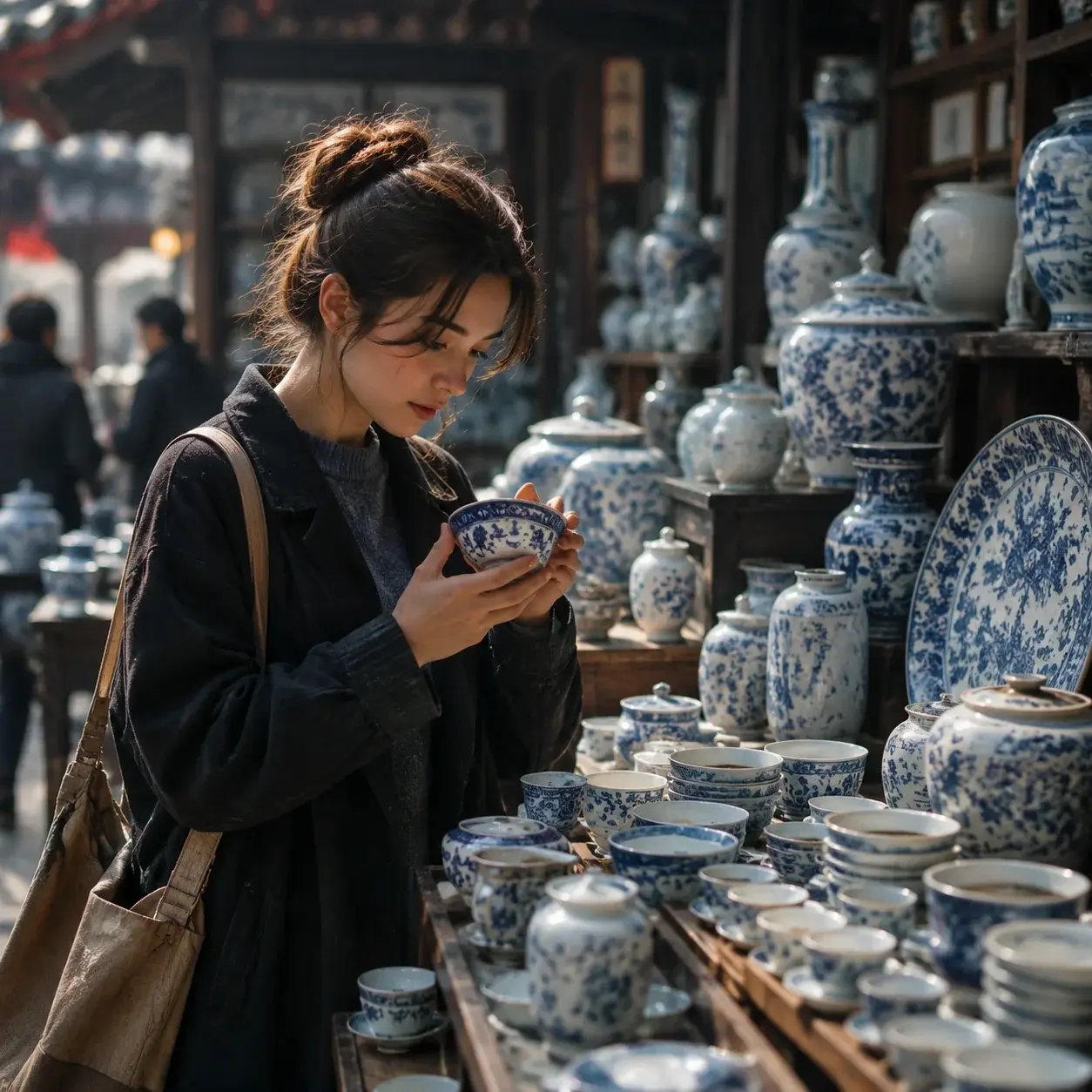
Chinesisches Porcelain: Wie kauft man authentische Stücke in China, ohne betrogen zu werden?
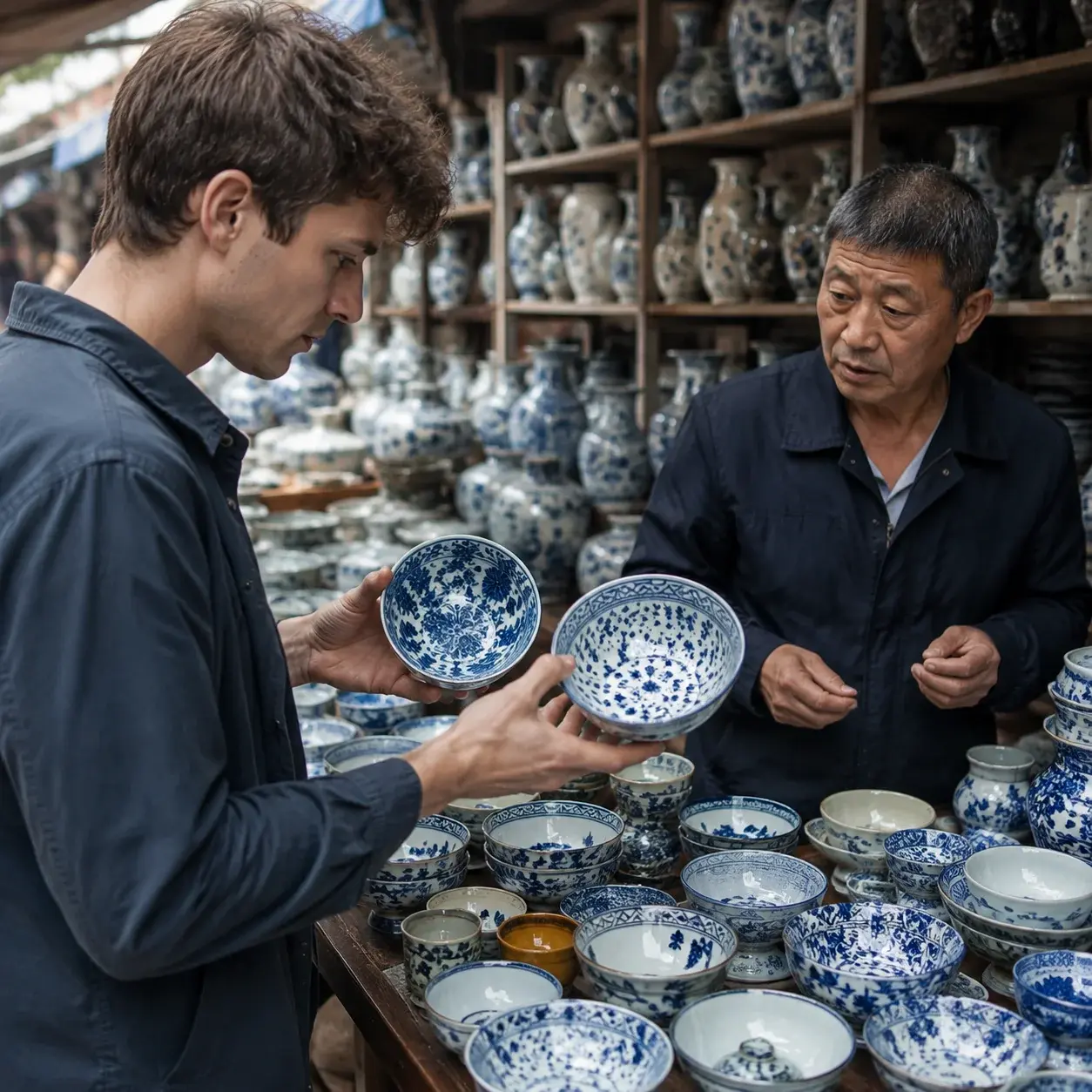
Denkauf in China ist einfach und sicher, wenn Sie eine einzige Regel befolgen: Kaufen Sie moderne Stücke. Fast jedes Stück, das ein Reisender kaufen sollte – handgemaltes Blau-Weiß aus Jingdezhen – ist ein Kunsthandwerk, das das Land frei verlassen kann. Echte antike Stücke (vor 1949) sind rechtlich eingeschränkt und meist gefälscht. Dies ist ein Reiseführer für den Markt, kein Laden.
Wir haben dies geschrieben, weil jede Porcelain-Anleitung, die wir finden konnten, entweder ein museumswürdiges Geschichtsessay oder eine dünne „Gehe nach Jingdezhen“-Liste war. Keine von ihnen erzählt Ihnen, wie es sich anfühlt, auf einem Markt zu stehen, Ihnen gesagt wird, dass eine Aufdruckschale „Qing-Dynastie“ ist, und dann entscheiden, ob Sie gehen wollen. Wir sind ein Reiseunternehmen für China, kein Porcelain-Händler – daher können wir Ihnen ehrlich sein. Am Ende wissen Sie, wie Sie echte Handmalerei von gedruckten Fälschungen unterscheiden, einen fairen RMB-Preis zahlen, genau verstehen, was Sie mitnehmen dürfen, und es so verpacken, dass es den Flug übersteht.
Ein kurzes Versprechen zur Ehrlichkeit, bevor wir beginnen: Das hier vorhandene, immergrüne Wissen — die Handwerksdefinitionen, die Stilunterschiede, die Feldtests, die Prinzipien des Exportrechts — ist solide. Die spezifischen RMB-Preise, die genannten Märkte und die rechtlichen Schwellenwerte sind lediglich Anhaltspunkte; wir präsentieren sie zur Orientierung, nicht als feste Angebote oder rechtliche Beratung. Behandeln Sie Geldbeträge als "ungefähr", bestätigen Sie vor Ort und überprüfen Sie jede Exportvorschrift mit dem Zoll Chinas, bevor Sie kaufen oder abreisen.
Wichtige Erkenntnisse
- Kaufen Sie einfach modernes Porzellan. Für 99 % der Reisenden ist das die richtige Antwort – kein rechtliches Risiko, keine Papierkram und meistens ein schöneres, vollständigeres Stück als ein "gealtertes Antiquitätenstück".
- Die relevante Preislinie ist modern vs. antique, dann handbemalt vs. gedruckt. Eine moderne Jingdezhen-Schüssel kostet zwischen einigen Dutzend und ein paar Tausend RMB; echte kaiserliche Antiken gehören in eine andere Auktionswelt, auf der Sie während einer Reise nicht einkaufen sollten.
- Blau-weiß (qinghua) ist der sichere erste Kauf – handgemaltes Kobalt unter einer klaren Glasur, sofort erkennbar, funktioniert als Vase, Schüssel oder Geschenk.
- Stücke vor 1949 sind im Prinzip "Kulturgüter" – zur legalen都需要 sie eine Bewertung, einen roten Wachssiegel und ein Genehmigungsformular. Modernware nach 1949 kann frei mitgenommen werden. (Überprüfen Sie mit der chinesischen Zollbehörde / SACH; die Regeln ändern sich.)
- Ein roter Wachssiegel beweigt nur die Ausfuhrerlaubnis, nicht die Echtheit – und er kann gefälscht sein. Er ist niemals Beweis dafür, dass ein Stück echt oder ein guter Kauf ist.
- Lassen Sie es vom Fachgeschäft verpacken und große Stücke nach Hause versenden. Zerbrochen ist der häufigste Grund, warum Reisende ihr Porzellan verlieren.
Was macht chinesisches Porzellan besonders (und warum heißt es "China")?
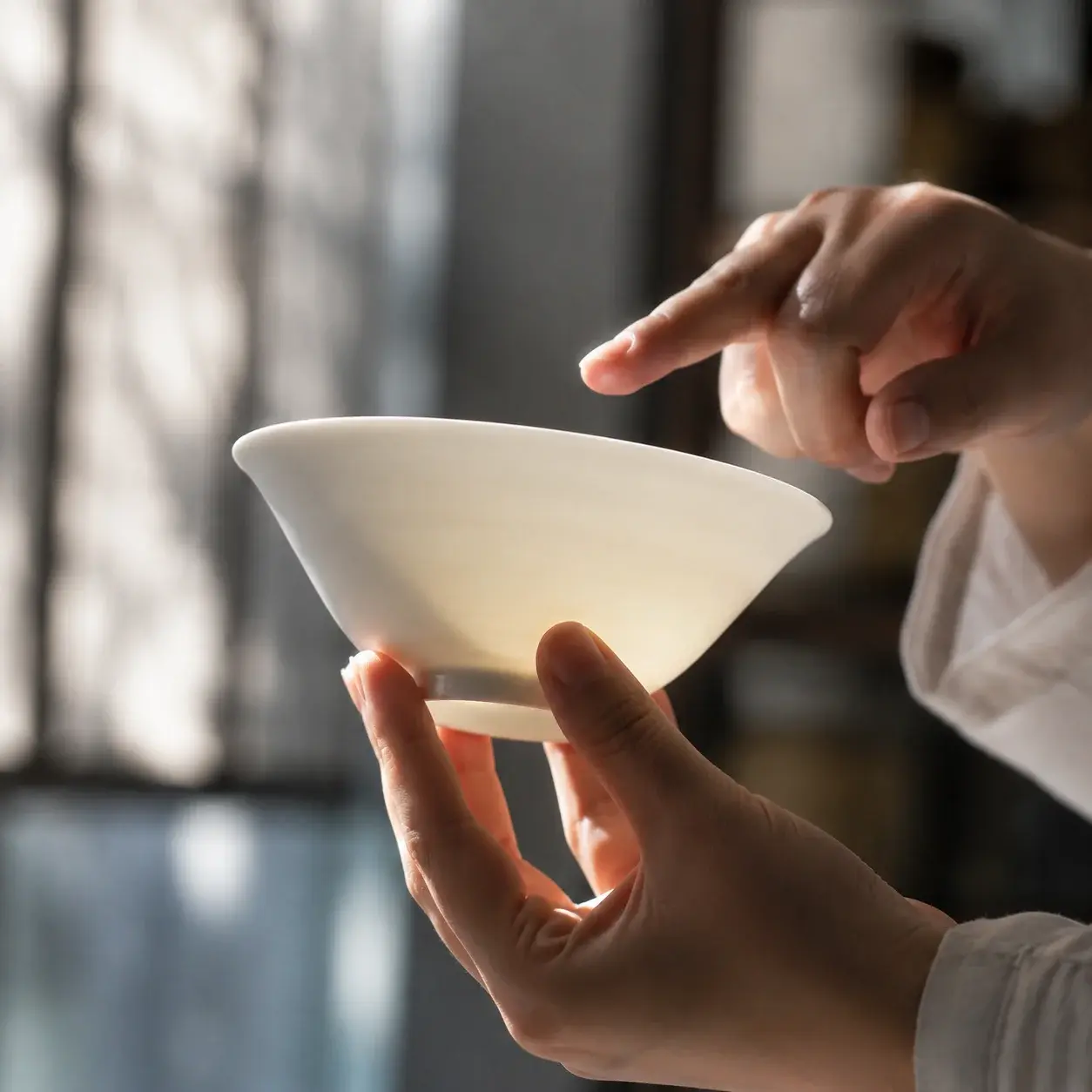
Chinesisches Porzellan ist ein Keramikprodukt, das aus Kaolin und Petuntse (Chinastein) hergestellt wird und bei etwa 1.300 °C gebrannt wird, bis der Körper zu einem harten, weißen, durchscheinenden Material wird, das beim Antippen wie eine Glocke klingt. China beherrschte diese Technik mehr als tausend Jahre früher als Europa, weshalb der englische Name für das Land und der Name für die Tischware identisch sind: „China“.
Die Handwerkskunst erreichte ihren Höhepunkt in Jingdezhen (景德镇) in Jiangxi, einer Stadt, die seit über einem Jahrtausend Porzellan brennt und ihren Namen im Jahr 1004 n. Chr. während der Jingde-Regierung der Nord-Song-Dynastie erhielt, als sie den kaiserlichen Hof versorgte (laut Britannica und Wikipedia; letzte Überprüfung 2026-06). Daher hat der Ausdruck „Made in Jingdezhen“ immer noch Gewicht – und warum diese Stadt Ihr erster Stopp ist.
Drei Dinge unterscheiden hochwertiges Porzellan von touristischem Kitsch:
- Durchlässigkeit: Halten Sie ein dünnes, gutes Stück ins Licht – es leuchtet schwach auf. Dickes, kreidiges, opakes Geschirr ist niedrig gebranntes Steinzeug, kein echtes Porzellan.
- Der Klang: Tippen Sie sanft am Rand. Ein vollständig, gut gebrücktes Stück gibt einen klaren, nachklingenden, fast metallischen Ton. Ein dumpfer Schlag bedeutet einen Riss oder einen schlecht verglasten Körper.
- Die Dekoration: Handgemalte Pinselstriche (mit sichtbarem Druck und Schattierung) versus aufgebrachte Dekalcomien (einheitliche Punkte, maschinenperfekte Wiederholung). Diese Unterscheidung bestimmt den Großteil des Preises – darauf werden wir zurückkommen.
Blau-Weiß vs. Andere Stile — Welches chinesische Porzellan sollten Sie eigentlich kaufen?
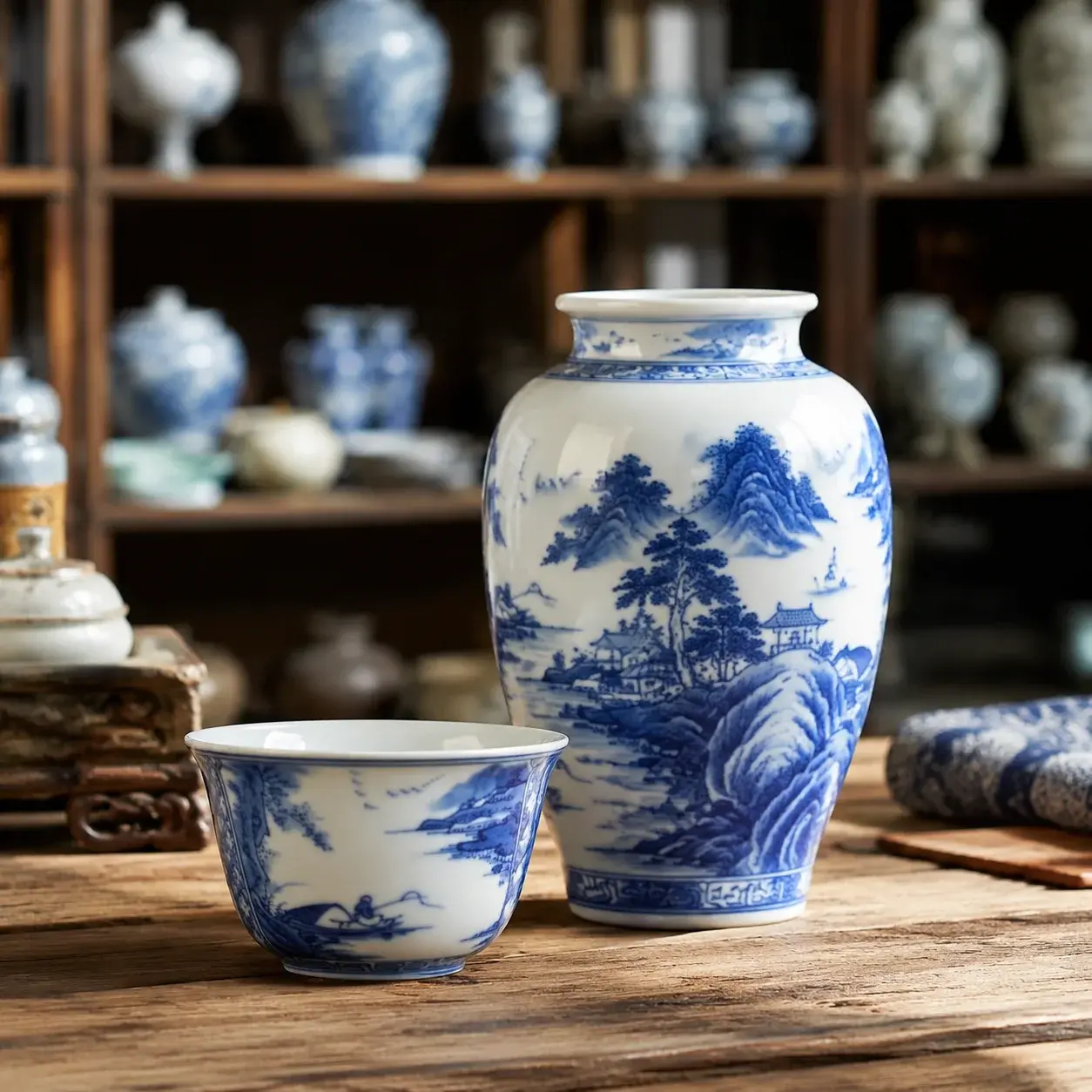
Wenn Sie ein sicheres, eindeutig chinesisches Stück wollen, kaufen Sie Blau-Weiß (Qinghua): Handgemalte Kobaltunterglasuren. Es ist der erkennbarste Stil, funktioniert als Vase, Schale oder Geschenk und passt zu jedem Budget. Aber es gibt vier weitere Familien, die es wert sind, bekannt zu sein, und zwei von ihnen — Celadon und Dehua-Weiß — sind stillschweigend die Wahl der Kenner. Verwenden Sie diesen Selektor, um „Was ist das?“ in „Welches sollte ich kaufen?“ zu verwandeln.
| Stil (Chinesisch / Englisch) | Aussehen | Geeignet für | Verwendung / Geschenk | Preisgefühl | Editor-Tipp |
|---|---|---|---|---|---|
| Qinghua 青花 / Blau-Weiß | Kobaltblauer Unterglas-Malerei, handgemacht, der klassische „sofort chinesische“ Look | Fast jeder; sicheres Geschenk | Vase, tägliche Schale, Teezubehör – alles | Breit; von günstig bis fein | Ihr erster Kauf – schwer falsch zu gehen |
| Fencai 粉彩 / Famille rose | Weiche, verzierte Überglas-Esmailen; Blumen und Vögel | Menschen, die dekorative, luxuriöse Stücke mögen | Displayvase und Geschenke | Mittel bis hoch | Überglas abnutzt – nicht als tägliche Schale verwenden |
| Celadon 青瓷 | Einzelner jadegrüner Glanz, minimalistisch, glasig | Teetrinker, wabi-sabi / minimalistischer Geschmack | Teezubehör, Display, tägliche Nutzung | Mittel | Der unterschätzte Teezubehör; altert schön |
| Dehua 德化 / Blanc de Chine | Warm elfenbeinweiß, oft Figuren und Buddhas | Liebhaber von reinem Weiß; Teezubehör | Teezubehör (Gaiwan), Figuren, Geschenke | Mittel | Hergestellt in Dehua, nicht Jingdezhen – hochwertiges weißes Teezubehör |
| Doucai 斗彩 | Unterglas-blaue Umrisse mit Überglasfarbe gefüllt | Fortgeschrittene / Sammler | Sammeln, hochwertige Geschenke | Hoch | Komplexes Handwerk; billiges „Doucai“ ist eine vereinfachte Nachbildung |
| Farbiger Glasur / linglong 玲珑 | Monochrome Hochbrandglasuren / durchsichtige „Reiskorn“-Öffnungen | Alle, die etwas Anderes wollen | Display, tägliche Nutzung | Mittel | Zwei der vier berühmten Porzellane von Jingdezhen |
💬 Ehrliche Einschätzung der Redaktion: Jeder greift nach dem tausendsten Blau-Weiß-Drachenvasse. Der Reisende mit Geschmack bringt sich stattdessen einen warmen Celadon-Gaiwan oder eine Dehua-Teetasse mit – ruhiger, raffinierter und auf westlichen Regalen viel seltener.
Welche Porzellankaufen Reisende tatsächlich?
Entscheiden Sie zuerst nach Verwendung, dann nach Stil: Kaufen Sie zur Ausstellung, zur Nutzung oder als Geschenk? Diese einzige Frage reduziert die gesamte Auswahl auf ein konkretes Objekt.
- Zur Ausstellung: eine Blau-Weiß- oder Famille-Rose-Aussagevase – das Stück, am ehesten wie "etwas, ich aus China mitgebracht habe." Denken Sie daran: Eine hohe Vase ist ein Packungsnachtsehen (siehe unten).
- Zur Nutzung: Blau-Weiß-, Celadon- oder Dehua-Weiß in Unterglasur- oder Einfarbglasur – langlebig und spülmaschinenfest. Bestehen Sie auf Unterglasur; Überglasuren Famille Rose sind keine täglichen Schalen.
- Als Geschenk: ein Gaiwan-Teeset, ein Paar Tassen oder eine kleine Vase – kompakt, verpackbar, bedeutungsvoll und leicht zu preisen.
Chinesische Porzellanvasen
Eine chinesische Porzellanvase ist der klassische Kauf zur Ausstellung. Achten Sie auf gleichmäßige Wandstärke, einen stabilen Fuß und von Hand gemalte Pinselstriche, wenn Sie über Souvenirpreise zahlen. Je höher die Vase, desto teurer ist es, sie sicher nach Hause zu bringen – für alles über etwa 30 cm planen Sie, dass der Shop sie versendet und versendet, anstatt sie in Ihr Gepäck zu kämpfen.
Chinesische Porzellschalen, Tassen und Teeutensilien
Für alles, was Sie täglich essen oder trinken, bestehen Sie auf Unterglasur-Muster (die Farbe liegt unter dem Glasur, sodass sie nicht abnutzen kann). Ein Gaiwan-Set oder ein Paar Blau-Weiß-Tassen ist das beste Geschenk aus Porzellan: klein, verpackbar, bedeutungsvoll und so preisgünstig, dass Sie eine gute auswählen können, ohne sich zu sehr zu überlegen.
Wo können Sie authentisches chinesisches Porzellan in China kaufen?
Beginnen Sie in Jingdezhen – es ist die Porzellanmetropole mit der größten Auswahl und den klarsten Preisen. Konkurrenten bleiben beim Namen der Stadt stehen; im Folgenden nennen wir die spezifischen Märkte und Studio-Cluster sowie die regionalen Spezialisten für Weiß-, Figuren- und Alltagsgeschirr. (Öffnungszeiten, bestimmte Geschäfte und Pack-/Versandverfügbarkeit müssen vor Ort überprüft werden – siehe die Erstartikel des Vertiefungsleitfadens.)
| Ort | Berühmt für | Für wen geeignet | Editor-Tipp |
|---|---|---|---|
| Jingdezhen (Jiangxi) | Die 1.000-jährige Porzellanstadt; jede Kategorie | Jeder erste Stop | Siehe die drei Orte unten |
| — Taoxichuan 陶溪川 | Ehemaliges Fabrik-Creative-Park; junge Designer, feste Preise, Nachtsmarkt | Käufer, die modernes Design und klare Preise suchen | Top-Wahl – leicht zu durchsuchen, weniger Verhandlungsspiele |
| — Sanbao 三宝 (Keramik-Dorf) | Künstlerwerkstätten, Wurfschulen | Menschen, die Studio-Originale oder hands-on-Machen wollen | Einen Aufenthalt lohnen, um tiefer einzusteigen |
| — China Ceramic City 中国陶瓷城 | Großes Großhandels-/Einzelhandelskomplex | Preisvergleich auf einen Blick, Mengen | Gemischte Qualität – hart verhandeln |
| Dehua (Fujian) | Blanc-de-Chine-Weiß, Figuren, weißes Tee-Geschirr | Käufer von Weißporzellan und Figuren | Der spezialisierte Weißporzellan-Trip |
| Foshan / Shiwan (Guangdong) | Shiwan-figurative Keramik, Architekturkeramik | Sammler skulpturaler Figuren | Eine andere Ästhetik als Jingdezhen |
| Liling (Hunan) | Unterglas-Farbenalltagsgeschirr | Wertbewusste Alltagsporzellansammler | Toller Alltagswert |
| Beijing / Shanghai Antikmärkte + Museumsshops | Hochwertige Antiken + hochwertige Nachbildungen | Reisende mit wenig Zeit für die Brennöfen | Antikhallen benötigen die Betrugshilfe unten |
💬 Tipp der Redaktion: In Studios und kreativen Parks sind die Preise meist fest und ehrlich. Bei Großhandelskomplexen und Ständen sollten Sie verhandeln. Fragen Sie immer upfront, ob sie eine ordnungsgemäße Rechnung ausstellen und Verpackung/ Versand organisieren — Geschäfte, die das können, sind in der Regel vertrauenswürdig.
Wie erkennen Sie echtes chinesisches Porzellan von Fälschungen?
Führen Sie fünf schnelle Checks im Geschäft durch, aber verstehen Sie, was sie beweisen: Für Reisende geht es darum, handgemachte Qualität zu erkennen und offensichtliche Fälschungen auszuschließen — nicht um "die Authentizität einer Ming-Vase" zu bestätigen." Keiner der Tests im Markt datiert ein Stück zuverlässig; lassen Sie das lizenzierten Experten überlassen. Hier ist, was Sie direkt am Tresor machen können.
Fünf schnelle Überprüfungen im Geschäft
- Der Ringtest – klopfen Sie vorsichtig am Rand. Ein ganzes, gut gebranntes Stück klingt hell und hallt nach; ein dumpfer Klang bedeutet einen Riss oder einen weichen Körper.
- Transluzenz – halten Sie es an das Licht oder an die Taschenlampe Ihres Handys. Feines Porzellan leuchtet schwach auf; dickes, kreidiges Keramik bleibt opak.
- Fußrand – drehen Sie es um und fühlen Sie den unbemalten Boden. Handgefertigte Arbeiten haben leicht rauhe, unregelmäßige Werkzeugabdrücke; verdächtig makellose, maschinenglatt gerundete Ränder deuten auf Massenproduktion hin.
- Gewicht und Dünnwandigkeit – ein gutes Stück fühlt sich ausgewogen an, weder unhandlich schwer noch für seine Größe wie Eierschale dünn.
- Handbemalte vs. gedruckte Dekoration – betrachten Sie die Verzierung genau. Pinselstriche zeigen Druck, Schattierungen und gelegentlich eine verirrte Linie. Ein gedruckter Aufdruck zeigt ein gleichmäßiges Punktmuster, scharfe wiederkehrende Kanten und identische Bilder von Stück zu Stück. Dies ist der nützlichste Check: Er unterscheidet eine handbemalte Schale von einem gedruckten Souvenir und macht den größten Teil des Preisunterschieds aus.
Lesen der Reinschrift (款识)
Viele Stücke tragen eine sechsstellige Basismarke, die von rechts nach links und oben nach unten lautet „Großes [Dynastie] [Kaiser] hergestellt in der Regierungszeit von“ – beispielsweise Da Qing Qianlong Nian Zhi („Herstellung während der Qianlong-Regzeit des Großen Qing“). Vierstellige Markierungen lassen die Dynastie weg. Die am häufigsten gefälschten Kaisernamen sind Xuande, Chenghua, Kangxi, Yongzheng und Qianlong – die Hälfte der „Antiquitäten“ auf einem Markt trägt eine solche Marke.
⚠️ Die eiserne Regel, einfach ausgedrückt: Die alleinige Reichsmarke beweigt nichts. Spätere Öfen kopierten regelmäßig frühere Marken – diese werden als apokryph oder "Homage"-Marken bezeichnet und sind seit Jahrhunderten üblich. Eine Schale mit der Inschrift "Ming Xuande" ist fast immer Qing oder modern. Die Marke ist der Ausgangspunkt für die Datierung, nicht das Ende.
Echt-Antik vs. Reproduktions-Scorecard
Verwenden Sie dies, um Stücke auszuschließen (Betrug zu vermeiden), nicht um Schnappschüsse zu finden. Sie haben keine zehnjährige Sammlerexpertise, und der Markt weiß es. Zwei von {Aufklebepunkten, einem völlig neuen Fußrand, einem verdächtig niedrigen Preis} bedeuten, dass Sie es als moderne Reproduktion betrachten und den Reproduktionspreis zahlen sollten.
| Prüfpunkt | Echte Antike | Nachdruck / Neu | Wie testen |
|---|---|---|---|
| Malerische Arbeit | Pinselstriche mit Druck und Schattierung, gelegentlich abweichende Linien | Punktmuster-Decal, scharfe wiederkehrende Kanten | Genau hinsehen / vergrößern |
| Fußrand | Abnutzung am unglasierten Boden, "Feuerstein"-Rot, handwerkliche Unregelmäßigkeit | Perfekt glatt, maschinell sauber, neu | Umdrehen und den Boden fühlen |
| Glanz | Gebrauchsspuren, leichte Alterung, Orangenhautstruktur | Glasig, makellos, gleichmäßig hell | Licht schräg über die Oberfläche werfen |
| Kobalt-Ton | "Lebendiges" Blau, mit etwas Ansammlung oder Eisenflecken | Flaches, gleichmäßiges, mechanisches Blau | Farbtiefe untersuchen |
| Gewicht / Körper | Entspricht der Handwerksweise der Zeit | Zu schwer, zu leicht oder zu weiß und fein | In der Hand wiegen |
| Marken-Schriftzug | Selbstsicher, entspricht dem Standard der Regierungszeit | Nachgezeichnet, lockere Struktur | Mit einem Referenzblatt vergleichen |
| Ring | Klanger (prüft die Ganzheit, nicht das Alter) | Dumpfer Klang = Riss | Leicht klopfen |
💬 Editor's Meinung: Die Checkliste ist ein Betrugsschutzfilter. Wenn ein Stück scheitert, gehen Sie. Wenn es besteht, macht es immer noch keine Antike – es ist nur ein schönes Porzellanstück, das seinen Handwerkspreis wert ist. Für eine echte Antike nutzen Sie einen lizenzierten Antikenhändler plus eine unabhängige Bewertung, nie eine Marktlüge.
Können Sie chinesisches Porzellan rechtlich nach Hause nehmen? Das chinesische Ausfuhrrecht erklärt
⚠️ Lesen Sie dies zuerst — es ist ein Reisender-Erklärungsblatt, keine rechtliche Beratung. Das chinesische Kulturdenkmalschutzgesetz und die Zollvorschriften werden überarbeitet (eine überarbeitete Gesetz trat am 2025-03-01 in Kraft), und die Durchsetzung unterscheid sich nach Hafen. Kaufen Sie etwas "Altes" oder verlassen Sie das Land, überprüfen Sie bitte die aktuellen Vorschriften mit dem chinesischen Zoll und einer lokalen Ausfuhrbewertungsstelle für Kulturgüter (unter SACH, der Verwaltung für Kulturerbe). Alle unten genannten Preise sind nur Richtwerte, keine Angebote.
Das Kernprinzip: China reguliert "Kulturgüter", nicht "Handwerkswaren." Die etwa 99 % der Reisenden, die modernes Jingdezhen-Geschirr kaufen, erwerben ein Handwerk — es kann ohne Papierausfuhr exportiert werden. Nur wirklich alte Stücke werden zurückgehalten. Denken Sie an die eine-Zeilen-Regel:
Stücke, die vor 1949 (der Gründung der Volksrepublik China) hergestellt wurden, gelten im Prinzip als "Kulturgüter." Um sie legal auszuführen, müssen sie bewertet, mit einem roten Lack-/Wachs-Siegel versehen und ein Ausfuhrzertifikat erteilt werden — sonst kann der Zoll sie beschlagnahmen. Moderne und Nachbauware aus der Zeit nach 1949 ist kein Kulturgut und kann frei ausgeführt werden. (Überprüfen Sie dies mit dem chinesischen Zoll / SACH; der genaue Jahreswert wird von der vor Ort stehenden Bewertungsstelle festgelegt.)
Der Entscheidungsbaum "Kann ich es mit nach Hause nehmen?"
Fragen Sie sich diese Fragen in dieser Reihenfolge:]
- Handelt es sich um ein modernes Stück oder eine Reproduktion (nach 1949 gekauft – neu auf einem Markt, in einem Studio oder online)? → 🟢 Frei auszuführen. Keine Bewertung, kein Siegel, kein Zertifikat. Behalten Sie den Kaufbeleg im Zoll an. Hier止步 99 % der Reisenden.
- Behauptet der Verkäufer, es sei „alt / antik / Qing / Republik“ (vor 1949)? Wenn der Verkäufer zugibt, dass es sich um eine neue Reproduktion handelt, betrachten Sie es als Handwerk (zurück zu 🟢), halten Sie dies aber schriftlich fest. Wenn es beharrlich als echtes Antikstück bezeichnet wird → fahren Sie fort und lesen Sie die ehrliche Einschätzung unten, bevor Sie kaufen.
- Welcher Epoche gehört es ungefähr an? (Bestimmen Sie das Datum anhand der Marke und der oben genannten Hinweise – das Wort des Verkäufers zählt nicht.) Republik / späte Qing (~1912–1949) → 🟡 eingeschränkt, erfordert Bewertung. Mittlere Qing und früher, insbesondere vor 1795 oder erstklassige / ausgegrabene Stücke → 🔴 grundsätzlich verboten.
- Wenn Sie ein echtes Stück vor 1949 ausführen möchten, befolgen Sie den rechtlichen Ablauf: Bewertung → Wachssiegel + Genehmigung → Zollanmeldung.
Dreifarbige Schnellübersicht
| Signal | Urteil | Was zu tun ist |
|---|---|---|
| 🟢 Modern / Reproduktion (nach 1949) | Frei auszuführen — kein Relikt | Beleg behalten; packen und loslegen |
| 🟡 Echte Republik–späte Qing (~1912–1949) | Eingeschränkt, erfordert Bewertung | Bewerten → Wachssiegel + Genehmigung → Zoll anmelden |
| 🔴 Mittlere Qing und früher / vor 1795 / erstklassig / ausgegraben | Grundsätzlich verboten | Kaufen Sie es nicht mit nach Hause — Sie erhalten keine Genehmigung |
Die Wahrheit über das Wachssiegel
Ein roter Wachs-/Lacksiegel beweist nur, dass der Export erlaubt war – nicht, dass ein Stück authentisch oder wertvoll ist. Und Wachssiegel können gefälscht werden. Es ist bekannt, dass Verkäufer das Siegel fälschen, um ausländische Käufer zu überzeugen, dass ein Stück "legaler alter Ware" ist. Ein Siegel ist kein Talisman: es macht aus einem Fake kein Echtes, und ein echtes Antiquitätenstück ohne Siegel und Genehmigung wurde nie legal exportiert und kann noch immer beschlagnahmt werden. Eine seriöse Provenienz und unabhängige Gutachter sind viel wichtiger als jeder Stempel.
💬 Aufrichtige Meinung unseres Redakteurs – für fast jeden Reisenden kaufen Sie einfach modernes Porzellan. Null rechtliches Risiko, kein Wachssiegel, und Sie erhalten meist ein schöneres, vollständigeres Stück. Der Markt für echte Antikitäten ist tief, langsam und mostly Fakes; die Suche nach "einer Ming-Vase zum Mitnehmen" bringt etwa 99 % der Anfänger ins Abseits. Möchten Sie den alten Look? Kaufen Sie eine hochwertige Reproduktion und genießen Sie sie als dekorative Kunst.
Quellen für diesen Abschnitt: gov.cn (überarbeiteter Schutzgesetz für Kulturgüter, gültig ab 2025-03-01); US-China Business Council zu Relikt-Jahrgrenzen und den ~14 staatlichen Gutachterstationen; gotheborg.com zum jianding-Export-Siegel. Zuletzt überprüft 2026-06 — Grenzen und Stationenlisten ändern sich; bitte vor Ort bestätigen.
Was sollte chinesisches Porzellan in RMB kosten?
Zwei Trennlinien bestimmen den Preis. Die erste und größte: Modern vs. Antik — das sind Märkte, die sich um Größenordnungen unterscheiden. Zweitens: die Handwerkskunst — handgemalte Unterglasur übertrifft gedruckte Dekal, und Arbeiten von benannten Künstlern übertrifft anonyme. Das Verstehen dieser beiden Linien ist wichtiger als das Auswendiglernen irgendeiner Zahl.
Ein modernes Blau-Weiß-Vase kann im Bereich von Zehntausenden bis zu einigen Tausend RMB liegen. Eine echte kaiserliche Vase aus dem 18.–19. Jahrhundert gehört einer völlig anderen Welt an — Auktionspreise für chinesische Porzellan laufen von ein paar Dutzend Euro bis weit über zwei Millionen Euro, und eine hochwertige Qianlong-kaiserliche Vase wurde einmal in Peking für etwa 41,6 Millionen US-Dollar verkauft. Weniger als 0,1 % aller chinesischen Porzellanstücke erreichen solche Zahlen, im Wesentlichen nur bei großen internationalen Auktionen (nach den Wertleitern von Auctie und Mark Littler; letzte Überprüfung 2026-06). Die Schlussfolgerung: Antiken sind keine „teureren Souvenirs“ — sie sind eine eigene Welt aus Recht, Geld und Fachwissen, die keine Option für Reisende ist, die etwas mitnehmen wollen.
Die folgende Leiter deckt also nur modernes Porzellan ab — das, was 99 % der Reisenden tatsächlich kaufen. Alle Bereiche sind indikativ und stehen unter Feldverifikation.
| Kategorie | Indikativer RMB-Bereich | Handwerk / Kanal | Warnhinweis / Anmerkung |
|---|---|---|---|
| Souvenir / Alltag: touristische Aufkleber-Schale oder Tasse | ¥20–80 | Gedruckter Aufkleber, Szenenstände | Punktmusterdruck — Souvenir, keine Qualität |
| Qualität Handgemalt: Jingdezhen-Schale oder Tasse | ¥150–600 | Handgemalt unter Glasur, Taoxichuan / seriöse Geschäfte | Der ideale Bereich für Geschenke und Nutzung; der Unterschied zwischen Aufkleber und Handmalerei ist diese Linie |
| Künstler / Marke: mittlere Vase oder Teeset | ¥500–3.000 | Studio oder Marke, beurteilt nach Künstler und Handwerk | Verhandelbar; kennen Sie den Künstler? |
| Benannter Künstler: signierte Studioarbeit | ¥3.000–10.000+ | Sanbao-Studios / benannte Künstler, mit Zertifikat | Ein Lebenszeit-Souvenir — prüfen Sie Signatur und Papiere |
🚩 Preisuntergrenze: Was als „Antike“ für weniger als ~¥1.000 angeboten wird, ist zu 100 % eine Nachbildung — eine echte kaiserliche Antike kostet das nicht. Verhandeln Sie wie bei einer modernen Nachbildung, nie als Antike.
💬 Verhandlungsnormen: Studios und Kreativparks sind meist festpreisig mit wenig Spielraum; Großmärkte und Stände erwarten 30–50 % Rabatt. Fragen Sie frühzeitig nach Rechnungen und Versand — Geschäfte, die anbieten, sind oft vertrauenswürderer. In der Antikengruppe ist der Preis nicht Ihre erste Sorge; Echtheit und rechtlicher Export sind.
Wie verpacken und fliegen Sie mit zerbrechlichem Porzellan heim?
Die häufigste Art, wie Reisende ihr Porzellan verlieren, ist kein Betrug – es ist Bruch. Lassen Sie es vom Fachmann verpacken und senden Sie große Stücke. Jingdezhen und Dehua verfügen über ausgereifte Kistenbau- und internationalen Versanddienste; die Nutzung davon ist die beste Entscheidung, die Sie treffen können. Hier ist der Handlungsleitfaden:
- Lassen Sie das Stück im Laden verpacken. Die maßgeschneiderten Schaumstoff- und Holzkisten sind eine lokale Kernkompetenz – nutzen Sie sie. Für große oder hohe Stücke schicken Sie sie direkt nach Hause, statt sie in einen Koffer zu zwängen.
- Kleine Handstücke: Wickeln Sie jedes in drei Blasenfolienlagen, legen Sie es mittig in Ihre Tasche, umgeben Sie es mit weicher Kleidung und packen Sie es so fest, dass es sich nicht verschieben kann.
- Schalen und Teller: Wickeln Sie sie einzeln und stellen Sie sie auf die Kante (wie Schallplatten) – das ist viel druckfester als flaches Stapeln.
- Stücke mit Deckel (Gaiwan, Gläser): Wickeln Sie Deckel und Körper separat ein und legen Sie Polster dazwischen, damit sie sich nicht gegenseitig beschädigen.
- Handgepäck vs. abgeben: Legen Sie Wertgegenstände und zerbrechliche Stücke ins Handgepäck (weniger Druck). Große Stücke, die abgegeben werden müssen, kommen in eine Kiste mit der Aufschrift „EMPFLICH“, mit deklariertem Wert und Versicherung.
- Versicherung: Bei hochwertigen Stücken kaufen Sie eine Transportversicherung und fotografieren Sie alles vorher.
- Bewahren Sie die Papiere auf: Quittung, Geschäftsvisitenkarte und (wenn möglich) ein Verpackungsfoto – nützlich sowohl für die Versicherung als auch zum Nachweis gegenüber dem Zoll, dass das Stück neu ist.
Zoll-Checkliste
- China verlassen: Moderne und Nachahmungs-Porzellanwaren sind Handwerksprodukte — keine besondere Deklariation, behalten Sie einfach den Kaufbeleg im Fall einer Nachfrage. Ein echtes Stück vor 1949 muss über den Deklarationskanal mit seinem Wachssiegel und der Ausfuhrgenehmigung (siehe Abschnitt zum Ausfuhrrecht) abgewickelt werden.
- Ankunft in Ihrem Heimatland: Modernes Porzellane ist in der Regel uneingeschränkt, aber echte Antiken und Relikte können in einigen Ländern zu kulturdenkmalrechtlichen Importvorschriften führen (die USA beschränken beispielsweise bestimmte archäologische Kategorien). Geben Sie den Wert ehrlich an und behalten Sie die Rechnungen. (Länderweise prüfen; Vorschriften ändern sich.)
- Im Zweifel deklarieren. Die Deklaration moderner Porzellane kostet nichts; das Unterlassen einer Deklaration bei einem echten Relikt verursacht tatsächlich Probleme.
Welcher Arten von Porzellankäufer sind Sie?
Bevor Sie ausgeben, entscheiden Sie, welche Art von Käufer Sie sind – das befast fast alle Reue. Für Anfänger lautet der ehrliche Rat: „Ein echtes Antikum mit nach Hause bringen“ komplett von der Liste streichen und modernes Jingdezhen kaufen: sicher, schön und legal.
| Käuferart | Was zu kaufen | Was zu vermeiden | Editor-Urteil |
|---|---|---|---|
| Echter Antikensammler | Nur lizenzierte Antikengeschäfte / Auktionen mit Drittgutachter + rechtlichem Siegel und Genehmigung | Geschichten von "Erbstücken / Ausgrabungen" meiden; alles vor 1795, für das keine Genehmigung erhältlich ist | ⚠️ Höchste Risiko — nicht ohne Experten und echtes Budget allein gehen |
| Reproduktions-/Einrichtungskaufser | Schöne moderne Reproduktionsvasen als Deko-Kunst | Einen Antikenaufpreis für "Verwitterung" zahlen — es ist neu | Der kluge, sichere Weg: Kaufen Sie es als Kunst, nicht als Relikt |
| Alltagsnutzer | Unterglasuriges Blau-Weiß, Celadon oder Dehua-Weiße Schalen und Tassen | Oberglazuriges Famille-Rose als Alltagsware (die Farbe verblasst) | Bestehen Sie auf Unterglasur = waschbar und langlebig |
| Geschenkkaufser | Gaiwan-Sets, gepaarte Tassen, kleine Vasen | Übergroße Stücke (schwer zu tragen, schwer zu verschenken) | Klein + bedeutsam + packbar = die Geschenkdreieck |
💬 Die eine Merksatz: Für Anfänger ist die beste "Ming-Vase, die man mitbringt" eine wunderschöne moderne Reproduktion. Sie ist schöner, günstiger, legal und niemand wird sie am Flughafen beschlagnehmen.
Häufig gestellte Fragen
Wo kann ich authentisches chinesisches Porzellan kaufen? Beginnen Sie in Jingdezhen, der Porzellanhauptstadt — Taoxichuan Creative Park für moderne Designerarbeiten mit klaren Preisen, Sanbao Dorf für Künstlerstudien und China Ceramic City für Mengen. Dehua spezialisiert sich auf weißes Porzellan; Foshan auf figuralen Keramikkauf. Kaufen Sie Modernes für einen sorgenfreien Einkauf.
Ist chinesisches Porzellan ein gutes Geschenk oder Souvenir? Ja – es ist eines der bedeutendsten Souvenirs Chinas und trägt echtes kulturelles Gewicht. Für Geschenke sind eine Gaiwan-Teeset oder ein Paar handbemalte Blau-Weiß-Küppel ideal: kompakt, verpackbar, erschwinglich und eindeutig chinesisch. Wählen Sie handbemalte Unterglasmalerei statt Aufdruck für dauerhafte Qualität.
Kann ich handgemachtes oder maßgeschneidertes chinesisches Porzellan kaufen? Absolut. Die Künstlerstudios von Sanbao in Jingdezhen bieten Studio-Originale an und sogar Wurfschulen, bei denen Sie Ihr eigenes Stück herstellen können. Signierte Stücke von bekannten Künstlern (ca. ab ¥3.000) kommen mit Zertifikaten. Bestätigen Sie den Hersteller und die Unterlagen und bitten Sie das Studio, größere Stücke zu verpacken und zu versenden.
Was symbolisiert Blau-Weiß-Porzellan? Blau-Weiß (Qinghua) ist der ikonischste Stil chinesisches Porzellans – kobaltblaue Motive, die per Hand unter einer klaren Glasur bemalt wurden. Seine Motive (Drachen, Lotus, Landschaften) tragen traditionelle Bedeutungen für Glück, Harmonie und Wohlstand; der Stil selbst hat seit der Yuan- und Ming-Dynastie weltweit chinesische Handwerkskunst symbolisiert.
Kann ich antikes Porzellan aus China mitnehmen? Nur mit Dokumenten. Stücke vor 1949 sind prinzipiell Kulturgüter: Sie müssen bewertet, mit einem roten Wachssiegel versehen und mit einem Ausfuhrbescheinigung versehen werden, sonst kann sie der Zoll beschlagnahmen. Stücke aus der mittleren Qing-Zeit und früher sind faktisch verboten. Modernes Porzellan kann frei mitgenommen werden. Prüfen Sie aktuelle Regeln beim chinesischen Zoll / SACH.
Beweist ein roter Wachssiegel, dass mein Porzellan ein echtes Antikstück ist? Nein. Ein roter Wachssiegel beweist lediglich, dass die Ausfuhr offiziell genehmigt wurde – nicht, dass ein Stück authentisch oder wertvoll ist –, und Siegel können gefälscht werden. Behandeln Sie niemals ein Siegel als Beweis für einen guten Kauf. Verlassen Sie sich bei echten Antiken stattdessen auf eine seriöse Provenienz und eine unabhängige Gutachterbewertung.
Fazit
Chinesisches Porzellan ist eines der lohnendsten Dinge, die Sie aus China mitnehmen können – und eines der einfachsten, richtig zu erwerben, sobald Sie die einzige Regel kennen, die zählt: kaufen Sie modern. Wählen Sie ein handbemaltes Blau-Weiß- oder Celadon-Stück aus einem Studio in Jingdezhen, führen Sie den Ringtest und den Aufklebercheck durch, zahlen Sie einen fairen Preis in RMB, lassen Sie es vom Geschäft verpacken und verlassen Sie den Laden mit keinem rechtlichen Risiko und einem Stück, das Sie lieben werden. Überlassen Sie die Suche nach Antiken den Spezialisten und ihren Gutachtern.
Für den größeren Kontext siehe unsere Anleitung zu den  besten Souvenirs aus China. Kaufen Sie auch Teeutensilien? Lesen Sie unsere Anleitung zu chinesischen Tee- und Gongfu-Geschirr. Steht Ihnen ein weiterer Kauf mit hohem Fälschungsrisiko bevor? Erfahren Sie, wie Sie authentisches chinesisches Jade kaufen. Auf dem Weg zum Ursprung? Unsere Anleitung zu Aktivitäten in Jingdezhen deckt die Öfen und Märkte ab. Und die oben genannten Rahmenwerke – der Exportrechts-Entscheidungsbaum, das Bewertungsschema und die RMB-Bänder – stammen aus [unserer vollständigen Vertiefung in chinesischen Porzlexportrechten und Authentifizierung](./chinese-porcelain-deep-dive), unserer ersten Quelle für Methodik.
Wollen Sie einen Guide, der Sie zu überprüften Ateliers bringt? LyrikTrip entwirft