



 18 Tage China, von Anfang bis Ende Peking → Xi'an → Chuanzhusi → Jiuzhaigou → Chengdu → Zhangjiajie → Guilin → Yangshuo → Shenzhen ab $6,360 Route ansehen
  3 Tage 3-tägige Tour: Vier-Gipfel-Berg, Biepagou und Dagu-Eisberg Chengdu ab $1,599 Route ansehen
 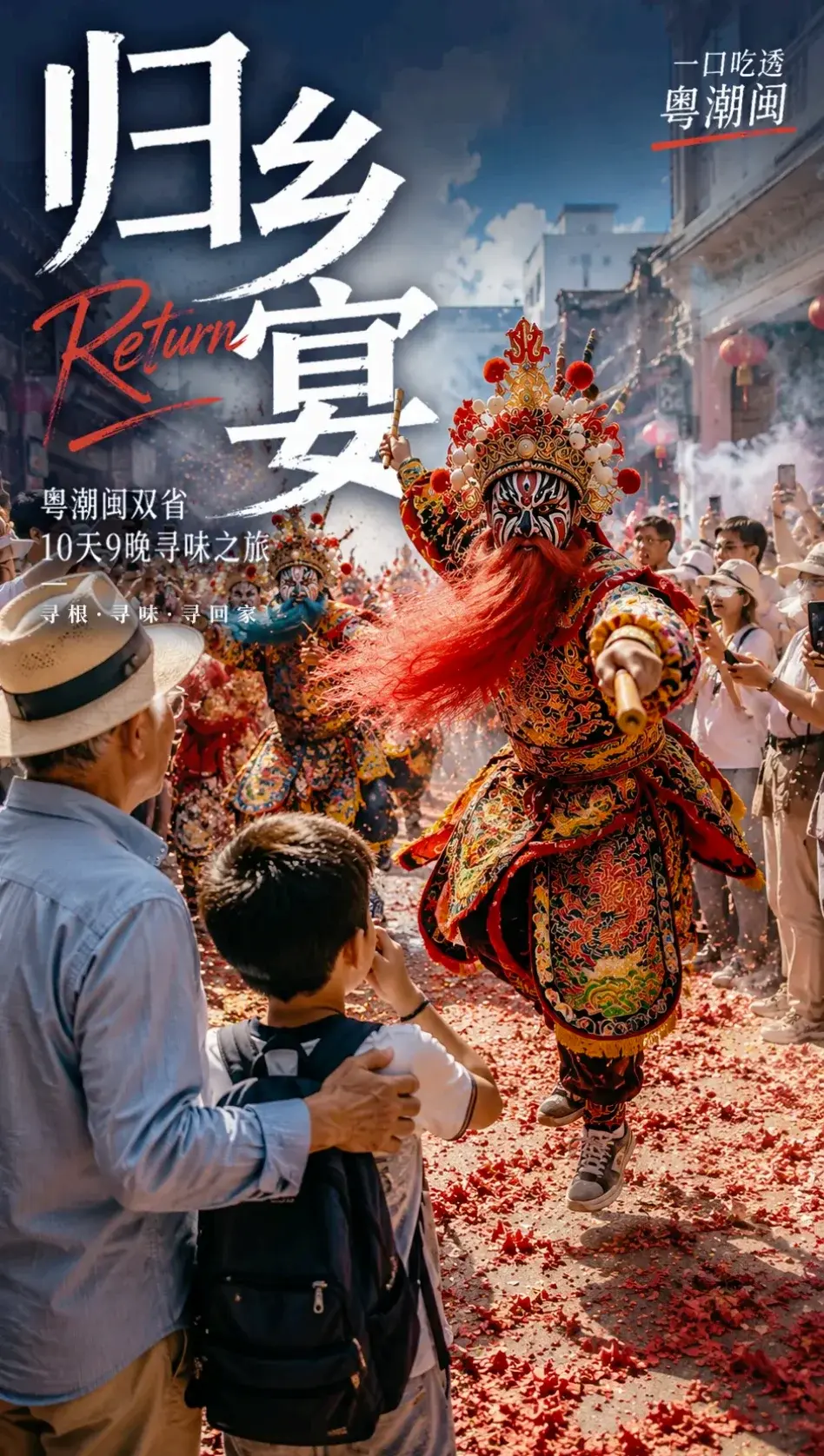 10 Tage Abschiedsessen Guangzhou → Shantou → Jieyang → Chaozhou → Quanzhou → Zhangzhou → Xiamen ab $4,000 Route ansehen
 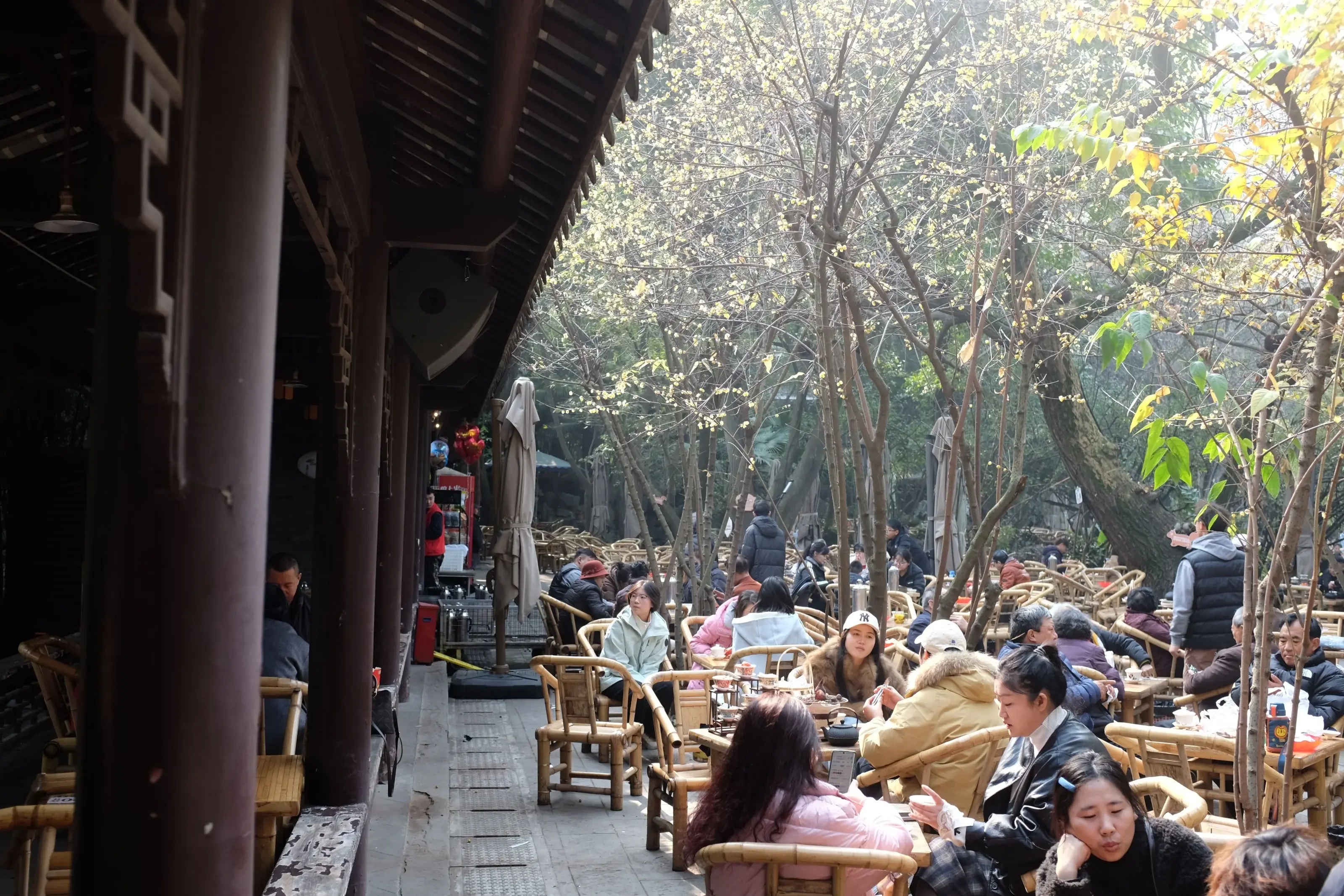 12 Tage Achse bis Küchentisch Peking → Xi'an → Chengdu ab $4,060 Route ansehen
  12 Tage China auf zwei Höhen Kunming → Lijiang → Shangri-La → Tacheng → Chengdu → Dujiangyan → Leshan ab $3,900 Route ansehen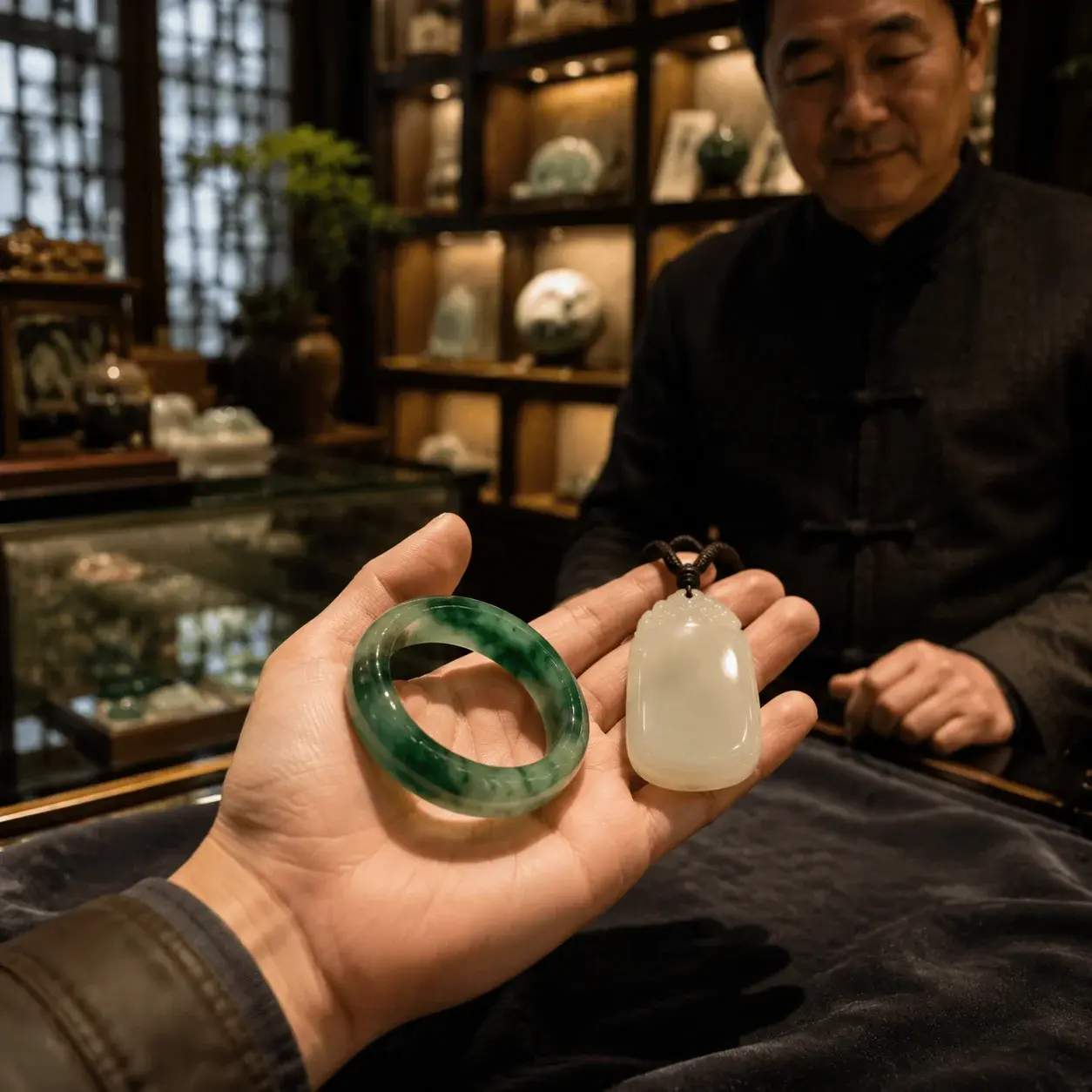
Was ist chinesischer Jade, und wie kauft man ihn gut in China?
Chinesischer Jade besteht tatsächlich aus zwei verschiedenen Steinen — Jadeit (硬玉) und Nephrit, auch Hetian-Jade genannt (软玉) — und die Entscheidung zwischen ihnen ist die erste, vor der jeder Käufer steht, bevor es um Farbe, Preis oder echt-falsch geht. Dies ist ein Reiseführer für Reisende, was Jade bedeutet, wie viel es kostet und wo man es authentisch in China kaufen kann.
Wir haben das geschrieben, weil die meisten "chinesischen Jade"-Entweder Kultur-Enzyklopädien oder Online-Shops sind. Keiner sagt dem ausländischen Reisenden das Wichtigste: Jade ist kein einzelnes Material, und die größten Kauffehler passieren, bevor Sie überhaupt einen Stein in die Hand nehmen. Wir sind ein privates China-Reiseunternehmen, kein Jade-Händler — daher können wir ehrlich darüber sprechen, was Sie kaufen sollten, was Sie überspringen und wie Sie es nach Hause bringen.
Zuerst eine Ehrlichkeitsnotiz. Das ewige Wissen hier — die beiden Jade-Familien, Farben- und Motivbedeutungen, die Ursprungskarte, die Feldtests — ist solide. Preise sind indikative Bereiche, die an einen Bewertungsstandard gebunden sind, nie fixe Angebote, denn Jade wird pro Stück berechnet: es gibt keinen Preis-Schild. Behandeln Sie jede RMB-Zahl als "ungefähr", bestätigen Sie vor Ort und verlangen Sie ein Laborzertifikat, bevor Sie ernsthafte Geldmittel ausgeben.
Wichtige Erkenntnisse
- Jade ist zwei Familien, nicht eine. Entscheiden Sie sich für "Jadeit oder Nephrit", bevor Sie sich über die Farbe aufregen — es sind verschiedene Mineralien, Ästhetiken, Preislogiken und Herkünfte.
- Zwei unabhängige Farbhierarchien. "Weiß ist der König" gilt für Nephrit; "Grün ist der König" gilt für Jadeit. Die Bewertung von Hetian-weißem Nephrit nach der Jadeit-Regel, dass Grün am teuersten sei, führt Käufer in die Irre.
- Es gibt keinen festen Preis. Jade wird pro Stück nach Sorte bewertet (Art × Wasserfarbe für Jadeit; Öligkeit × Weißheit × 籽料 für Nephrit). Wir geben nur anfangs RMB-Bereiche an — alles bleibt vorläufig.
- Feldtests können offensichtliche Fälschungen ausschließen, aber keine Echtheit beweisen. Nur ein Laborzertifikat (z. B. NGTC) kann natürlichen Typ A-Jade bestätigen. Legen Sie bei teuren Käufen Wert auf die Papiere.
- Die sicherste erste Jade ist ein Nephritanhänger (Yu Pei). Leicht zu tragen, leicht zu verschenken, und das geschnitzte Motiv übernimmt die symbolische Arbeit. Käufer von Armbändern sollten unsere Anleitung zu Jadearmbändern zur Größenbestimmung und zum Bruchrisiko lesen.
- Vermeiden Sie den ¥50–300 Touristen"-Jade." Es handelt sich überwiegend um Serpentin oder behandelten Stein — eine echte Jade-Familie, aber nicht das, wofür Käufer glauben, sie zu zahlen.
—
Was ist chinesische Jade? Jadeit vs. Nephrit (Hetian-Jade)
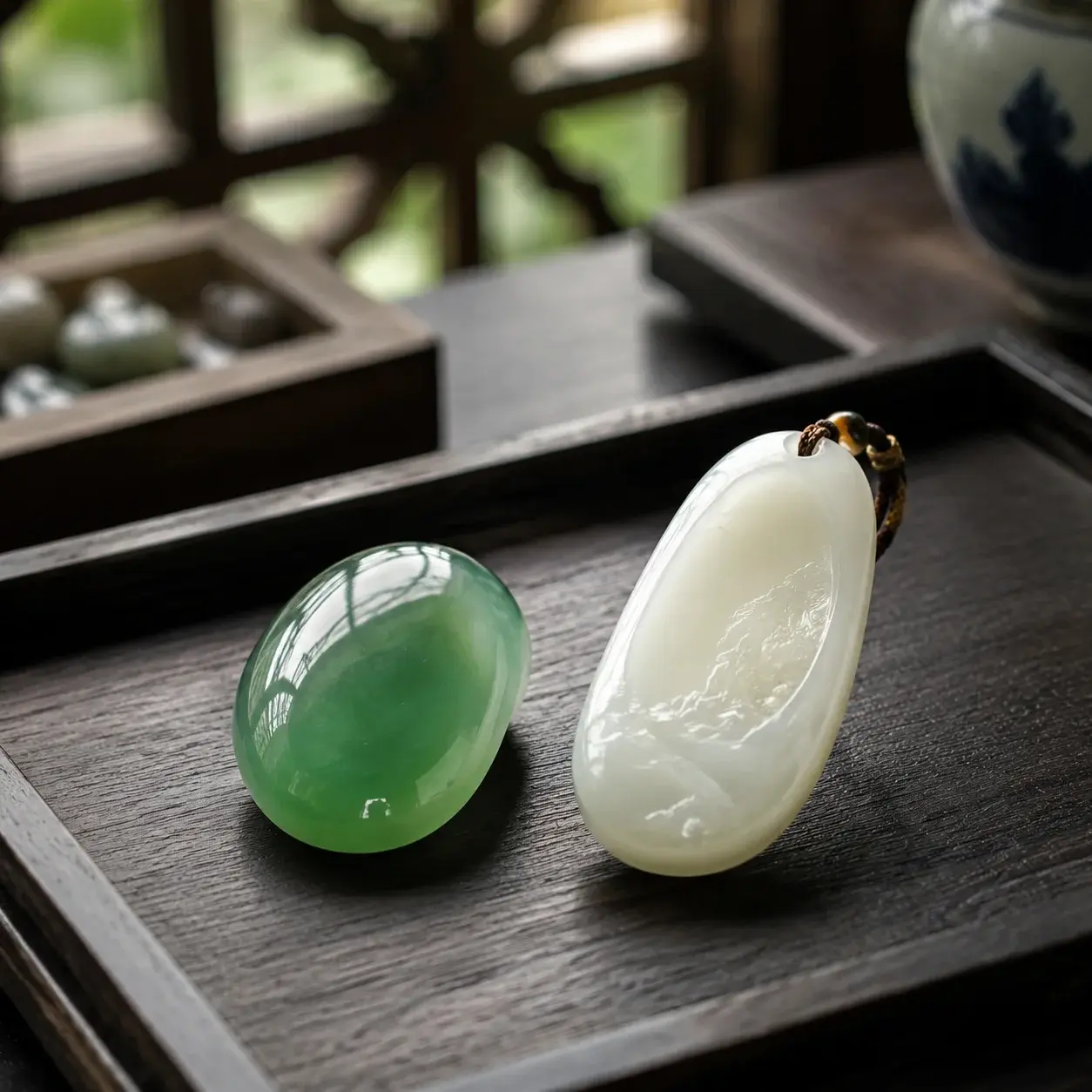
Chinesischer Jade umfasst zwei echte Jade-Mineralien: Jadeit (硬玉), härter und lebendiger gefärbt, hauptsächlich aus Burma; und Nephrit (软玉) — klassisches Hetian-Jade — weicher, aber zäher und das Herz der chinesischen Jadekultur. Der kontra-intuitive Teil: Jadeit ist härter, aber Nephrit ist zäher (widerstandsfähiger gegen Abplatzen). Hart bedeutet nicht unzerbrechlich.
Jadeit ist ein Natrium-Aluminium-Pyroxen (Mohs 6.5–7); seine verflochtene Kornstruktur verleiht hochwertigen Steinen einen glasigen, halb-transluzenten Glanz und die größte Farbpalette (Grün, Lila, Rot, Gelb, farblos). Nephrit ist ein Calcium-Magnesium-Amphibol in der Tremolit–Actinolith-Serie (Mohs 6–6.5); seine filzige Faserstruktur erzeugt einen ölig-warmen Glanz und außergewöhnliche Zähigkeit. Wenn Sie unverzierte Rohstücke sehen — „rohe Jade“, die an Grenzmärkten gehandelt wird — gilt dieselbe Zweiteilung, und Anfänger sollten nie auf Rohstücke setzen, die sie nicht lesen können.
| Eigenschaft | Jadeit (硬玉) | Nephrit / Hetian-Jade (软玉) |
|---|---|---|
| Mineralklasse | Natrium-Aluminium-Pyroxen | Calcium-Magnesium-Amphibol (Tremolit–Aktinolith) |
| Härte (Mohs) | 6,5–7 (härter) | 6–6,5 |
| Zähheit | Hoch | Höher (widerstandsfähiger gegen Bruch) |
| Struktur | Verflochtene Körner → glänzender Glanz | Filzartige Fasern → ölig, warmer Glanz |
| Hauptursprung | Myanmar (Burma); über Yunnan gehandelt | Xinjiang (Hetian / altes Khotan) |
| Signature-Farben | Imperatorgrün, lila, eisig klar | Schafsfettweiß, graugrün (青玉), schwarz |
| Preiskategorie | Breit; der hochwertigste Jadeit ist der teuerste Jade | Breit; der hochwertige Flussstein-Weiß ist die Spitze des klassischen Jade |
Was sind die vier berühmten chinesischen Jades?
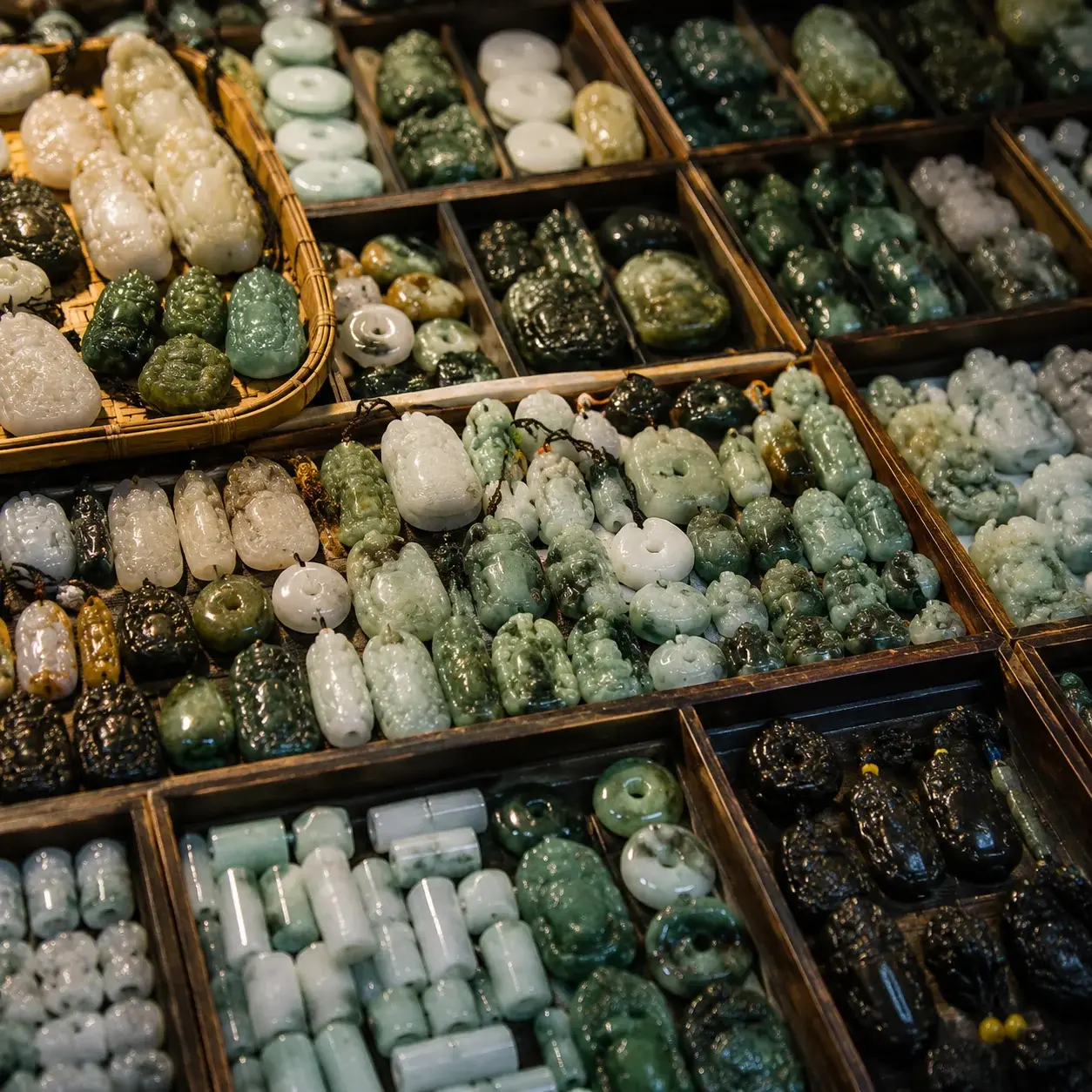
China erkennt vier historische Jades an: Hetian (Xinjiang-Nephrit, der klassische „Nationaljade“), Dushan (Henan Nanyang, mehrfarbig), Lantian (Shaanxi, alter Serpentinar-Marmor) und Xiuyan (Liaoning-Serpentin). Antikes chinesisches Jade — Schnitzereien, die weitergegeben oder als „alter Jade“ verkauft werden — ist meist Nephrit. Ehrliche Flagge: Der billige „Jade“ auf Touristenständen überwiegend aus Xiuyan-Serpentin oder behandeltem Stein. Es ist ein echtes Material der Jade-Familie, aber nicht der feine Nephrit oder Jadeit, für den Käufer glauben, sie zu zahlen.
Jadeit oder Nephrit? Ein „Nach Zweck“ wählender Selector
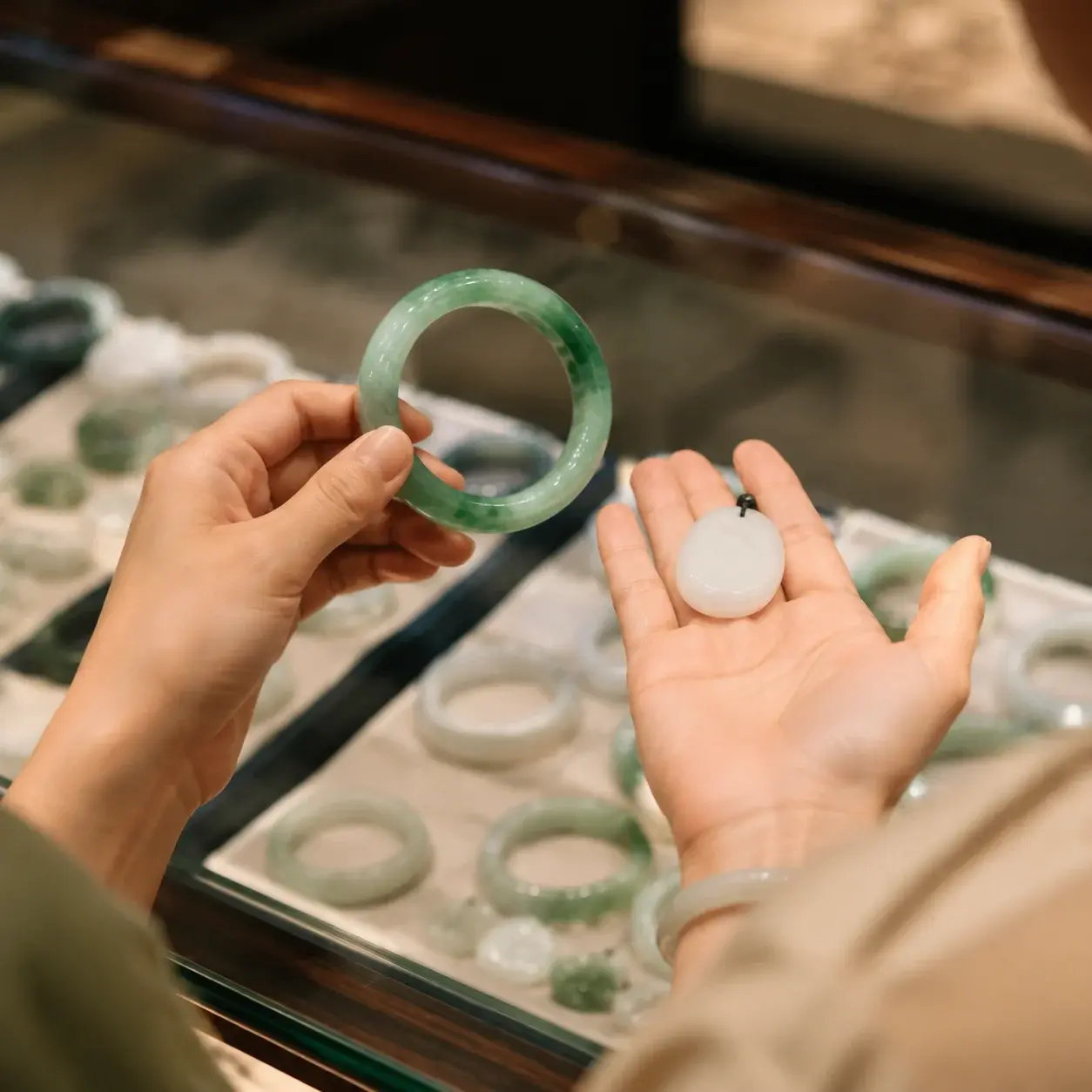
Entscheiden Sie nach Ihrem Ziel, nicht nach Mineralogie. Die erste echte Wahl ist nicht echt vs. gefälscht – es ist, welche der beiden Jade-Familien zu Ihrem Wunsch passt. Keine ist „besser“; sie drücken unterschiedliche Dinge aus. Nutzen Sie diesen Selector, um die Familie festzulegen, bevor Sie überhaupt über Farbe oder Preis diskutieren.
| Ihr Ziel | Wählen Sie | Warum |
|---|---|---|
| Eine atemberaubende, leuchtend grüne + die höchste Wiederverkaufsgrenze | Jadeit | Das kaiserliche Grün ist nur bei Jadeit; hochwertiger Jadeit übertrifft Nephrit bei Auktionen deutlich |
| Ein Geschenk für eine Ältere – zurückhaltend, kulturell orthodox | Nephrite (weiß / graugrün Hetian) | Das Schmalzfett-Weiß ist das Höchste der klassischen chinesischen Jade-Kultur |
| Echtes Jade mit großem Griff bei knappen Budgets | Nephrite (青玉 / 青白 graugrün) | Öliges Glanz, viel günstiger als Schmalzfett-Weiß oder kaisergrün – der Wertsweetspot |
| Lila, mehrfarbig oder ein modernes eisiges Aussehen | Jadeit (lila / eisig durchscheinend) | Breiterer Farbraum; saubere, zeitgenössische durchscheinende Stile |
| Herrenschmuck, bodenständig und schützend | Schwarzer Nephrite (墨玉 / 青花) oder gewöhnlicher Jadeit] | Zurückhaltend, hohe Akzeptanz bei Empfängern |
| Geringeres Risiko, behandelten Stein zu kaufen | Nephrite | B/C-Behandlung überschwimmt Jadeit; Nephrite-Fraud ist eher „Untertreibung oder Fälschung des Ursprungs“ – eine andere Logik zur Erkennung |
Die eine-Zeilige Regel unserer Käufer: Grün wollen, ein Schmuckstück wollen, eine Wiederverkaufsobergrenze wollen → Jadeit (burmischer Rohstein, gekauft in Yunnan). Weiß wollen, Wärme wollen, einem Älteren schenken → Nephrit (Xinjiang). Wenn Sie dies richtig machen, wird jede spätere Entscheidung — Farbe, Motiv, Markt — einfacher.
Woher kommt jeder Jade und wo kaufen Sie ihn?
Kaufen Sie Jadeit in Yunnan und Nephrit in Xinjiang oder Suzhou — je näher am Ursprung, desto mehr Auswahl, aber auch tiefer ins Thema. Jadeit-Rohstein stammt aus Myanmar und wird durch Yunnan (Ruili, Tengchong, Kunming) gehandelt. Der klassische Ursprung des Nephrits ist die Region Hetian in Xinjiang — das antike Königreich Khotan — wo 籽料 (Flussgerölle) aus dem Yulongkash- und Karakash-Fluss gewonnen werden; Suzhou ist das historische Schnitzzentrum. Xiuyan-Serpentin stammt aus Liaoning, Dushan-Jade aus Henan Nanyang.
| Jade | Handels-/Ursprungsort | Wo in China kaufen? | Hinweis |
|---|---|---|---|
| Jadeit | Rohstein aus Myanmar; gehandelt über Yunnan | Ruili, Tengchong, Kunming (am nächsten zum Ursprung); sekundäre Märkte in Peking/Guangzhou | Mehr Auswahl an der Grenze, aber Rohstein-Glücksspiel nur für Experten |
| Nephrit | Xinjiang Hetian (Khotan); Fluss-籽料 | Hetian, Ürümqi; Suzhou (Schnitzen); Peking | 籽料 (geschnittenes Flussgerölle) ist am teuersten; Fälschung des Ursprongs ist die größte Falle |
| Xiuyan | Liaoning Xiuyan | Touristische Gebiete landesweit | Serpentin — billig, oft als feiner Jade ausgegeben |
| Dushan | Henan Nanyang | Nanyang, Henan | Mehrfarbig; lokale Schnitzindustrie |
Historischer Ankerpunkt der Tradition des weißen Jadesteins: Hetian-Jade wurde als "kaiserlicher" oder "nationaler" Stein verehrt und entlang der Seidenstraße als Tribut an den kaiserlichen Hof gesendet. Im Jahr 1759 organisierte Kaiser Qianlong staatliche Bergbauaktivitäten in Hetian, um den Hof zu versorgen (Quellen: Lotus Gemology; Incolor Magazine; British Academy). Daher steht der weiße Nephrit an der Spitze der klassischen Hierarchie.
Was bedeutet Jade in der chinesischen Kultur?
Der chinesische Jadedeutung konzentriert sich auf Tugend, Reinheit, Schutz und Status – Jade ist der Stein, mit dem ein "Edelmann" (君子) verglichen wird, und ein sehr persönliches Geschenk. Aber ihre Symbolik basiert auf zwei unabhängigen Farbsystemen, und sie zu verwechseln ist der klassische Fehler eines Käufers: "Weiß ist König" gilt für die Nephrit-Hierarchie, während "Grün ist König" die Hierarchie des Jadeitmarktes kennzeichnet. Wenn Sie Hetian-Jade nach der Regel des Jadeits, dass Grün am geschätztsten ist, beurteilen, werden Sie zu viel für das Falsche zahlen.
Die Farbe legt die emotionale Basisnote fest. Die traditionelle chinesische Jadekultur rangiert fetthaltigem weißen Nephrit über blassgrün, lila und sogar feinem Gelb – das Gegenteil des Jadeitmarkts, bei dem gesättigtes kaiserlich-grün die höchsten Preise erzielt. Über die Farbe hinaus tragen geschnitzte Motive spezifische Segnungen: Ein Pixiu bedeutet Reichtum, Guanyin bedeutet Mitgefühl und Schutz, eine Bi-Scheibe (Ping'an Kou) bedeutet Frieden, Ruyi bedeutet "alle Wünsche erfüllt". Wenn Jade als Geschenk gegeben wird, codieren Farbe und Motiv zusammen die Nachricht – genau das, was die untenstehende Matrix entschlüsselt.
Die Jade-Geschenk-Matrix: Farbe × Form → Bedeutung → Für wen schenken
Jade-Schenken funktioniert in zwei Schichten: Die Farbe bestimmt die Stimmung, und das geschnitzte Motiv setzt den spezifischen Segen — beide müssen auf den Empfänger abgestimmt werden. Dies ist das Werkzeug, das keine Enzyklopédie bietet. Lesen Sie zuerst die Farbschicht für die Grundnote, dann die Motivebene für die Botschaft, und prüfen Sie schließlich, ob es zum Empfänger passt.
Welche Jadeschmuckfarbe eignet sich für welchen Empfänger?
| Jade-Farbe | Bedeutung | Beste Empfänger | Editor-Anmerkung |
|---|---|---|---|
| Imperial / Apfelgrün (Jadeit) | Vitalität, Wohlstand, Status | Ehepartner, Geschäftspartner, jeder, der "Präsenz" möchte | Nur Jadeit; tiefer, gleichmäßiger und durchscheinender = teurer. Fälschungen lieben diese Farbe |
| Schafsfett-Weiß (Nephrit) | Reinheit, Tugend, Wärme | Ältere Menschen, Gelehrte und Männer auch | Die Spitze der klassischen Jadekultur — die sicherste Wahl für einen älteren Menschen |
| Lila (Jadeit) | Ruhe, Romantik, Eleganz | Junge Frauen, Partner, enge Freunde | Selten und zart; je tiefer der Lila, desto mehr sollten Sie verdächtigen, dass es sich um eine Färbung handelt (C-Grad) |
| Gelb / Honig (Nephrit) | Reichtum, Ernte, Erde | Ältere Menschen, Reichsuchtige | Echtes Hetian-Gelb ist selten und teuer; das meiste "Gelb" ist Huanglong oder gefärbt — zahlen Sie keine Preise für Hetian-Gelb |
| Schwarz / Tinte (Nephrit) | Abwehr, Stabilität | Männer, diejenigen in ihrem Tierkreisjahr | Zurückhaltend und würdevoll; 墨玉 und 青花 sind solide Optionen |
| Graugrün 青玉 (Nephrit) | Zurückhaltend, akademisch | Eigener Gebrauch, ältere Männer, Käufer mit Budget | Der Wertsweetpoint: öliges Gefühl, viel günstiger als Schafsfett-Weiß |
| Eisig / Farblos (Jadeit) | Klarheit, modern, unisex | Jüngere Käufer, städtischer Geschmack, jedes Geschlecht | Bewertet nach 水头 (Durchsichtigkeit), nicht nach Farbe; beliebt in modernen Designs |
Welches geschnitzte Motiv passt zu welchem Empfänger?
| Motiv | Bedeutung | Beste(r) Empfänger(in) | Erinnerung |
|---|---|---|---|
| Ping'an Kou / bi-disc (平安扣) | Frieden, Ganzheit | Fast jeder — Ältere, Kinder, selbst, jedes Geschlecht | Sicheres Geschenk bei Unsicherheit; minimalistisch, konfessionsneutral |
| Pixiu (貔貅) | Reichtum („nimmt nur auf“) | Unternehmer, Reichstreibende | Klingt wie „Möge reich werden“, kein persönliches Amulett — Legende besagt, es bindet sich an einen Besitzer, daher schlecht als Weitergeschenk |
| Guanyin (观音) | Mitgefühl, Schutz, geburtsfreundliche Frauen | Frauen, Mütter, Gläubige im Volksglauben | Der Sprichwort „Männer tragen Guanyin, Buddha tragen Frauen“ ist Brauch, keine Doktrin — nicht als Regel behandeln |
| Buddha / Budai (佛) | Glück, Leichtigkeit | Männer, Ältere, Glückssuchende | Unterscheiden Sie den weltlichen Lachenden Buddha von einem meditativen Buddha beim Beschenken eines praktizierenden Buddhisten |
| Ruyi (如意) | „Alles nach Wunsch“ | Beförderungen, Abschlüsse, Geburtstage von Älteren | Universelle glückbringende Aussage, konfessionsneutral, ideal für formelle Segnungen |
| Hulu / Kürbis (葫芦) | Reichtum + Gesundheit, Abwehr | Ältere, Gesundheitsuchende, Zodiac-Jahr | Wortspiel mit 福禄; die Wahl für Wellness-Themen |
| Cabbage / 白菜 („hundert Reichtümer“) | Reichtum, Integrität | Unternehmer, Hausweihe, Hochzeitspaare | Wortspiel mit 百财; klassisches Jade-Motiv |
| Bambus (竹节) | Aufsteigender Erfolg, Integrität | Studierende, Beförderungen, männliche Ältere | Ideal für Berufs-/Studien-Segnungen |
| Drache und Phönix (龙凤) | Adel, eheliche Harmonie | Hochzeitspaare, Paargeschenke | Drache (Yang) + Phönix (Yin): am vollständig als Paar für Paare |
| Zodiac-Tier (生肖) | Persönlicher Wächter | Jeder — wählen Sie nach ihrem Zeichen | Das Persönlichste und nie konfliktbeladen; universeller Rückgriff |
Ein Jade-Geschenkfinder — ein interaktiver Quiz auf der Seite, der Empfänger, Alter, Glauben und Budget in eine Farbe + ein Motiv + einen Marktempfehlung umwandelt — steht auf unserer Roadmap, ist aber noch nicht live. Bis dahin erledigen die beiden obenstehenden Matrizen dieselbe Aufgabe manuell.
Halskette, Anhänger oder Armband aus Jade? Das richtige Stück auswählen
Beginnen Sie mit einem ersten Jade-Stück mit einem Anhänger (Yu Pei): es ist der Kauf mit dem geringsten Risiko — leicht nach Hause zu transportieren, leicht zu verschenken und das Motiv übernimmt die symbolische Arbeit. Armbänder haben Größenprobleme und ein Bruchrisiko, daher verweisen Sie diese Käufer auf unsere spezielle Armband-Anleitung. Sobald der Stücktyp feststeht, verwenden Sie die obere Geschenkmatrix, um Farbe und Motiv auszuwählen.
- Jadeanhänger (Yu Pei, 玉佩). Die klassische chinesische Jade, die am Körper getragen wird für Schutz und Segen. Ein einzelnes geschnittenes Motiv trägt die gesamte Botschaft, übersteht Reisen gut und passt zu jedem Empfänger — der Grund, warum wir sie als erste Jade empfehlen, die ein Reisender kauft.
- Jade-Halsketten und Perlenketten. Mengen von gestaffelten Perlen oder ein Anhänger an einem Band/Kette. Perlen aus Nephrit wirken unauffällig und klassisch; eine leuchtende Jadeit-Perlenkette wirkt als Statement-Stück. Achten Sie darauf, dass jede Perle in der Qualität übereinstimmt — Mischqualitäten sind eine gängige Methode, den Preis aufzubauschen.
- Jade-Armbänder und -Bänder. Das Stück mit höchster Symbolik und höchstem Risiko: Ein massiver Armband lässt sich nicht vergrößern oder verkleinern und kann brechen. Die vollständige Typ A/B/C-Authentizitätsbewertung, NGTC-Zertifikatsprüfung, Größenberechnung und der Touristenladen-Schwindel-Atlas finden Sie im Armband-Leitfaden — wir wiederholen sie hier nicht.
Echtes vs. Falsches Jade: Schnellchecks am Stand (und was sie nicht beweisen können)
Diese Checks schließen nur offensichtliche Fälschungen aus — sie können nicht beweisen, dass ein Stein echtes Jade vom Typ A ist. Nur ein Laborzertifikat kann das. Behandeln Sie sie wie Müllfilter am Stand, nicht als Authentifizierung. Bei jedem Wertgegenstand ist das einzige entscheidende Test ein verifizierbares NGTC-Laborzertifikat.
| Bildschirm | So geht's | Was echtes Jade zeigt | Hinweis |
|---|---|---|---|
| Kälteempfindung | Gegen Wang oder Handgelenk drücken | Fühlt sich deutlich kalt an, leitet Wärme, erwärmt sich langsam | Kunststoff/Glas erwärmen sich schneller; im Sommer unzuverlässig |
| Gewicht / Dichte | In der Hand wiegen | Schwer für seine Größe, drückt auf die Handfläche | Glas und Kunststoff fühlen sich leicht und hohl an |
| Klang beim Klopfen | Anhängsel an einem Faden aufhängen und leicht klopfen | Klare, klingende Stimme | Ein dumpfer, gedämpfter Klang deutet auf Kunststoff (B-Qualität) oder Nicht-Jade hin |
| Licht & Einschlüsse | Mit einer Taschenlampe durchleuchten | Natürliche, wolkige Einschlüsse, Steinlinien, Farbe „verwurzelt“ im Stein | Glasblasen oder in Rissen angesammeltes Tinte = gefälscht oder behandelt |
Führen Sie keine Kratztests durch (sie beschädigen echtes Jade) oder Volksmethoden wie den „Haarverbrennungstest“ – sie beweisen nichts und können ein echtes Stück zerstören.
Wo ist die vollständige Authentifizierungs-Checkliste?
Für eine vollständige A/B/C-Bewertung, NGTC-Zertifikat-QR-Verifikation und den Betrugsschutz-Reisetouristen-Atlas verwenden Sie unsere Begleit-Jade-Authentifizierungs-Checkliste (Typ A/B/C, NGTC-Verifikation, Betrugsatlas) im  Jade-Armband-Leitfaden. Diese Seite deckt breites Jade – Anhänger, Halsketten und Rohmaterial; der Armband-Leitfaden verfügt über das tiefe Authentifizierungstoolkit. Bei teuren Käufen helfen die oben genannten Stallscreens nur, offensichtlichen Müll zu vermeiden – das Zertifikat schützt Sie wirklich.
Wie viel kostet chinesisches Jade? Preise nach Qualität und Herkunft
Für Jade gibt es keinen festen Preis — er wird pro Stück berechnet. Der Wert von Jadeit hängt von der Art des Wassers (Textur/Transluzenz: Bohne → klebrig → eisig → hoch-eisig → Glas) × Farbe ab; der Wert von Nephrit hängt von der Öligkeit, Feinheit, Weißheit und davon ab, ob es sich um Flussgerölle handelt. Die untenstehenden Richtwerte sind an diese Standards gekoppelt und jede Zahl ist noch zu überprüfen — sie dürfen nie als präzise zitiert oder veröffentlicht werden.
Nach den Jadeite Jade Quality Factors von GIA wird der Wert von Jadeit durch Farbe > Transparenz > Textur > Klarheit bestimmt — gleichmäßiges, gesättigtes Grün steht an der Spitze (Quelle: GIA, gia.edu; zuletzt überprüft am 2026-06). Nephrit verwendet gar keine Art des Wassers — er wird nach Öligkeit und Weißheit beurteilt, wobei mutton-fat Flussgerölle an der Spitze stehen. Halten Sie die beiden Systeme getrennt.
/ Type / Güteklasse | Richtiger Preisbereich (RMB, noch zu prüfen) | Vertriebsweg | Kommentar des Redakteurs | |—|—|—|—| | Touristen-Gebiet "billiges Jade" -Anhänger (Serpentin / gefärbt / behandelt) | ¥50–300 (noch zu prüfen) | Stände in Sehenswürdigkeiten, Reisehandelsläden | Ignorieren Sie es — Serpentin oder B/C-behandelt, fast kein Souvenir- oder Wiederverkaufswert | | Eingangsanhänger aus natürlichem graugrünem Nephrit | ¥500–2.000 (noch zu prüfen) | Vertrauenswürdige Geschäfte; Suzhou / Hetian | Der ehrliche "erste echte Jade" — öliges Qingyu bietet den besten Wert für Anfänger | | Mittlerer Jadeit-Anhänger (Typ A, klebrig mit Farbe) | ¥2.000–10.000 (noch zu prüfen) | Yunnan; vertrauenswürdige Geschäfte | Beurteilen Sie die Art und Wasserqualität sowie die Verarbeitung; ein NGTC-Zertifikat gibt Sicherheit | | Feiner Mutton-Fat-Weiß / hochwertiger grüner Jadeit | ¥10.000–100.000+ (noch zu geprüft) | Etablierte Häuser, Fachhändler | Ein Lebenszeit-Souvenir — bestehen Sie auf ein Zertifikat und entscheiden Sie sich langsam | | Sammler-imperial-grüner Jadeit / top Zi-Li-Nephrit | Hunderttausende bis Millionen (noch zu prüfen) | Auktionen / Top-Händler | Gewöhnliche Reisende sollten dies nicht impulsiv während der Reise kaufen |
Die Preise variieren auch je nach Stadt: Der gleiche klebrige Jadeit-Anhänger kann zwischen Ruili, Kunming, Hetian, Suzhou und Beijing variieren. Eine pro-Stadt-Preisband-Vergleichsdaten sind erste-party-Daten, die wir planen zu sammeln (noch zu prüfen) — wir werden sie nicht erfinden. Fazit: Ignorieren Sie die ¥50–300 Touristenstufe und betrachten Sie die graugrüne-Nephritstufe als Einstiegspunkt für echte Jade.
Wo können Sie authentische Jade in China kaufen?
Kaufen Sie Jadeit in Yunnan (der nächstgelegenen Quelle aus Burma), Nephrit in Xinjiang oder Suzhou und Vielfalt in den etablierten Märkten Beijings — und wählen Sie ein zertifiziertes Geschäft gegenüber einem Marktstand, wenn Ihnen etwas wichtig ist. "Näher an der Quelle kaufen" bedeutet mehr Auswahl, aber auch größere Risiken; Anfänger sollten niemals ungeschliffenes Rohmaterial an einer Grenze kaufen.
| Stadt / Region | Bekannt für | Hinweis |
|---|---|---|
| Hetian & Xinjiang (+ Ürümqi) | Nephrit an der klassischen Quelle | Fälschungen des Ursprungs sind das Hauptrisiko; 籽料 erzielen einen Aufpreis |
| Yunnan — Ruili, Tengchong, Kunming | Burmese Jadeit-Handel, am nächsten zur Quelle | Größte Auswahl an Jadeit; Rohkauf nur für Experten |
| Suzhou | Zentrum für Nephrit-Schnitzereien | Historische Werkstätten; stark bei geschnitztem weißem/Blau-Nephrit |
| Beijing — Panjiayuan & Hongqiao | Vielfalt über alle Jade-Familien hinweg | Panjiayuan (Kunsthandelsmarkt) und Hongqiao (Perlenmarkt) decken beide Jadesorten ab |
| Shanghai | Sortiment an Einzelhändlern, zertifizierte Geschäfte | Bequem beim Kauf in zertifizierten Geschäften gegenüber Ständen |
Jeder spezifisch genannte Shop oder Marktstand ist vor Ort überprüfbar (待verify) — wir erfinden keine Shop-Namen. Bevorzugen Sie ein Geschäft, das ein überprüfbares Zertifikat ausstellt, gegenüber einem Stand, der das nicht tut. Wenn Sie lieber nicht alleine durch dieses Thema navigieren möchten, kann LyrikTrip begleiteten, vetten Jade-Einkauf als Teil einer privaten Reise organisieren — ein Service, kein Druck.
Wie bringen Sie Jade nach Hause? Zoll, Transport und Versand
Tragen Sie geschnitztes Jade im Handgepäck mit, behalten Sie alle Quittungen und Zertifikate für die Zollabfertigung bei, und prüfen Sie vor dem Flug die Importvorschriften Ihres Heimatlandes. Wickeln Sie die geschnitzten Stücke in Polstermaterial — Nephrit ist robust, aber Jadeit kann splittern, und Verschlüsse sowie dünne Schnitzereien sind im aufgegebenen Gepäck anfällig.
Halten Sie die Unterlagen beisammen: Die Kaufquittung und jedes Laborzertifikat beweisen sowohl den Wert als auch die Legitimität am Zoll an beiden Enden. Eine echte Einschränkung, die Sie kennen sollten: Echte Antiquitäten (im Allgemeinen Stücke von über ~100 Jahren / vor 1949) können exportbeschränkt sein und benötigen ein offizielles roter Wachssiegel, um China legal zu verlassen — ein seriöser Antikhändler kümmert sich darum, und ein Stück ohne solches Siegel darf Ihnen nicht als exportfähige Antiquität verkauft werden.
Bei hochwertigem modernen Jade prüfen Sie, ob Ihre Zieldestination eine Anmeldung bei der Ankunft erfordert. Kein Wettbewerber bietet dies — und genau hier scheitert oft eine Reise am Flughafen.
Wie pflegt man Jade?
Tragen Sie es, halten Sie es fern von aggressiven Chemikalien und plötzlicher Hitze, und reinigen Sie es mit einem weichen, leicht feuchten Tuch. Jade — besonders Nephrit — profitiert tatsächlich vom regelmäßigen Tragen; Hautkontakt und natürliche Öle helfen, den warmen Glanz über die Zeit zu erhalten. Vermeiden Sie Ultraschallreiniger für behandelte (B/C)-Stücke, starke Reinigungsmittel und das Lagern von Jade in direkter Sonnenwärme oder in der Nähe von Hitze, was den Stein belasten und bei behandelten Produkten das Harz abbauen kann. Bewahren Sie geschnitzte Stücke getrennt auf, damit härtere Edelsteine sie nicht zerkratzen.
Unser ehrlicher Rat: Kauf von Jade nach Empfänger und Budget
Passt den Käufer zum Stein: Zuerst die Familie, dann die Farbe, dann das Motiv und niemals einen Kauf mit Touristen"-Jade aufbessern. So würden wir jedem häufigen Käufer raten.
- Buddhistischer / spiritueller Käufer: Motive von Guanyin, Buddha oder Lotus in warmem Weiß oder graugrünem Nephrit über lautem Grün – es vermittelt "gebildete Wärme". Unterscheiden Sie den weltlichen Lachenden Buddha vom meditativen Buddha, wenn der Empfänger tatsächlich praktiziert.
- Schutz / Sicherheit: Der Ping'an Kou ist die universelle Antwort – glaubensneutral, geschlechtsneutral. Für spezifischen Schutz wählen Sie 墨玉/青花 oder eine Gurke. Vermeiden Sie Pixiu für ein persönches Amulett; es ist ein Reichtumsmotiv, das "mit einem Besitzer verbunden wird".
- Geschenk für Ältere: Weißes oder graugrünes Nephrit + Ping'an Kou, Ruyi oder葫芦. Es ist kulturell orthodox und warm. Vermeiden Sie Schwarz als Hauptfarbe – manche Älger mögen es nicht – und lassen Sie kalte, schillernde moderne Designs weg.
- Eigenverbrauch / täglich: Beurteilen Sie die Wasserqualität (Transparenz) und fühlen Sie mehr als Symbolik; eisige farblose, 青玉 und einfache Designs sind vielseitig und unisex. Bei knappen Budgets greifen Sie direkt zum graugrünen Nephrit – das ölige Gefühl kann Kunststoff nie imitieren.
- Budget: Jadeit vs. Nephrit: Kleines Budget + echtes Juwel wollen → graugrüner Nephrit (ölig, erschwingliches). Mittleres Budget + Farbe und Wiederverkaufswert wollen → mittlerer Typ A Jadeit (klebrig mit Farbe). Füllen Sie die Lücke niemals mit ¥50–300 Touristen"Jade".
- Reichtum / Geschäft: Pixiu, Kohl (百财) oder Krötenmotive; grüne und gelbe Jadeittöne verstärken die "Wohlstandsmessage".
Drei unterschriebene One-Liner, die Sie mitnehmen sollten: Jade ist kein Stein, sondern zwei Familien — beantworten Sie "Jadeit oder Nephrit", bevor Sie sich um die Farbe kümmern; "Weiß ist der König" ist die Regel des Nephrits und "Grün ist der König" die des Jadeits — zwei Systeme, niemals mischen Sie sie; und Abtrennschirmen fangen nur offensichtliche Fälschungen auf — bei jedem Wertgegenstand fordern Sie ein NGTC-Zertifikat (Überprüfungsfluss im Armbandführer).
Überarbeitet von einem LyrikTrip-China-Reisespezialisten mit vor Ort Markterfahrung. Platzhalter für den Autor: Dieser Leitfaden sollte vor der Veröffentlichung den Namen und die Qualifikation eines Edelsteinexperten oder eines erfahrenen China-Reisekaufmanns tragen.
Häufig gestellte Fragen
Wo kann ich authentische chinesische Jade kaufen? Kaufen Sie Jadeit in Yunnan (Ruili, Tengchong, Kunming — am nächsten zur burmesischen Quelle), Nephrit in Xinjiangs Hetian oder dem Schnitzzentrum Suzhou und Vielfalt in Beijings Panjiayuan- und Hongqiao-Märkten. Bei jedem Wertgegenstand wählen Sie ein zertifiziertes Geschäft, das ein überprüfbares Laborzertifikat ausstellt, statt einen Stand.
Wie erkenne ich, ob chinesische Jade authentisch ist? Standseiten-Schirme — Kaltberührung, Gewicht, ein清脆er Klopf-Sound und natürliche Einschlüsse unter einer Taschenlamme — schließen offensichtliche Fälschungen aus, können aber keine natürliche Jade vom Typ A beweisen. Nur ein Laborzertifikat (z. B. NGTC) bestätigt die Authentizität, also fordern Sie überprüfbare Unterlagen vor jedem Hochwertkauf.
Welches chinesische Jade ist das beste, um es mit nach Hause zu bringen? Ein Nephrit-Anhänger (Yu Pei) ist der erste Jade: leicht zu tragen, leicht zu verschenken und das geschnitzte Motiv trägt eine Bedeutung. Das Grau-grüne 青玉 bietet echten Jade mit einem öligem Gefühl zu einem fairen Preis; lassen Sie die ¥50–300 Touristen"Jade" weg, die meist Serpentin oder behandelter Stein ist.
Ist Jade ein gutes Geschenk aus China? Ja – Jade ist eines der bedeutungsvollsten Geschenke Chinas. Passen Sie die Farbe an die Stimmung des Empfängers an und das geschnitzte Motiv an Ihren Wunsch: Ein Ping'an Kou eignet sich fast für jeden, Guanyin eignet sich für Frauen und Mütter, und Ruyi eignet sich für Beförderungen oder den Geburtstag eines Älteren. Weißer Nephrit ist die sicherste Wahl für Ältere.
Jadeit oder Nephrite – welchen sollte ich kaufen? Wählen Sie nach Ziel. Wollen Sie lebendiges Grün, ein Schauwerk und einen Wiederverkaufswert → Jadeit (burmesischer Rohstein, kaufe in Yunnan). Wollen Sie Weiß, Wärme und kulturelle Orthodoxie, besonders für einen Älteren → Nephrit/Hetian-Jade (Xinjiang). Keiner ist besser; sie sagen einfach unterschiedliche Dinge.
Ist chinesisches Jade ein gutes Souvenir? Jade ist ein ausgezeichnetes Souvenir, wenn es auf der richtigen Ebene gekauft wird: Ein natürliches Grau-grüner Nephrit oder ein Anhänger vom Typ A Jadeit behält seinen Wert und seine Bedeutung über Jahrzehnte hinweg. Vermeiden Sie billige Touristen"Jade", halten Sie Ihre Quittung und Zollzertifikat für die Zollkontrolle und tragen Sie geschnitzte Stücke persönlich mit nach Hause.
Fazit: Kaufen Sie zuerst die Familie, dann den Stein
Chinesischer Jade belohnt den Käufer, der sich zuerst entscheidet "Jadeit oder Nephrit?", die beiden getrennten Farbhierarchien respektiert und Feldtests als Junkfilter statt als Beweis betrachtet. Erhalten Sie die Familie richtig, passen Sie Farbe und Motiv mit dem Geschenk-Matrix auf Ihren Empfänger an, halten Sie die Preise in etwaigen "erwartungsgemäßen" Begriffen und verlangen Sie ein Lab-Zertifikat für alles Wertvolle — und Sie werden nach Hause bringen, was etwas bedeutet und seinen Wert hält.
Für das tiefe Authentifizierungstoolkit — die vollständige Jade-Authentizitätsbewertung (Typ A/B/C, NGTC-Verifikation, Betrugsatlas) und unser kompletter Leitfaden zu Jade-Armbändern und -Bangles — beginnen Sie dort vor jedem Bangkauf. Dieser Leitfaden befindet sich innerhalb unserer besten Souvenirs aus China-Säule; wenn Sie ein Geschenkpaket zusammenstellen, sehen Sie unsere Begleiter zu chinesischer Seide und chinesischem Tee, den Sie mit nach Hause nehmen.
Wollen Sie Jade gut kaufen, während Sie tatsächlich in China sind? LyrikTrip kann eine private maßgeschneiderte China-Tour mit gesichteten, geführten Jade-Einkäufen erstellen — damit Sie einkaufen, während ein Experte neben Ihnen steht, nicht ein Verkaufsangebot.