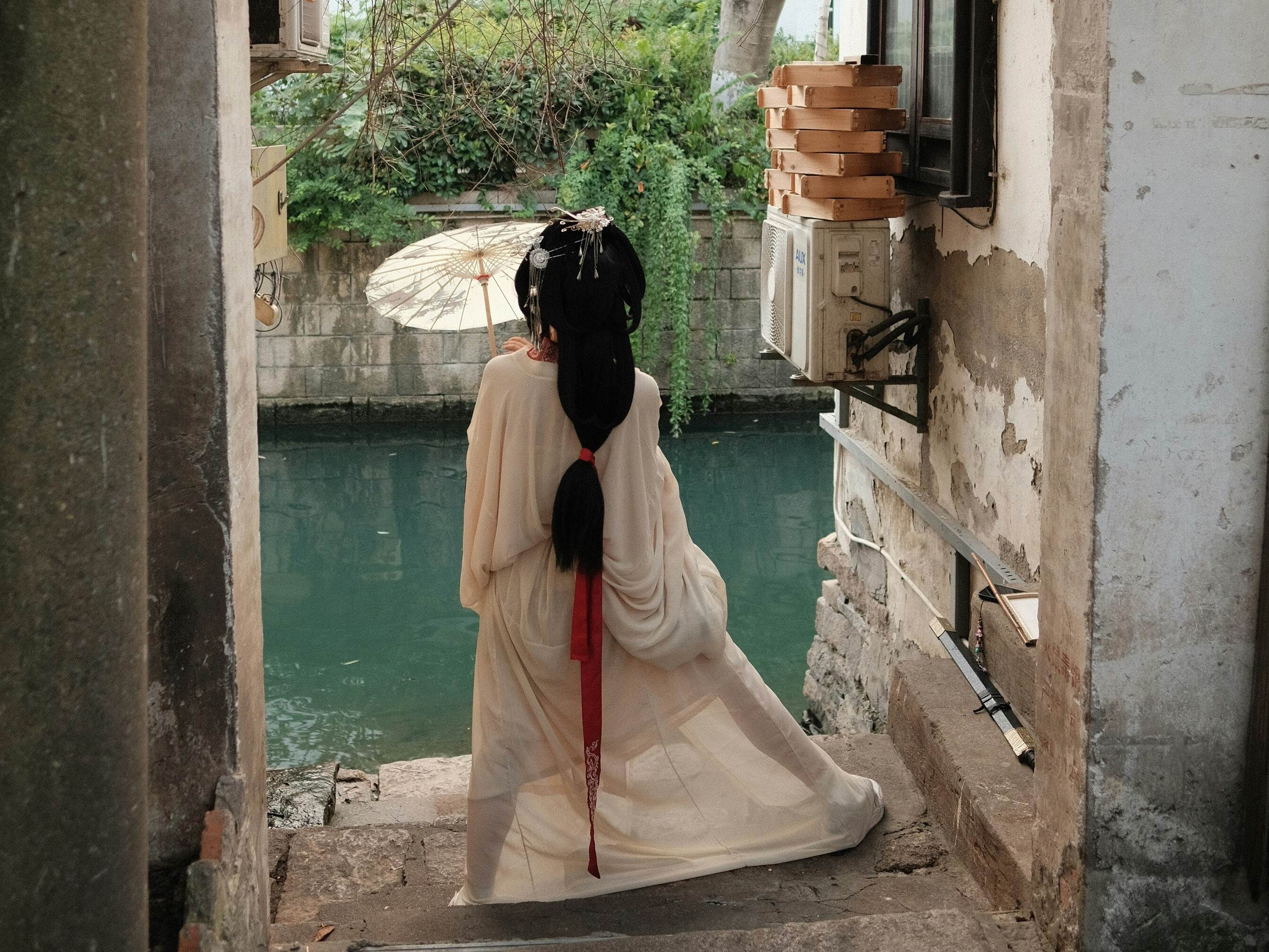





 18 Tage China, von Anfang bis Ende Peking → Xi'an → Chuanzhusi → Jiuzhaigou → Chengdu → Zhangjiajie → Guilin → Yangshuo → Shenzhen ab $6,360 Route ansehen
  3 Tage 3-tägige Tour: Vier-Gipfel-Berg, Biepagou und Dagu-Eisberg Chengdu ab $1,599 Route ansehen
 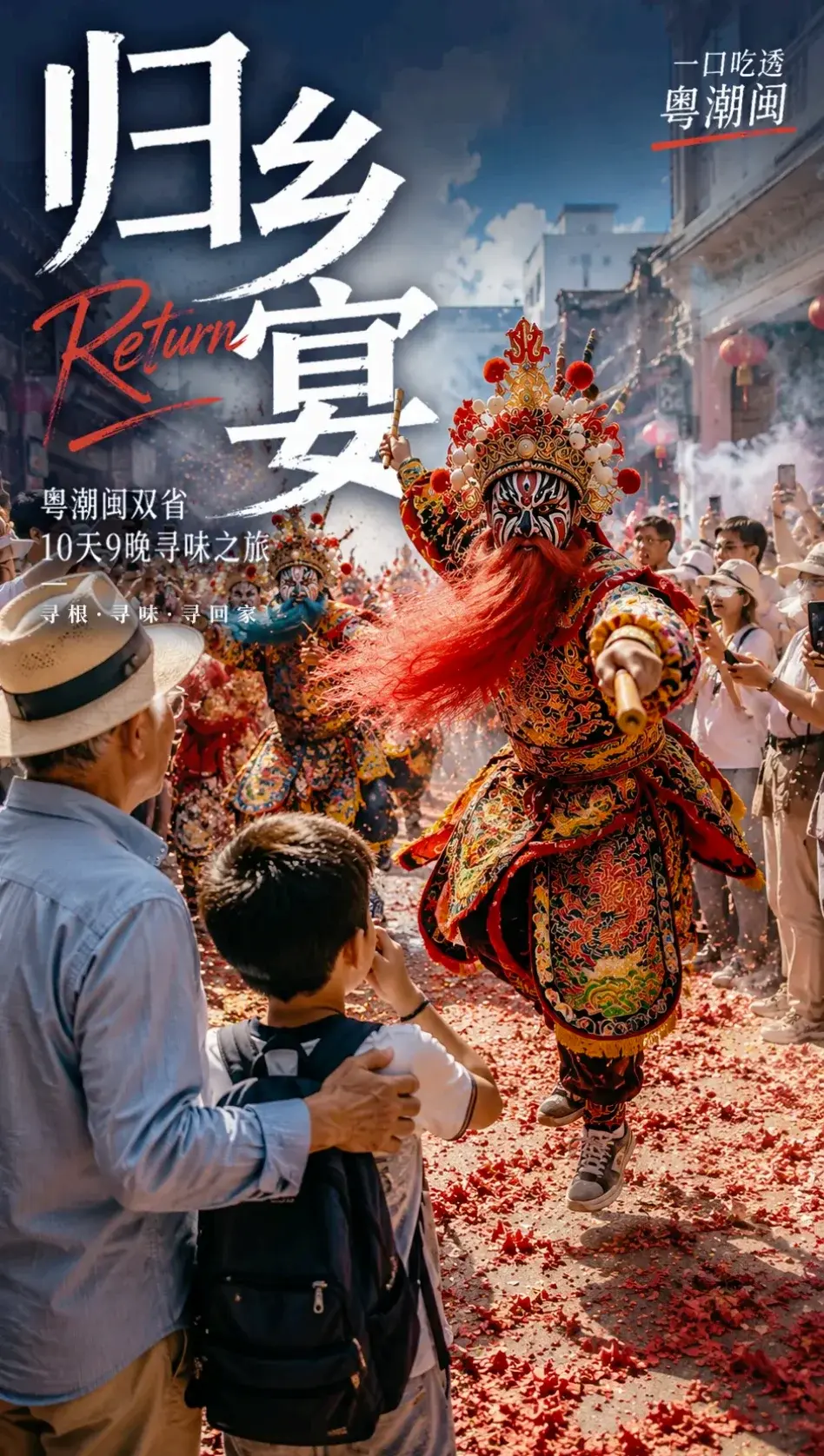 10 Tage Abschiedsessen Guangzhou → Shantou → Jieyang → Chaozhou → Quanzhou → Zhangzhou → Xiamen ab $4,000 Route ansehen
 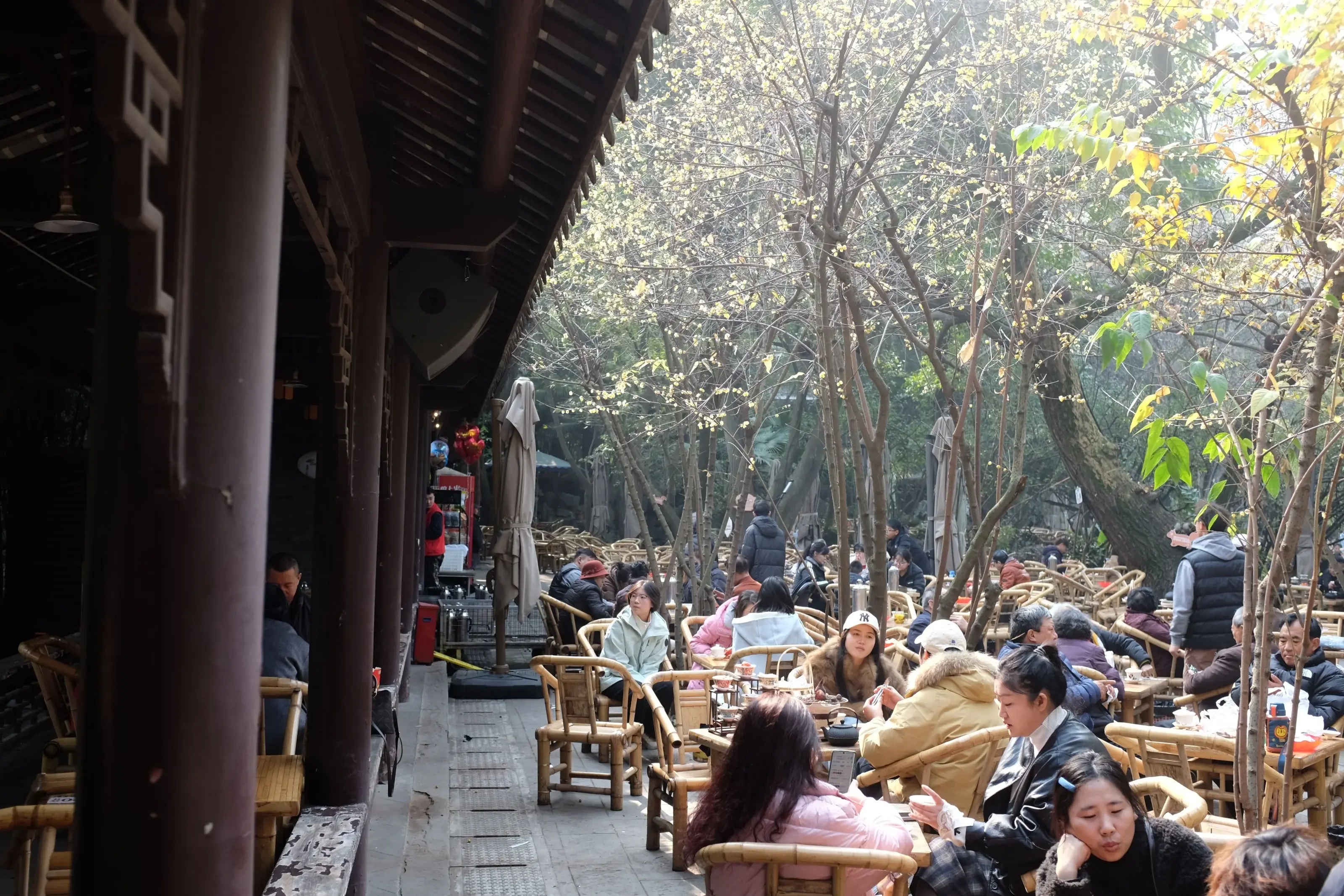 12 Tage Achse bis Küchentisch Peking → Xi'an → Chengdu ab $4,060 Route ansehen
  12 Tage China auf zwei Höhen Kunming → Lijiang → Shangri-La → Tacheng → Chengdu → Dujiangyan → Leshan ab $3,900 Route ansehen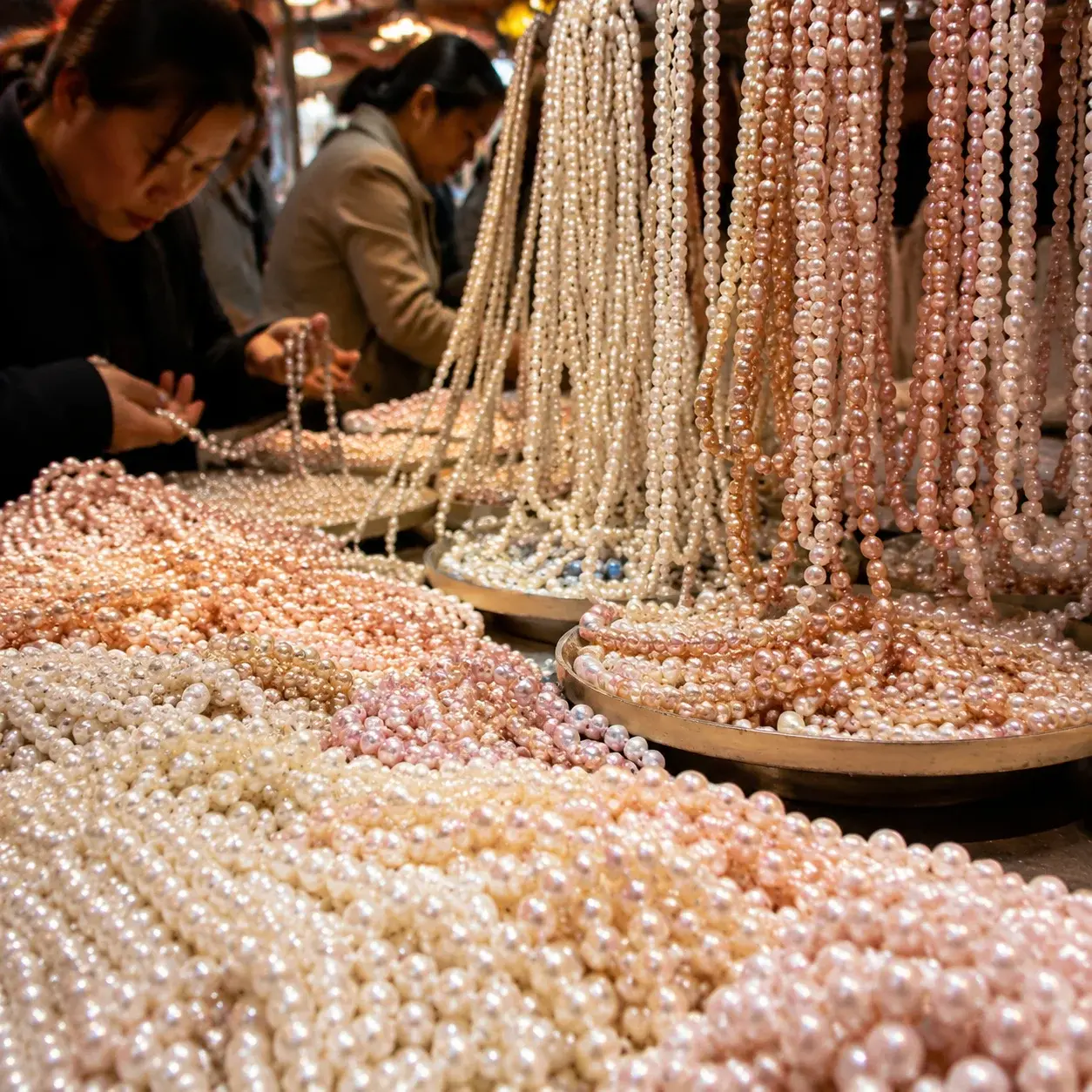
Perlenmarkt Peking (Hongqiao): Wie erkennt man echte Perlen und bekommt einen fairen Preis?
Ja, der Perlenmarkt, den Peking-Einkäufer meinen — Hongqiao — verkauft echte Perlen, aber er drängt auch gefärbte Muschelperlen und falsch beschnürte Stränge. Welches Sie bekommen, hängt vom Stockwerk und dem Verkäufer ab, nicht vom Glück. Erfahren Sie drei Tests, den Stockwerksplan und faire RMB-Bereiche, bevor Sie kaufen.
Bei LyrikTrip bringen wir regelmäßig erste Käufer auf den Hongqiao-Stockwerk, und wir sind ein Reiseunternehmen, kein Perladen. Wir verkaufen keine Perlen, nehmen keinen Anteil von einem Stand oder betreiben eine Hongqiao-Konzession. Dies ist ein Leitfaden zum Schutz des Käufers, geschrieben für einen ausländischen Reisenden, der auf dem Markt steht und Bargeld in der Hand hat — also führt die Beratung mit dem, was Sie schützt, nicht mit dem, was einen Strand verkauft.
Hongqiao (红桥市场), nahe dem östlichen Tor des Himmels Tempels, ist tatsächlich einer der größten Perlenhandelsplätze Chinas. Genau deshalb überzahlen Besucher dort am häufigsten — und der teuerste Fehler ist nicht, eine offensichtliche Fälschung zu kaufen. Es ist, Meerwasserpreis für Süßwasserperlen auf der Touristenstockwerk zu zahlen. Dieser Leitfaden bietet Ihnen drei Vorteile: Echtheit von Fälschungen am Stand zu unterscheiden, ungefähr faire RMB-Preise kennen und sicher das richtige Stockwerk zu durchsuchen.
Wichtige Punkte
- Echte Perlen sind hier — und auch Fälschungen. Hongqiao ist ein legitimer Perlenmarkt, aber gefärbte Muschelperlen, Glas und falsch bezeichnete Stränge sind auf Touristenlevel häufig. Ihr Schutz liegt darin, die Tests zu kennen und die richtigen Etagen zu finden.
- Der Zahnprobe-Test ist Ihre schnellste Feldprüfung. Echtes Nussperlmutter fühlt sich rau gegen Ihren Zahnrands an; Glas und Kunststoff wirken glasig-glatt. Das schließt offensichtliche Fälschungen aus – aber kein Handtest kann Qualität bewerten oder beweisen, ob es sich um eine Meerwasserperle handelt.
- Die Etage entscheidet alles. Straßenniveau-Stände locken mit Laufkundschaft; obere Etagen halten etablierte Händler mit echten, bewertbaren Perlen. Kaufen Sie ernsthafte Stränge oben.
- Die meisten Perlen in Hongqiao sind chinesische Süßwasserperlen, keine Meerwasserperlen. Runde + günstige + „Akoya/Tahitian“ bedeutet fast immer gefärbte oder perlkernbasierte Süßwasserperlen. Echte Tahitian-Perlen zu Schnäppchenpreisen existieren nicht.
- Bieten Sie von ~30 % des angefragten Preises aus und seien Sie bereit zu gehen – aber wirklich gute Stränge fallen nicht um 90 %. Ein Verkäufer, der bei einem „Meerwasserstrang“ so stark heruntergeht, verrät Ihnen, dass es niemals Meerwasser war.
- Fordern Sie bei jedem teuren Strand ein echtes Laborzertifikat (ein nationales Edelsteinprüfzentrum) nicht einen Ausdruck im Laden. Kein Zertifikat = unbestätigt; zahlen Sie Süßwasserpreise.
Sind die Perlen in Hongqiao echt? Die ehrliche Antwort
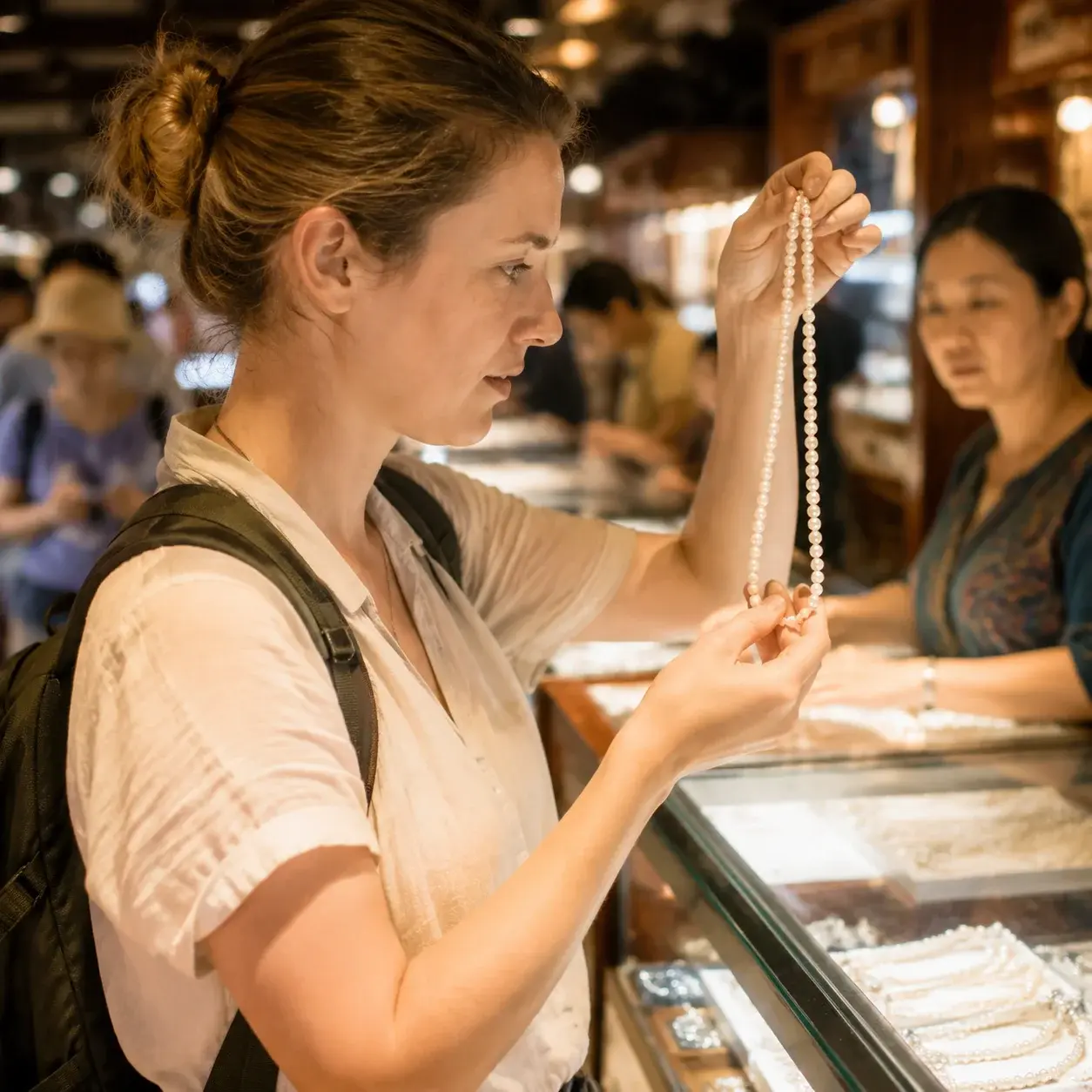
Ja und nein. Echte Perlen werden tatsächlich im Hongqiao verkauft – es ist einer der größten Perlmarkte Chinas, sodass die Suchbegriffe "Perlenmarkt Peking" und "Hongqiao-Markt Peking", die Reisende verwenden, ein echter Handelsplatz sind und kein reines Touristenfalle. Aber gefärbte Muschelperlen, Glas"perlen" und Süßwasserperlen, die fälschlicherweise als Meerwasserperlen bezeichnet werden, werden hier ebenfalls verkauft, und was Sie mitnehmen hängt davon ab, wo Sie einkaufen und von wem Sie kaufen. Der Hongqiao ist heute ein gemischter Markt – neben Perlen werden auch Elektronik, Kleidung und Meeresfrüchte verkauft – wobei die Perlen und Schmuckstücke auf den oberen Etagen konzentriert sind.
Zwei Dinge schützen Sie, und dieser Guide bietet Ihnen beide: die Tests zu kennen (so dass offensichtliche Fälschungen Sie nie täuschen) und die Etagen zu kennen (so dass Sie dort kaufen, wo sich die echten Perlen befinden). Alles Folgende basiert auf diesen beiden Hebeln. Beachten Sie, dass der Begriff "Perlenmarkt" allein mostly US-Bauernmärkte zurückgibt, nicht Peking – der gesuchte Markt ist specifically Hongqiao.
Wie Erkennen Sie, Ob Perchten Echt Sind? Die Standbewertung
Führen Sie sieben schnelle physikalische Tests durch, bewerten Sie jeden und addieren Sie die Punkte. Echte Perlen fühlen sich rau am Zahn an, strahlen mit Tiefe, tragen kleine natürliche Unregelmäßigkeiten und erwärmen sich langsam in der Hand. Diese Bewertung erfasst zuverlässig offensichtliche Fälschungen – lesen Sie jedoch zuerst die Ehrlichkeitsnotiz.
Hinweis zur Ehrlichkeit (vor dem Test lesen). Diese Handtests können nur offensichtliche Fälschungen ausschließen — Glas-, Kunststoff- und beschichtete Muschelperlen. Sie können die Qualität einer Perle nicht bewerten und nicht beweisen, dass es sich um Salzwasserperlen handelt (Akoya, Tahitisch, Südsee). Gefärbte Süßwasserperlen bestehen die meisten dieser Tests. Daher sollte jedes teure "Salzwasser"-Strang ohne verifizierbares Lab-Zertifikat als unbewertet behandelt und als gefärbtes Süßwasser verhandelt werden. Nur ein Edelsteinlabor kann die Qualität bewerten oder den Ursprung bestätigen.
Die 7-Test-Punktekarte für echte vs. gefälschte Perlen
| # | Test | Wie es geht (3–5 Sek.) | Echtheit (+1) | Warnzeichen (−1) | Kann es Qualität/Herkunft beweisen? |
|---|---|---|---|---|---|
| 1 | Zahnprobe (nützlichster) | Reibe die Perle sanft an deinem Zahnrand | Fühlt sich gritig/sandig an (natürliche Schichtstruktur) | Glasglatt → Glas/Kunststoff/beschichtet | Nein – nur Beweis für Vorhandensein von Perlmutt; unterscheidet nicht zwischen Süß- und Salzwasser oder Farbstoff |
| 2 | Glanz und Farbnuance | Drehe das Band und betrachte die Reflexion | Tiefes inneres Leuchten mit subtilen Nuancen; fast spiegelnd | Flach, lackiert, „zu perfekt“, gleichmäßig | Nein – schließt nur billige Fälschungen aus |
| 3 | Oberfläche bei Handylicht | Halte die Taschenlampe schräg über die Oberfläche | Kleine natürliche Makel/Wachstumsmerkmale; Perlen unterscheiden sich leicht | Das gesamte Band makellos und identisch | Deutet auf Produktion hin; kann Herkunft nicht beweisen |
| 4 | Bohrungsrands | Schaue auf den Rand des Lochs | Sauberer, scharfer Rand, manchmal mehrschichtiger Perlmutt sichtbar | Abgesplittert, abblätternd oder Farbauf堆积 → beschichtete Perle | Starkes Zeichen für beschichtete Fälschungen; keine Bewertung möglich |
| 5 | Temperatur | Berühre die Haut beim ersten Kontakt | Zuerst kühl, erwärmt sich langsam | Raumtemperatur/warm sofort → Kunststoff | Nein – Glas ist auch kühl; schließt Kunststoff aus |
| 6 | Gewicht und Sprungverhalten | Hebe es; lasse es leicht auf eine harte Oberfläche fallen | Leichtes Gewicht, geringer Rückprall | Federleicht oder starker Rückbau → hohlglas/plastik | Nein – schließt nur hohle Fälschungen aus |
| 7 | Konsistenz am Band | Prüfe das gesamte Band auf Einheitlichkeit | Leichte natürliche Variationen in Größe/Form/Nuance | Klonierte, perfekt identische Perlen | Massenfertigung; keine Bewertung möglich
Bewertung: +1 pro echtem Perlenschild, −1 pro roter Flagge, 0 bei Unsicherheit. Maximum +7.
| Gesamtpunktzahl | Urteil | Was zu tun ist |
|---|---|---|
| +5 bis +7 | Besteht die Sofortkontrolle; kein offensichtliches Fälschen | Nur Meerwasserpreise gegen überprüfbares Zertifikat zahlen; ansonsten nach Qualitätsstufe verhandeln als Süßwasser |
| +2 bis +4 | Wahrscheinlich echtes Süßwasser, aber gewöhnlich | Behandle es als gewöhnliches Süßwasser und hart verhandle; keine Meerwasserpreise zahlen |
| ≤ +1 | Mehrere rote Flaggen | Geh weg. Glatt-zahnhaft + makellos-einheitlich + federleicht = beschichtete Muschel/Glas |
Was NICHT tun: der Messer-Kratz-Test
Das Internet liebt den Messer-Kratz-Test — echte Perlen hinterlassen Pulver, überzogene Fälschen hinterlassen einen Lackfaden. Es funktioniert, aber nutze es nicht. Es ist zerstörerisch (es beschädigt die Perlenoberfläche), und es ist ein klassischer Betrugsweg: Ein Verkäufer kratzt eine echte Probe, um die Perlen zu „beweisen“, und wickelt dann eine andere Schnur ein. Kratze niemals Perlen, die du nicht gekauft hast, und lasse niemals einen Verkäufer „beweisen“, indem er eine Perle kratzt, die du dann nicht kaufen kannst. Das Gleiche gilt für jeden Flammentest — nur bei Perlen, die du bereits besitzt.
Süßwasser vs. Meerwasserperlen: Was Hongqiao tatsächlich verkauft
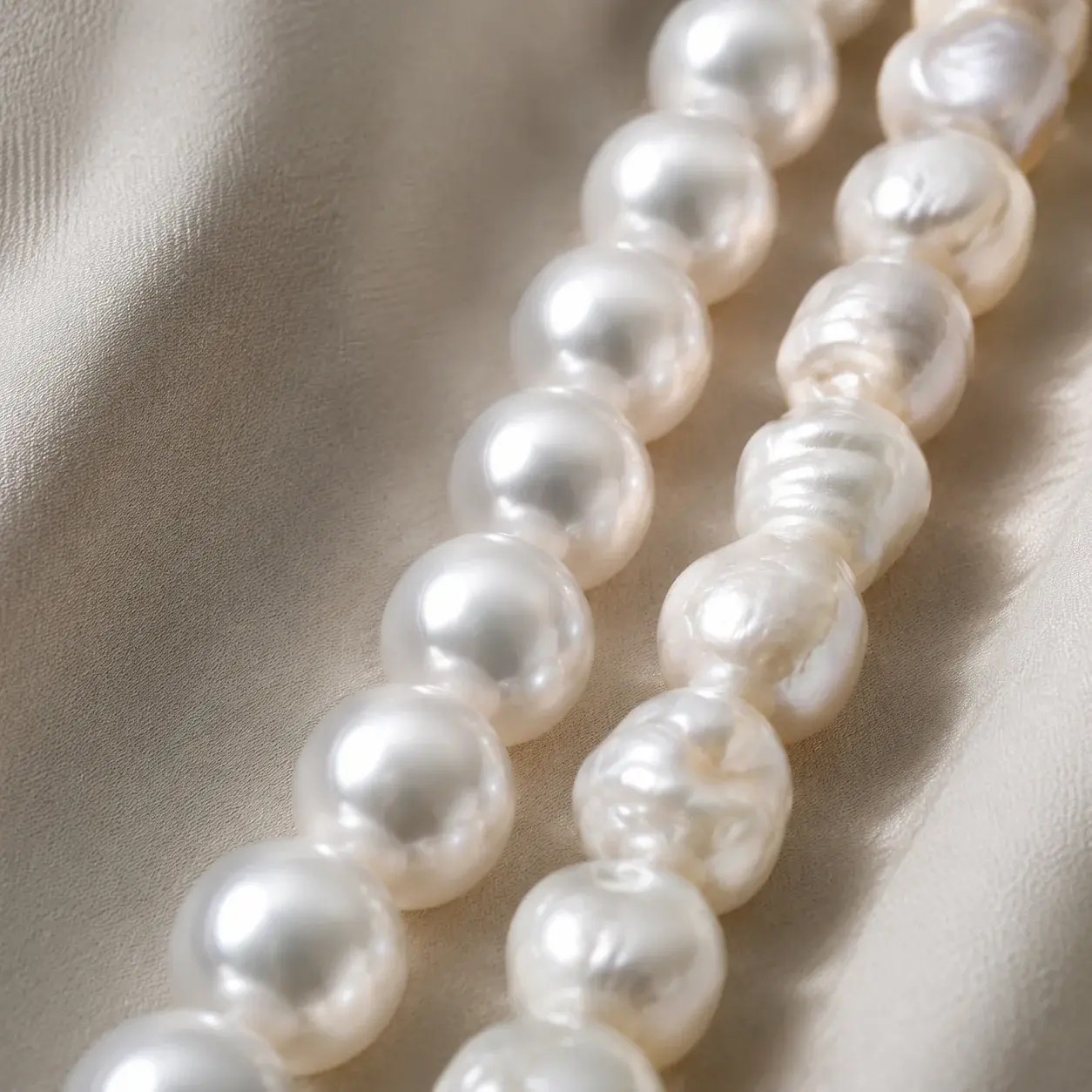
Hongqiao ist überwiegend chinesische Süßwasserperlen. Süßwasserperlen wachsen um implantiertes Gewebe in Fluss- und Seemuscheln – oft unregelmäßig oder barockartig, mit einem sanften, feuchten Glanz, reichlich und erschwinglich. Salzwasserperlen (Akoya, Tahiti, Südsee) sind perlkernbasiert, runder, mit einem schärferen, spiegelartigen Glanz – viel seltener und teurer und die häufigste Falschbezeichnung auf dem Markt.
| | Süßwasserperlen | Salzwasserperlen (Akoya / Tahiti / Südsea) |—|—|—| | Herkunft & Bildung | In Fluss-/Seemuscheln kultiviert, um Gewebe (oft ohne Perlkern) gewachsen | Perlkern-basiert in Salzwasseroestern | | Form | Oft unregelmäßig / barockartig | Mehr perfekt rund | | Glanz | Sanft, "feucht" | Scharf, spiegelnd | | Seltenheit & Preis | Häufig, erschwinglich | Selten, teuer (um eine Größenordnung höher) | | Überprüfung | Zahnschmerz bestätigt echten Nacre | Rund + sehr billig + "Salzwasser" ≈ höchstwahrscheinlich perlkernbasiert oder gefärbte Süßwasserperlen; nur ein Zertifikat ist harter Beweis |
Erkennen der Falschbezeichnung: Rund + sehr billig + beschriftet als "Akoya" oder "Tahiti" ist höchstwahrscheinlich perlkernbasiert oder gefärbte Süßwasserperle. Eine echte schwarze Tahiti-Perle zu einem Schnäppchenpreis existiert nicht. Wenn Sie Salzwasserperlen wollen, vertrauen Sie dem Zertifikat (siehe unten), nicht der Verkaufsargumentation. Diese Unterscheidung folgt dem GIA-Perlenwertframework – siehe Preise unten.
Der Hongqiao-Führer: Wo sind die echten Perlen?
Kaufen Sie serious Perlenstränge in den oberen Etagen, nicht im Erdgeschoss. Die Stände auf der Erdgeschoss-Ebene locken Passanten und sind der Ort, an dem gefärbte Muschelperlen, Glas und falsch bezeichnete Stränge gehäuft vorkommen; die oberen Etagen etablierte Händler mit regelmäßigen Kunden und echten, bewertbaren Perlen zu höheren, aber ehrlichen Basiskosten.
Die untenstende Darstellung ist indikativ und zeigt, wie Märkte dieser Art üblicherweise stratifiziert sind — überprüfen Sie vor Ihrem Kauf die genauen Etagen und Stände.
| Ebene | Wer verkauft hier | Was sie verkaufen | Wie man es anstellt |
|---|---|---|---|
| Erdgeschoss / untere Ebene (Touristenfloor) | Stände mit Durchgangsverkehr; hoher Verkaufsdruck | Gefärbte Muschelperlen, Glas, falsch bezeichnete Stränge am stärksten konzentriert; "Zertifikate" oft selbst gedruckt | Nutzen Sie es nur, um den Verkaufsansatz und die ungefähren Preise kennenzulernen; seien Sie mischtrisch gegenüber Preisen und Zertifikaten hier — geben Sie kein echtes Geld aus |
| Mittlere Ebene | Gemischt: einige echte Süßwasserperlen plus Touristenartikel | Gewöhnliche bis mittlere Süßwasserperlen | Preisvergleich ist okay, aber führen Sie weiterhin die Punktzahl und feilschen Sie |
| Obere Ebene (serious-Händlerfloor) | Etablierte Händler mit Wiederkauf-/Großhandelskunden | Echte, bewertbare Perlen; höhere Basis, aber ehrliche Qualität | Hier echtes Geld ausgeben. Fragen Sie, wie lange sie bereits im Geschäft sind und ob sie den Perlentyp und eventuelle Behandlungen auf dem Quittung schreiben |
So kaufen Sie auf den Etagen: Zuerst gehen Sie durch das Erdgeschoss, um den Preis zu hören und grobe Fragepreise als Bargaining-Anker zu notieren. Kaufen Sie dann die guten Stränge im Obergeschoss. Stellen Sie an jedem Stand zwei Fragen – wie lange sie bereits handeln und ob sie "Perlenart + Behandlung (gefärbt/strahlungsbehandelt)" auf dem Quittung schreiben. Bereitschaft zeigt Selbstvertrauen; Zögern ist ein rotes Flagge.
Praktisches: Der Hongqiao-Markt liegt direkt gegenüber vom Osttor des Himmels Tempels, und die nächste U-Bahn-Station ist Tiantandongmen der Linie 5 – ein kurzer Fußweg davon. Der Markt selbst öffnet ungefähr von 08:30 bis 19:00 Uhr, während der Perlen- und Schmuckbereich etwas kürzere Öffnungszeiten von etwa 10:00 bis 19:30 Uhr hat (laut China Explorer Tour). Die Mischung aus Bargeld- und Mobilepayment sollte kurz vor Ihrer Reise noch bestätigt werden. Behalten Sie alle Quittungen.
Wie teuer sollten Perlen im Pekinger Perlenmarkt sein? RMB-Preisspannen nach Qualität
Perlen haben keinen festen Preis – die Qualität bestimmt den Preis, also kaufen Sie nach Stufen, nicht nach einer einzigen Zahl. Lernen Sie zuerst, was den Preis beeinflusst (die GIA-Wertfaktoren), und verwenden Sie dann die indikativen RMB-Spannen nach Qualitätsstufe. Betrachten Sie jede der folgenden Zahlen als indikativen Anker zur Überprüfung vor dem Kauf, nie als angebotenen Preis.
Die GIA-Perlenwertfaktoren – eine standardisierte Bewertungssprache (das Äquivalent der Diamant-4Cs bei Perlen) – sind, in grober Reihenfolge ihrer Preiswirkung:
- Luster (gewöhnlich das erste Merkmal, das den Preis bestimmt)
- Oberfläche (weniger Mängel = höherer Wert)
- Form (rundere Perlen kosten mehr; Barockperlen sind günstiger)
- Farbe
- Größe (größere sind seltener, alles andere gleich)
- Nacre (Dicke und Gleichmäßigkeit; entscheidend für perlkerngezüchtete Salzwasserperlen)
- Abstimmung (Konsistenz über einen Strang hinweg)
Quelle: „GIA Pearl Value Factors“, Gemological Institute of America (gia.edu/pearl-quality-factor); GIA Gems & Gemology, Sommer 2021, „The GIA 7 Pearl Value Factors“. Zuletzt überprüft am 2026-07.
| Qualitätsstufe | Hauptwertreiber (GIA-Faktor) | Angegebener RMB-Bereich pro Schnur/Stück — vor dem Kauf prüfen | Mein Fazit |
|---|---|---|---|
| Touristen-/behandelte Süßwasserperlen (gefärbte Muschelperlen — keine echten Perlen) | — (keine Perle) | Niedriger zwanziger RMB pro Schnur (Anhaltspunkt) | Nicht als echte Perlen kaufen; gut als Fotoprop, niemals zu Meereswasserpreisen |
| Ordinaire runde Süßwasserschnur | Durchschnittliche Oberfläche, mittlerer Glanz, gewisse Formvariationen | (Bereich erfordert verifizierte Daten — siehe Feldnotizen) | Der Einstieg — hart verhandeln |
| Hochglänzende annähernd runde Süßwasserschnur | Starker Glanz + saubere Oberfläche + annähernd rund | (Anhaltspunkt, eine Stufe über gewöhnlichem Süßwasser — verifizieren) | Der Sweet Spot für Eigennutzung oder Geschenke; einen Aufpreis für den Glanz zahlen sich aus |
| Feine Meerwasserperlen (Akoya / Tahitisch / Südsee) | Spiegelglanz + rund + dicke Perlmutter + Seltenheit | (ca. eine Größenordnung über feinem Süßwasser — verifizieren) | Benötigt ein Laborzertifikat + Preisvergleich an mehreren Ständen; nicht impulsiv auf einer Reise kaufen |
Preisuntergrenze / Mein Fazit: Eine Schnur, die als „Meerwasser“ oder „Tahitisch“ bezeichnet wird, aber wie ein Süßwasser-Schmuckstück定价iert ist, ist nicht das, was sie behauptet zu sein — es handelt sich um gefärbtes Süßwasser oder Muschel. Die Bereiche sind Anhaltspunkte nach Stufe; jede Perle wird einzeln定价iert, also vergleichen Sie mit der tatsächlichen Schnur und ihrem Zertifikat am Markt.
Wie man im Hongqiao-Perlenmarkt verhandelt?
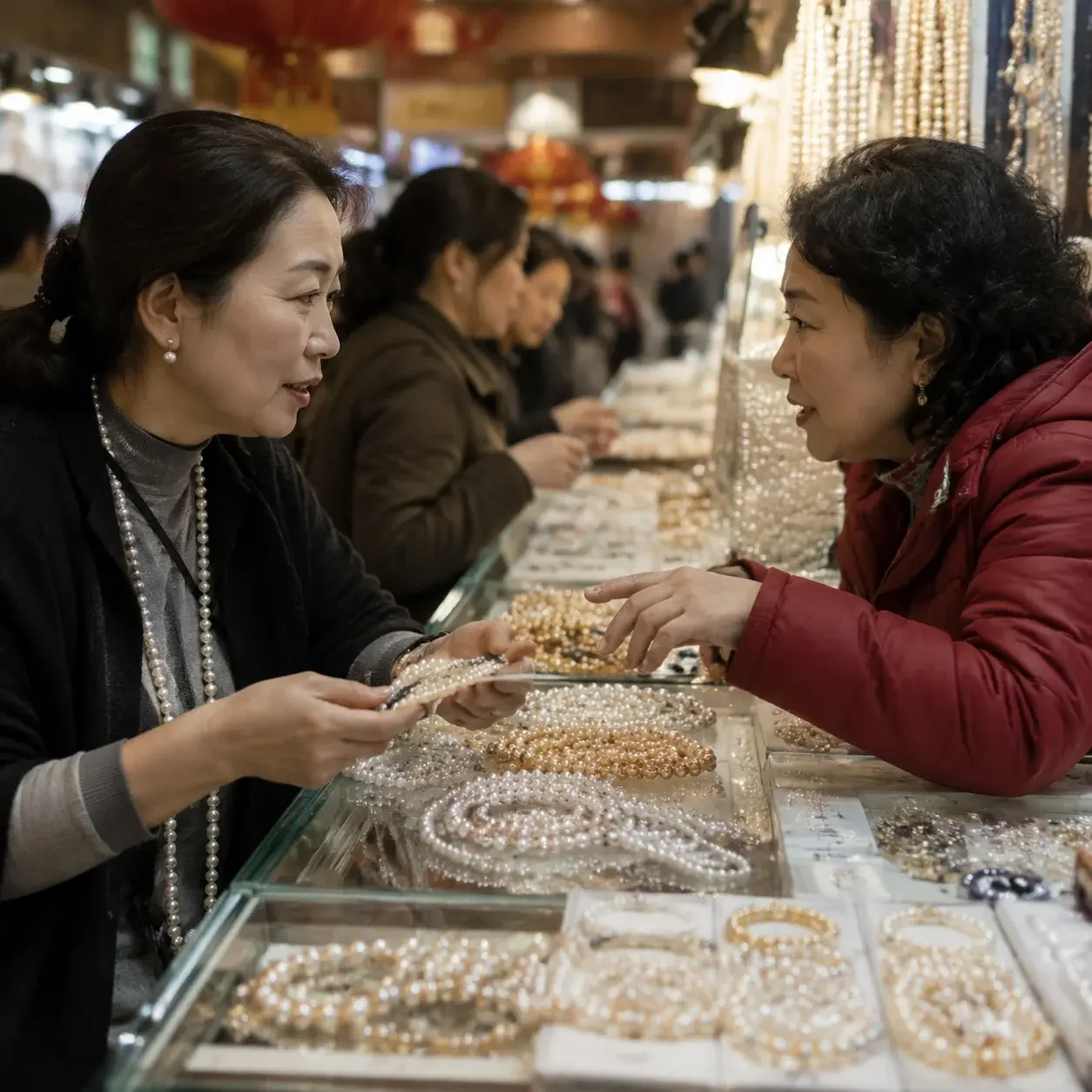
Öffnen Sie bei etwa 30% des angefragten Preises, einigen Sie sich in der Mitte und seien Sie bereit, zu gehen — das Gegenangebot folgt Ihnen bis zur Tür. Aber wissen Sie die nuancierte Ehrlichkeit: Ketten aus Billigperlen fallen weit unter dem Preis, während wirklich hochwertige, glänzende Perlen nicht zusammenbrechen.
Der Verhandlungsskript:
- Beginnen Sie bei etwa 30% des Angebots und lassen Sie den Verkäufer Sie in die Mitte ziehen.
- Seien Sie bereit zu gehen. Gehen ist Ihr stärkster Hebel — ein echtes Gegenangebot verfolgt Sie.
- Lesen Sie den Preisabschlag ehrlich. Touristische Ketten können stark vom ursprünglichen Preis heruntergehandelt werden. Eine wirklich hochwertige Kette (hochglänzendes Süßwasser oder echtes Meerwasser) wird nicht um 90 % fallen — ein Verkäufer, der bei einer „Meerwasser“-Kette so stark nachlässt, verrät Ihnen, dass es sich nie um Meerwasser gehandelt hat.
Hebelstrategien:
- Bündeln Sie mehrere Ketten für einen Gesamtpreis.
- Der Guanxi-Foto: Ein freundliches Foto mit dem Verkäufer beim ersten Kauf kann einen Rabatt für次回besuche bringen.
- Bar zahlen — in der Regel einfacher zu verhandeln als mobile Zahlung.
- Erfahren Sie die Straßenpreise und kaufen Sie dann die hochwertigen Ketten im Obergeschoss.
Warnsignale während der Verhandlung: „nur heute“, „letztes Stück“, ein kostenloser Tee-Raum, der zu aggressivem Verkauf wird, ein gedrucktes „Zertifikat“ im Laden und Druck, schnell zu entscheiden. All das bedeutet: Verlangsamen Sie oder gehen Sie.
Wie erhalten Sie echtes Zertifikat und tragen Perlen nach Hause?
Für hochwertige Perlen insistieren Sie auf ein Zertifikat einer anerkannten chinesischen Edelsteinlabor — nicht einen Ausdruck aus dem Laden — und vergleichen Sie es mit den tatsächlichen Perlen, bevor Sie zahlen. Perlen sind auch weich, also packen und tragen Sie sie vorsichtig.
Schritte für das Zertifikat:
- Das Labor kennen. In China suchen Sie nach NGTC (National Gemstone Testing Center) oder einem provinzialen nationalen Labor; für hochwertige internationale Stücke können Sie auch einen GIA-Bericht anfordern.
- Die Schlussfolgerung lesen. Das Zertifikat muss die Perlenart (Süßwasser / Akoya / Tahitisch / Südsee) und jede Behandlung (gefärbt, bestrahlt, verbessert) angeben. Wenn eine Behandlung aufgeführt ist, zahlen Sie keine Preise für Naturfarben.
- Die Nummer überprüfen. Prüfen Sie die Zertifikatsnummer auf der offiziellen Seite des ausstellenden Labors (für NGTC: ngtc.com.cn) — etwa 30 Sekunden, um zu bestätigen, dass es echt ist.
- Zertifikat mit der Kette abgleichen. Bestätigen Sie die Anzahl der Perlen, Größe und Farbe auf dem Zertifikat mit der Kette in Ihrer Hand; lassen Sie die Perlen nicht aus den Augen.
- In-Shop-"Zertifikate" ablehnen. Eine Geschäftskarte mit einem roten "reguliert/zollabgenommen"-Stempel hat kein Gewicht — es ist ein gängiges Verkaufspropagandamittel.
- Alles archivieren. Fotografieren Sie das Zertifikat, den Beleg und die Zahlungsdaten zusammen in die Cloud; Zoll bei hochwertigen Käufen und Reiseversicherung benötigen sie möglicherweise.
Welche Hongqiao-Anbieter ein gleichwertiges NGTC-Zertifikat am selben Tag ausstellen können, der Bearbeitungszeit und die Gebühr sind alle indikativ und sollten bei Ihrem Besuch bestätigt werden.
Pflege und Reisen: Perlen sind weich (Mohs-Härte etwa 2,5–3) und empfindlich gegen Parfüm, Kosmetika und Schweiß, was den Perlmutt matt werden lässt. Ziehen Sie sie letzten an, ersten aus, wischen Sie sie nach dem Tragen ab und lagern Sie sie flach getrennt von härterem Schmuck. Behalten Sie die Rechnung für Zollzwecke bei hochwertigen Käufen.
Ehrliche Empfehlung: Souvenir vs Andenken vs Investition
Entscheiden Sie zuerst, welche Art Käufer Sie sind, dann entscheiden Sie, wie viel Sie ausgeben wollen und ob ein Zertifikat nötig ist. Der größte Fehler von Touristen in Hongqiao ist nicht, eine Fälschung zu kaufen – es ist, Meereswasserpreis für Süßwasserperlen auf der Touristenetage zu zahlen. Kaufen Sie fröhlich Süßwasserperlen, wie sie sind; zahlen Sie nur echten Perlenpreis für Glanz plus Zertifikat.
| Käuferart | Kernbedürfnis | Strategie | Preisuntergrenze |
|---|---|---|---|
| Foto-Souvenir | Schön, billig, echt-falsch egal | Eine billige Süßwasser-/gefärbte Schnur vom Straßenlevel ist in Ordnung – wissen Sie nur, dass sie nicht edel oder Salzwasser ist | Keine Untergrenze, aber nicht für Salzwasser/edle Preise bezahlen |
| Andenken (für sich selbst) | Eine echte Perle, die Sie gerne tragen | Mittelwertiges Hochglanz-Süßwasser ist Hongqios Sweet Spot; führen Sie den Punktekatalog, kaufen Sie oben, wählen Sie Größe/Farben nach Geschmack | Bewerten Sie sie nach dem Glanz, nicht nach "weißer/runder" |
| Geschenk | Bedeutung + Aussehen + Präsentation | Passen Sie den Empfänger an: klassische weiße Runde für eine ältere Person; gefärbte Barockform für eine jüngere Frau | Mindestens echtes Süßwasser + Perlentyp auf der Rechnung |
| Investment | Wert erhalten | Nur edles Salzwasser mit echtem Lab-Zertifikat + Mehrfachvergleich; impulsives Kaufen auf einer Reise vermeiden | Kein Zertifikat = null Investitionswert; "Salzwasser", aber billig = kein echtes Salzwasser |
Ein Fehler ausländischer Käufer ist, dass sie runder-weiß-größer als besser annehmen. In der Praxis trennt der Glanz (Faktor #1 der GIA) gut von gewöhnlich auf einen Blick – ein hochglänzender fast-runder Süßwasserstrahl wirkt oft eleganter als ein großer, mattier. Alle spezifischen Preisangaben hier sind nur Anhaltspunkte – überprüfen Sie auf dem Markt vor dem Kauf.
Häufig gestellte Fragen
Sind die Perlen in Hongqiao echt? Echte und gefälschte Perlen werden beide in Hongqiao verkauft – es ist ein echter Perlenmarkt, aber gefärbte Muschelperlen und falsch beschriftete Stränge sind auf der Touristenetage häufig. Was Sie bekommen, hängt von der Etage und dem Verkäufer ab; führen Sie also die Tests durch und kaufen Sie hochwertige Stränge oben.
Wie können Sie erkennen, ob Perlen echt sind? Reiben Sie eine Perle vorsichtig an Ihrem Zahnrand: Echte Perlmutter fühlt sich rau an, Glas und Plastik fühlen sich glatt an. Prüfen Sie zudem den tiefen Glanz, kleine natürliche Oberflächenfehler und das langsame Erwärmen in der Hand. Das schließt offensichtliche Fälschungen aus, ermöglicht aber keine Qualitätsbewertung.
Was ist der Unterschied zwischen Süßwasser- und Salzwasserperlen? Süßwasserperlen wachsen um ein Gewebe in Muscheln – oft unregelmäßig, sanft glänzend, erschwinglich und das, was Hongqiao hauptsächlich verkauft. Salzwasserperlen (Akoya, Tahiti, Südsee) sind perlkernbasiert, runder, strahlender im Glanz und deutlich teurer. Runde, günstige und als „Salzwasser“ bezeichnete Perlen sind fast immer falsch etikettiert.
Wie teuer sind Perlen im Pekinger Perlenmarkt? Es gibt keinen festen Preis – die Qualität bestimmt den Preis, angeführt vom Glanz. Bearbeitete Touristenstränge kosten wenige Zehner RMB; gewöhnliche und hochglänzende Süßwasserperlen sind teurer; feine Salzwasserperlen liegen eine Größenordnung höher. Betrachten Sie alle Preise als Richtwerte und prüfen Sie sie vor dem Kauf.
Wie feiere ich auf dem Perlenmarkt in Peking? Öffnen Sie bei etwa 30 % des angeforderten Preises und einigen Sie sich in der Mitte, bereit zu gehen. Schmuckketten fallen weit; echt gute Ketten tun das nicht. Ein Verkäufer, der 90 % von einer "Meeresperlen"-Kette ablässt, gibt zu, dass es niemals Meeresperlen war – lesen Sie den Abzug als Information.
Welche Etage bei Hongqiao verkauft echte Perlen? Ernstzunehmende Händler mit echten, bewertbaren Perlen befinden sich üblicherweise in den oberen Etagen, während die Straßenstände Touristen mit gefärbten Muschelperlen und falsch beschrifteten Ketten locken. Durchsuchen Sie die untere Ebene, um Preise zu lernen, dann kaufen Sie die guten Ketten oben – und überprüfen Sie das genaue Layout bei Ihrem Besuch.
Die Zusammenfassung
Die Perlen auf dem Perlenmarkt Hongqiao in Peking sind echt – und so sind auch die Fälschungen direkt daneben. Sie schützen sich mit zwei Dingen, die Sie jetzt haben: der sieben-Test-Karte, die offensichtliche Fälschen ausschließt, und der Etkarte, die Sie in die oberen Etagen zu den ernstzunehmenden Händlern schickt. Fügen Sie die ehrliche Süßwasser-zu-Meerwasser-Gabel, die anzeigenden RMB-Bereiche nach Qualität, ein Verhandlungsskript und ein Laborzertifikat für alles Kostbare hinzu, und Sie können mit Vertrauen statt Angst bei Hongqiao kaufen.
Denken Sie an den einen Fehler, der am meisten kostet: Meerwasserpreis für Süßwasser auf der Touristenebene. Kaufen Sie fröhlich Süßwasser, wie es ist, und zahlen Sie nur echte Perlenpreise gegen Glanz und Zertifikat.
Planen Sie einen Einkaufsday in Peking? Kombinieren Sie dies mit unserem  Beste Märkte in Peking für Einkäufe-Hub und lesen Sie unseren Leitfaden zum Seidenmarkt in Peking — den anderen Markt mit hohem Risiko für Fälschungen, bei dem die gleichen Ausrundungs- und Käufer-Schutzregeln gelten. Wenn Sie lieber von einem Spezialisten direkt zu den überprüften Hongqiao-Händlern gebracht werden wollen, kann unser Team Ihnen eine individuell zugeschnittene Peking-Reise organisieren.